IMPROVEMENT IN MAIL-BAG FASTENINGS
A mail-bag lock, not a duck call — filed here by mistake
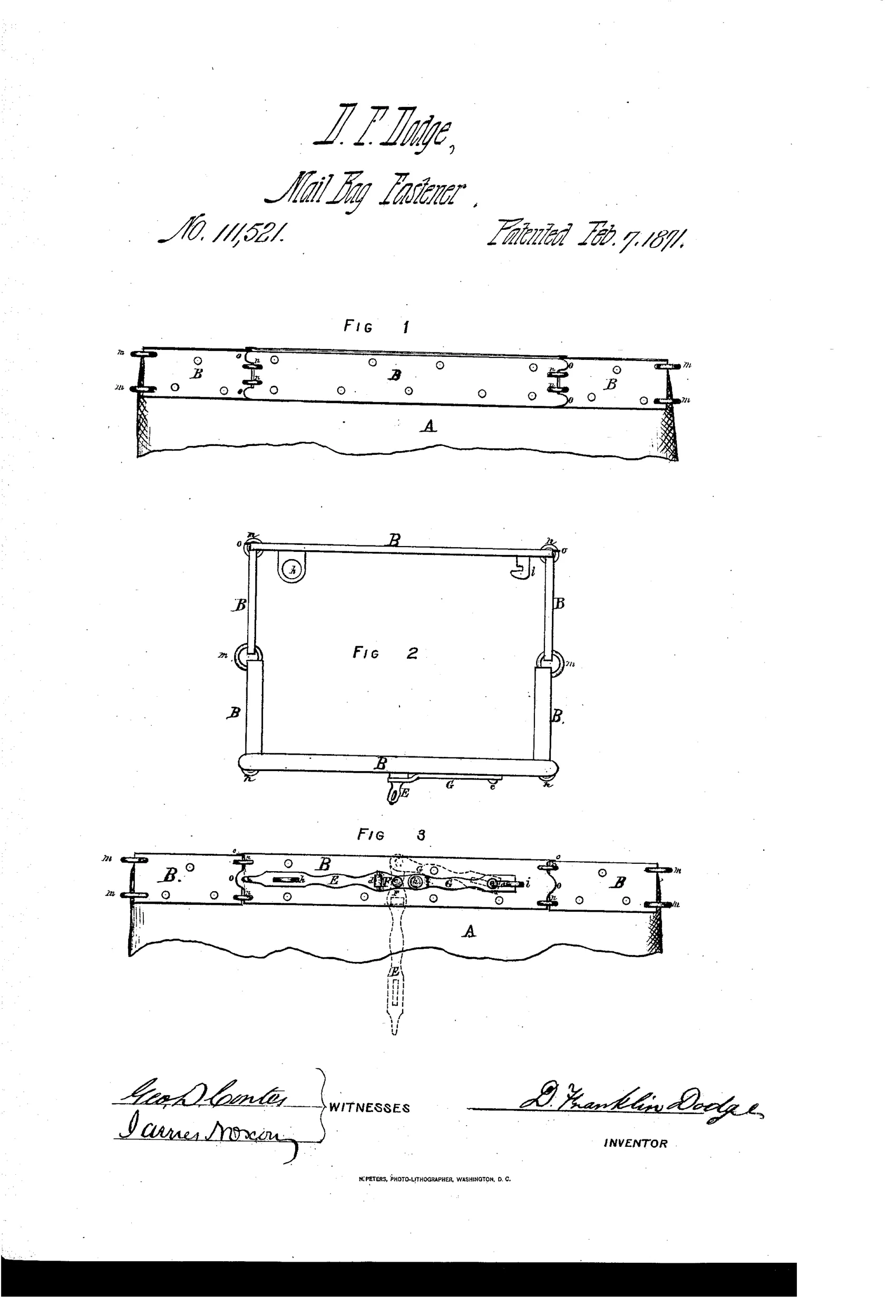
Hinged, locking metal frame fastener for mail bags
➶ How it works
A jointed iron or steel frame rings the bag's mouth and hinges open into a rectangular shape for loading mail. A pivoted lever carries a hinged hasp on one end and a hinged bolt on the other, guided by a headed pin through a slot. When closed, the bolt end passes through a staple and catch on the frame, and the hasp fits over a staple so a padlock link can pass through it, locking the bag shut instantly.
➶ What was claimed
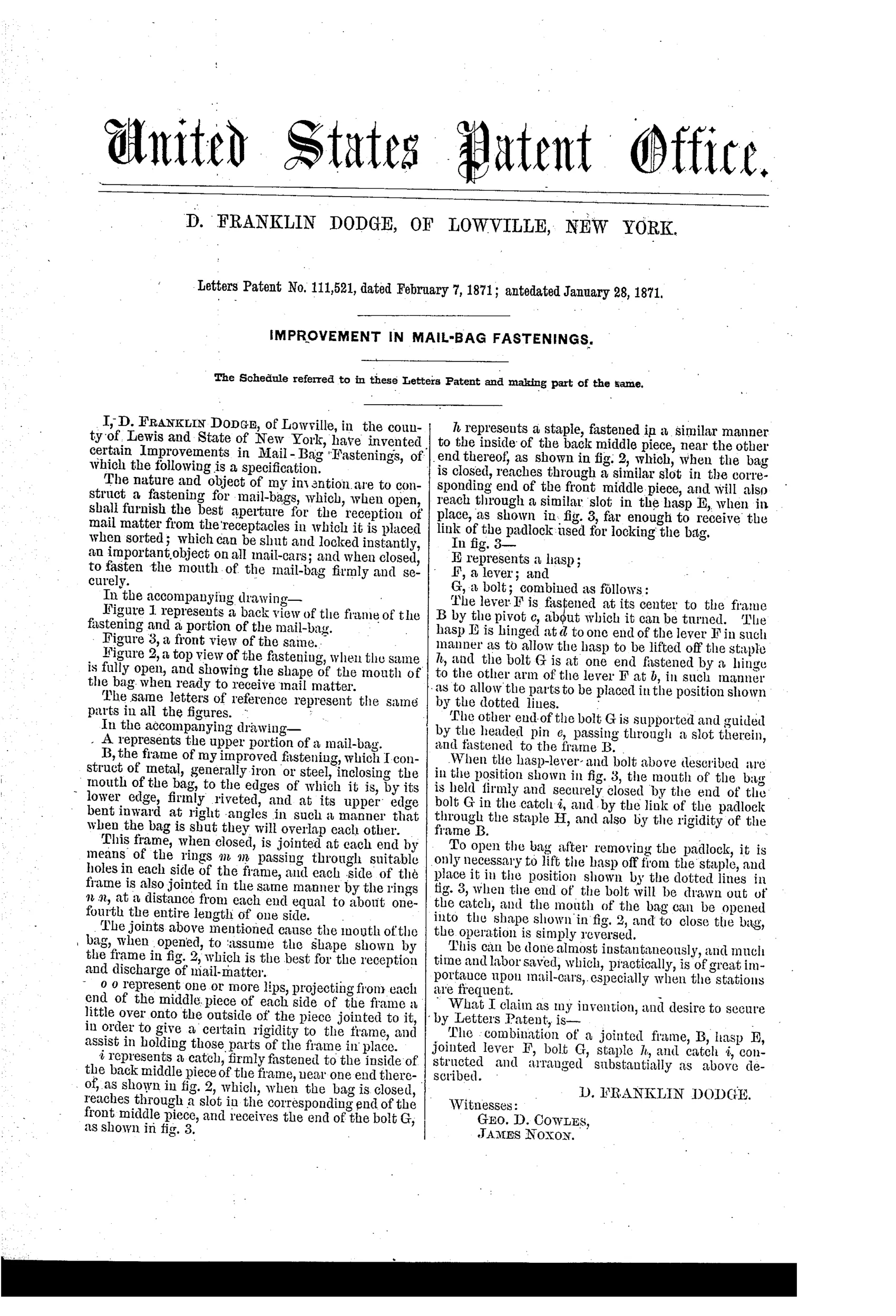
“The combination of a jointed frame, B, hasp E, jointed lever F, bolt G, staple h, and catch i, constructed and arranged substantially as above described.”
In plain English: The invention claims the combined jointed frame, hasp, lever, bolt, staple, and catch working together as described to fasten and lock the mail bag.
➶ In the inventor’s words
“This can be done almost instantaneously, and much time and labor saved, which, practically, is of great importance upon mail-cars, especially when the stations are frequent.”— D. Franklin Dodge, from the specification
Fate unknown
Off-topic for this collection; whether Dodge's fastener saw postal service use would require Post Office procurement records or a surviving marked frame.
➶ Commentary
Let's be straight with each other: this is not a game call. D. Franklin Dodge's 1871 patent is a hinged iron frame that rings the mouth of a railway mail bag, with a pivoted lever, hasp, and bolt so a postal clerk can slam the bag shut and drop a padlock through the staple in one motion. Nothing on this sheet makes a sound at a duck, unless you count the clank of the bolt hitting the catch. It has landed in our category by classification accident, and honesty demands we say so before commenting on the hardware itself.
Taken on its own terms, it is a tidy piece of railway-era problem solving. Fig. 2 is the view worth studying: the jointed frame swings open into a rectangle so mail can be shoveled in fast, then folds flat to close. The lever F does double duty — one end carries the hasp for the lock, the other a bolt that shoots through a staple — so a single throw both fastens and readies the bag for the padlock. Dodge's own pitch, that this matters 'especially when the stations are frequent,' tells you the real customer: Railway Mail Service clerks working against the clock between whistle stops.
For our readers, the takeaway is simply calibration. 1871 is one year after Elam Fisher's tongue-pincher opened the duck-call record; this patent shares only the decade, not the field.
Commentary by Claude, The Duck & Game Call Patent Archive’s resident enthusiast