The Duck & Game Call Patent Archive
In 1870, a man named Elam Fisher patented a device for talking to ducks, and the United States government drew it, numbered it, and filed it with the same gravity it gave the steam engine.
This site collects what followed: the patented instruments of American wildfowling. A duck call looks simple — a barrel, an insert, a reed held against a tone board by a wedge — but that geometry is a dialect, and hunters guarded theirs. The metal-reed calls of Reelfoot Lake, the Illinois River school, the Louisiana cane calls: each is a different theory of what a mallard wants to hear at forty yards in a north wind. The patent record catches inventors trying to bottle that theory in brass and walnut: adjustable reeds, double reeds, calls tuned by set screws, bellows crows that flap, turkey boxes that scratch, and more than one machine that promised to do the calling for you.
Old calls are collected seriously — checkered barrels from known makers bring real money, and the patent dates stamped on barrels and inserts are how a call is identified and dated. Type the date off your call into this site and the patent should be waiting for you, with its original drawing at full size and the inventor's own explanation of why his voice was the true one.
The drawings are public domain — U.S. government work, never copyrighted, free to reproduce. The ducks' opinions were not recorded.
➶ Begin here
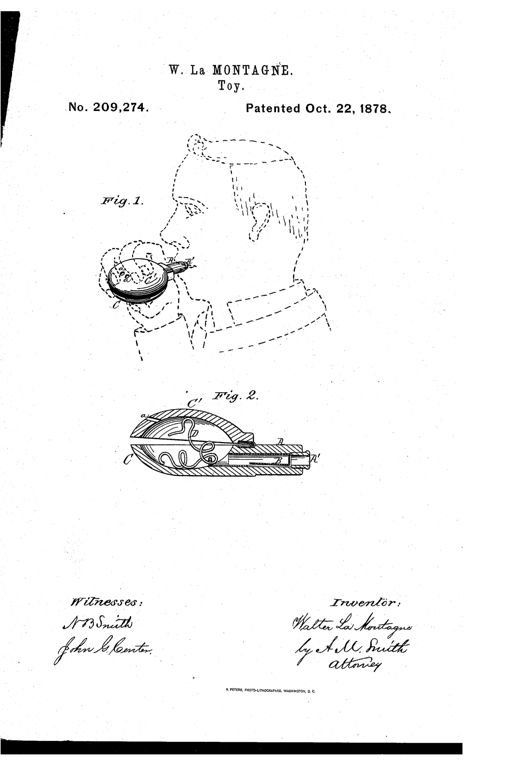 IMPROVEMENT IN TOYSWalter La Montagne · October 22, 1878
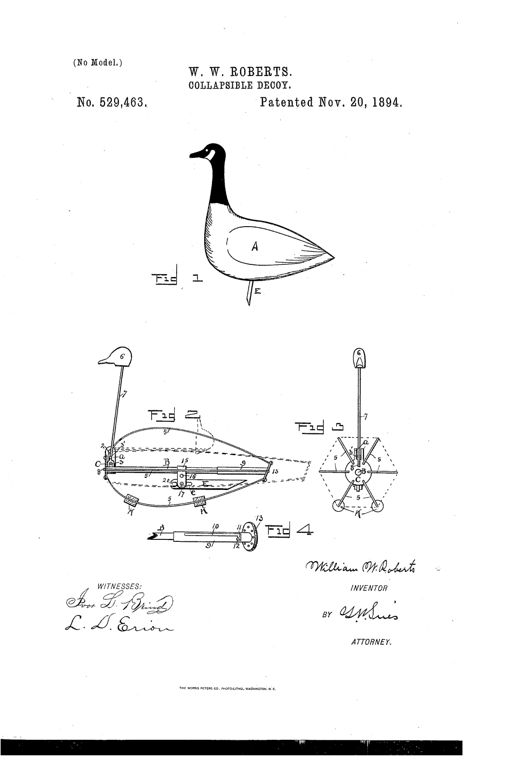 COLLAPSIBLE DECOY.William W. Roberts · November 20, 1894
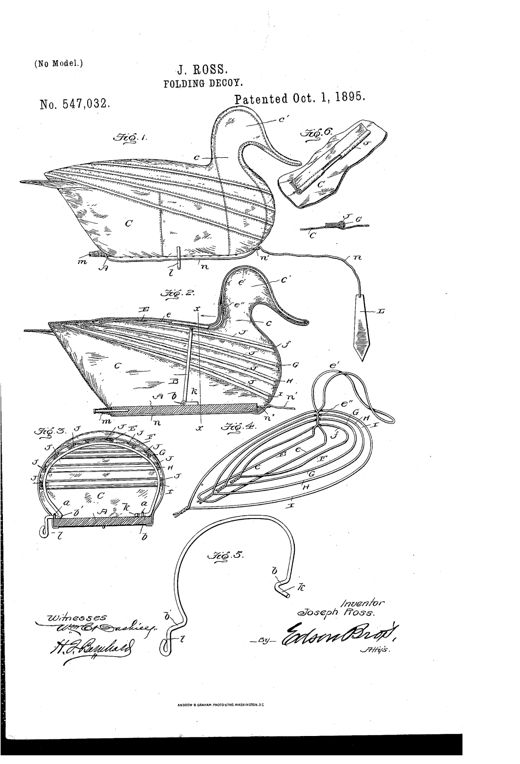 FOLDING DECOY.Joseph Ross · October 1, 1895
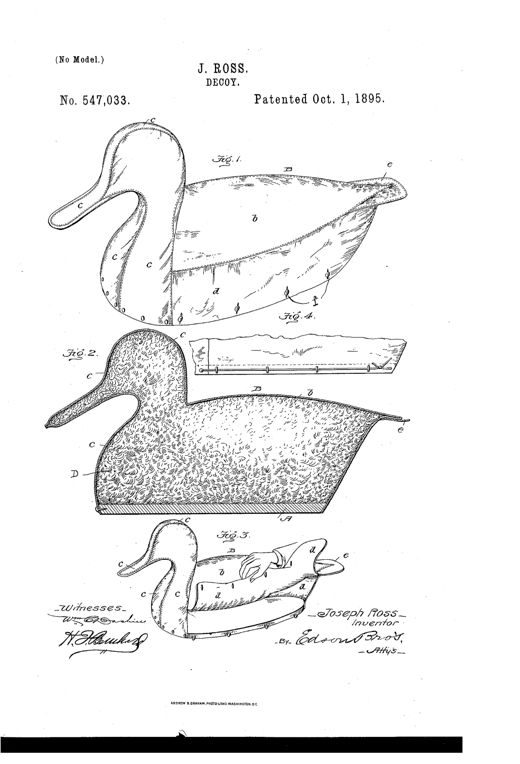 DECOY.Joseph Ross · October 1, 1895
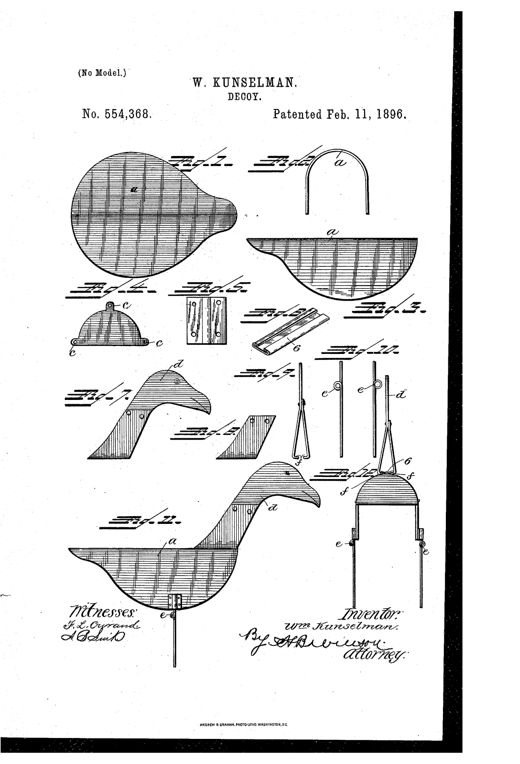 DECOYWilliam Kunselman · February 11, 1896
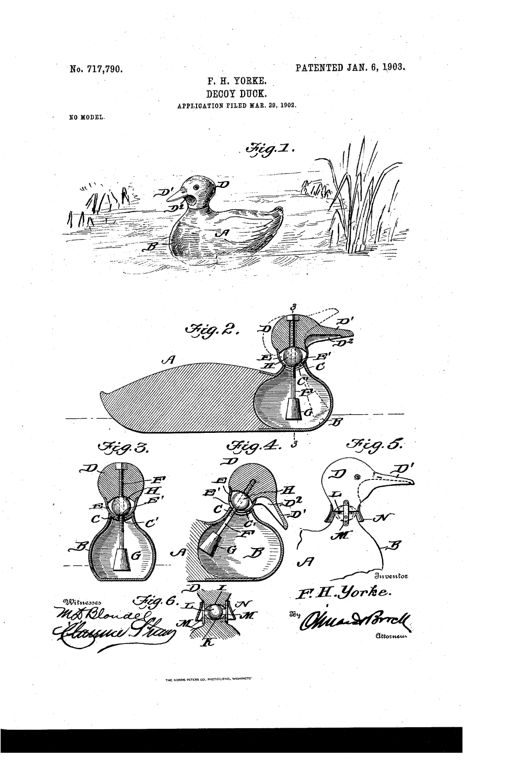 DECOY-DUCKFrederick Henry Yorke · January 6, 1903
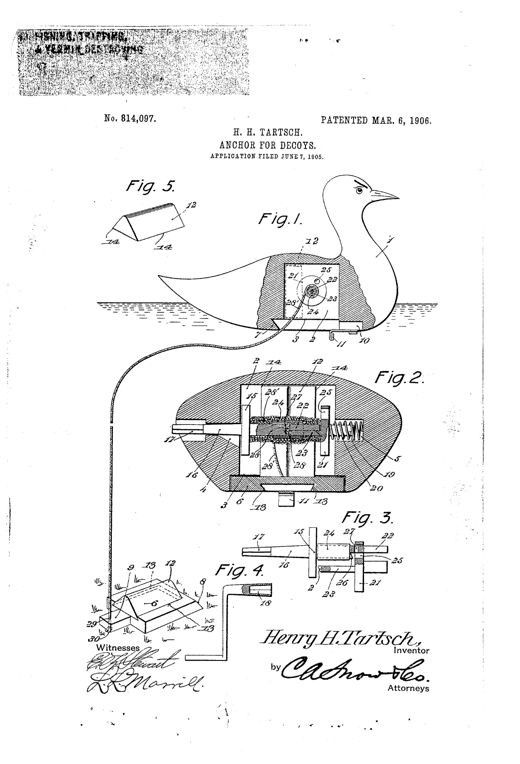 ANCHOR FOR DECOYS.Henry H. Tartsch · March 6, 1906
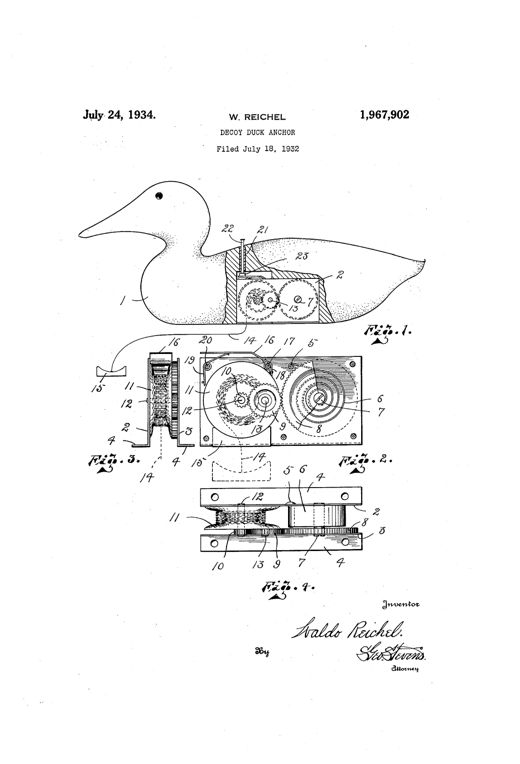 DECOY DUCK ANCHORWaldo Reichel · July 24, 1934