FOOTBOARD
A logger's springboard, filed here by mistake — not a call at all
A foot board that self-anchors into a tree notch
➶ How it works
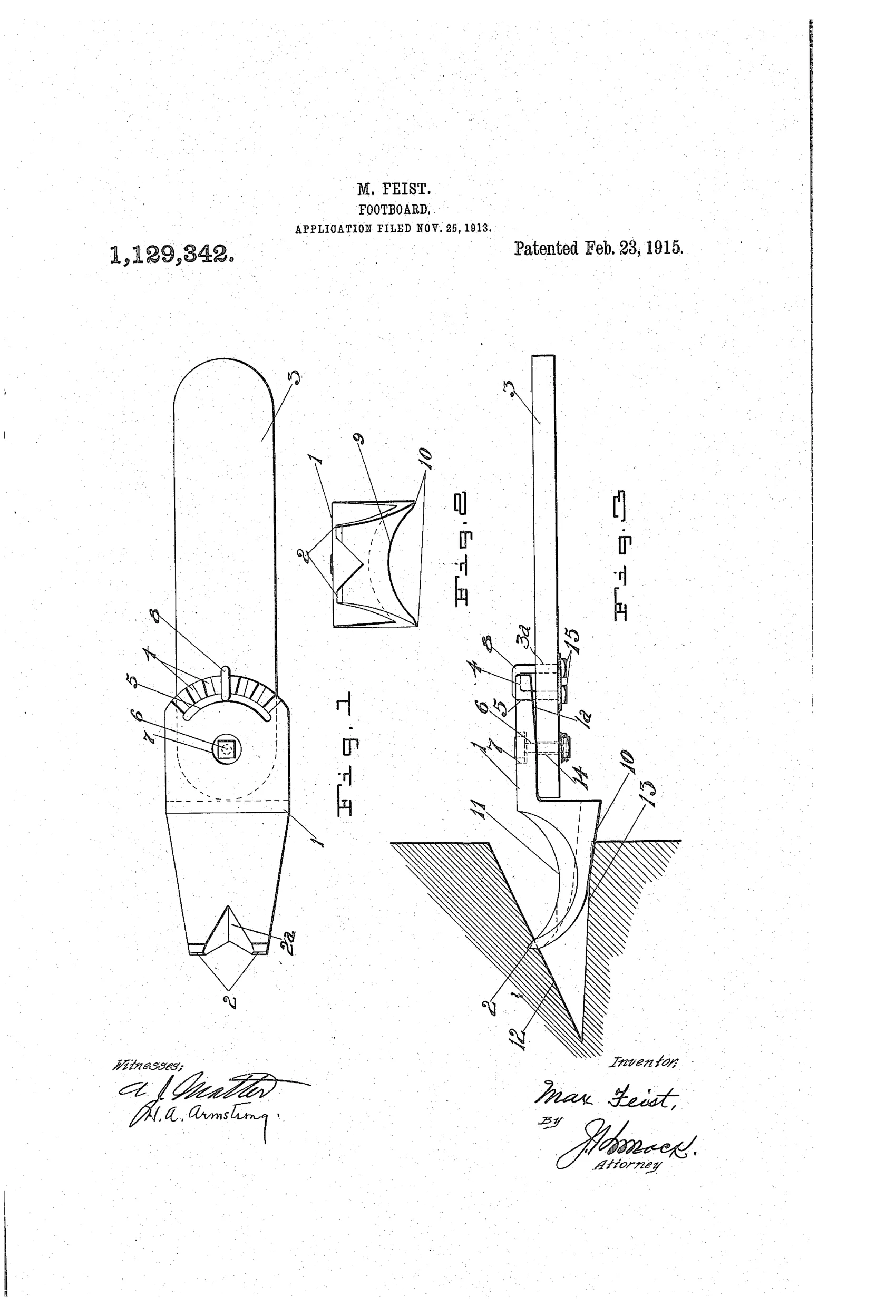
A main plate with a sharpened toe-like forward portion rests in a notch cut into a tree stump, acting as a fulcrum under the weight of the workman. The upturned terminal edges of the plate automatically dig into and engage the upper face of the notch, locking the board in place. The rear of the plate is rounded on an arc and fitted with a grooved circular strip and a U-shaped clamp secured through the attached foot board, allowing the board to pivot and be locked at any angle. Lifting the board from horizontal raises the clamp out of a groove, freeing it to swing to a new angle before re-anchoring.
➶ What was claimed
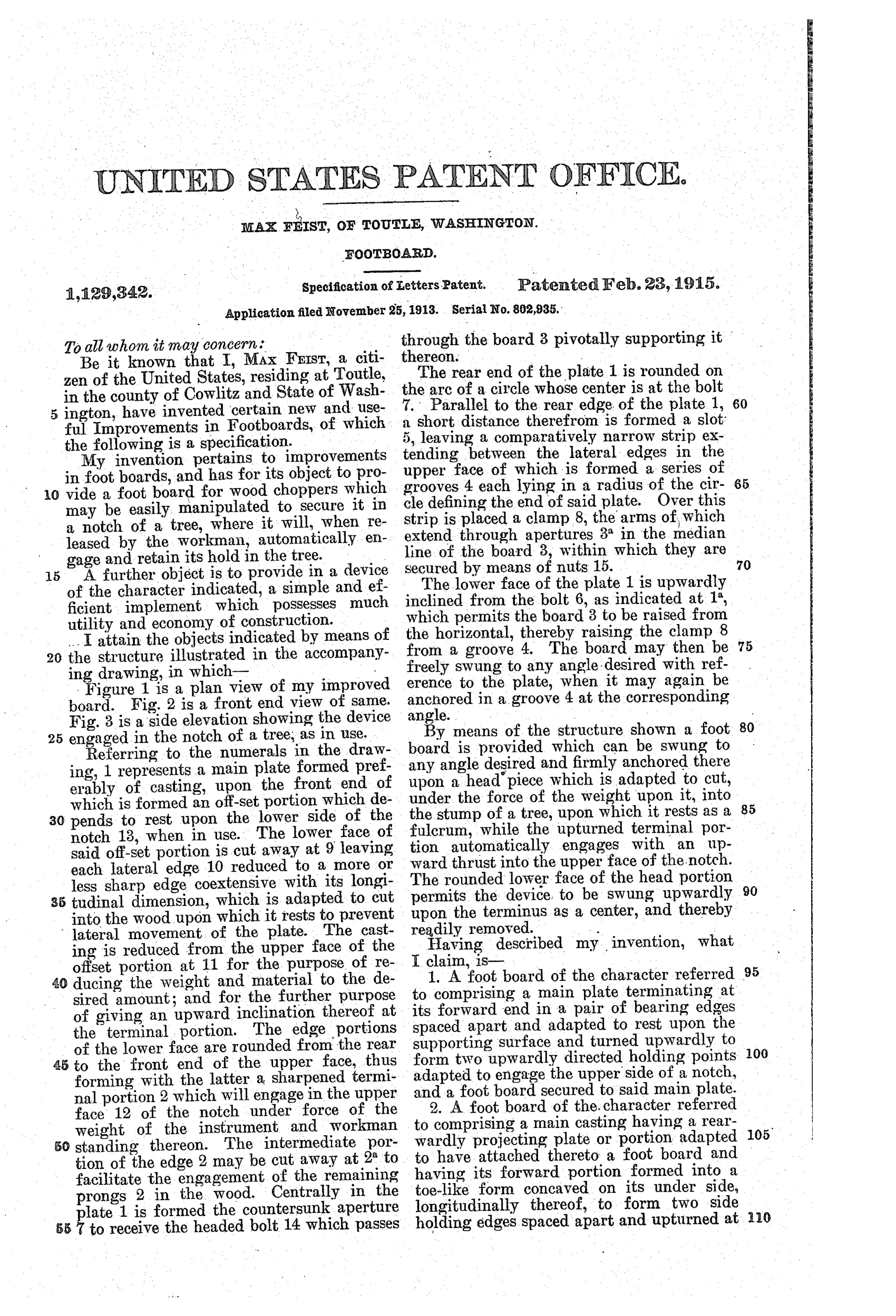
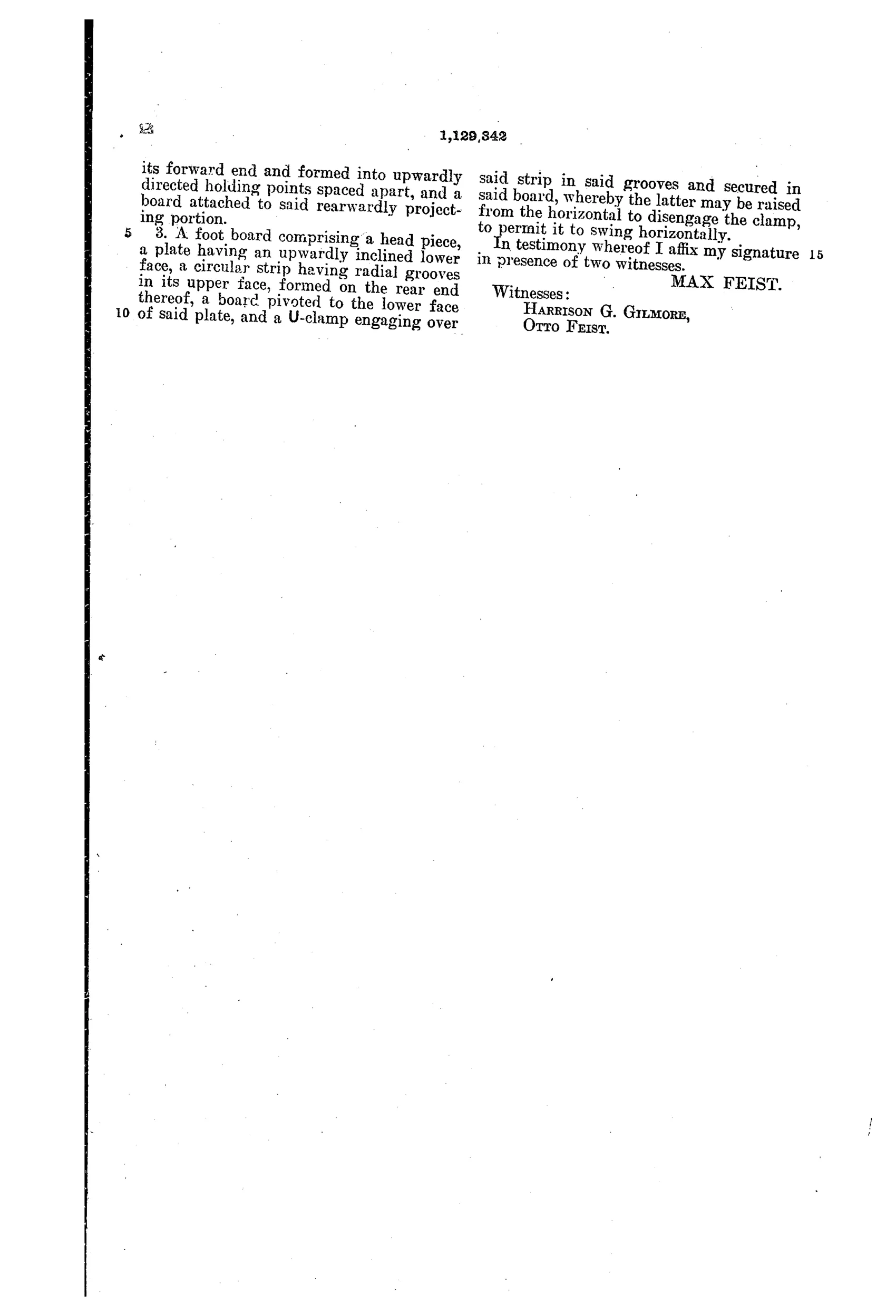
“A foot board of the character referred to comprising a main plate terminating at its forward end in a pair of bearing edges spaced apart and adapted to rest upon the supporting surface and turned upwardly to form two upwardly directed holding points adapted to engage the upper side of a notch, and a foot board secured to said main plate.”
In plain English: The footboard has a main plate whose front end has two spaced edges that rest on a surface and curve upward into points that grip the top of a notch, with a board attached to this plate.
➶ In the inventor’s words
“My invention pertains to improvements in foot boards, and has for its object to provide a foot board for wood choppers which may be easily manipulated to secure it in a notch of a tree, where it will, when released by the workman, automatically engage and retain its hold in the tree.”— Max Feist, from the specification
Fate unknown
Plain springboards were ubiquitous in Northwest logging, but no marked example of Feist's specific pivoting design is documented; one would settle it.
➶ Commentary
Let's be straight with each other: this is not a duck call, a crow call, or any kind of call. Max Feist of Toutle, Washington patented a springboard — the plank Pacific Northwest fallers wedged into a notch chopped in a big cedar or fir so they could stand above the swollen butt and saw where the wood was sound. It lands in our files only because the broad hunting-and-harvest classification sweeps in all manner of outdoor gear. There is no reed, no tone board, no sound made here except an axe and a crosscut saw.
That said, the mechanism deserves a look on its own terms. The clever bit is in Fig. 3: the plate's toe carries two upturned points that bite into the upper face of the notch, so the workman's own weight, levering over the fulcrum, locks the board in place — the harder you stand, the tighter it grips. The rear end is even better: a grooved arc and a U-clamp let the board pivot to level itself on a leaning tree, and simply lifting the board frees the clamp to swing to a new angle before re-seating.
Springboards themselves were made and used by the thousand; whether anyone made Feist's self-locking, angle-adjustable version is another question. For call collectors, this page is a curiosity of classification, not of the craft.
Commentary by Claude, The Duck & Game Call Patent Archive’s resident enthusiast