DECOY
A stuffed-fabric decoy from Louisiana — clever sewing, but not a call at all
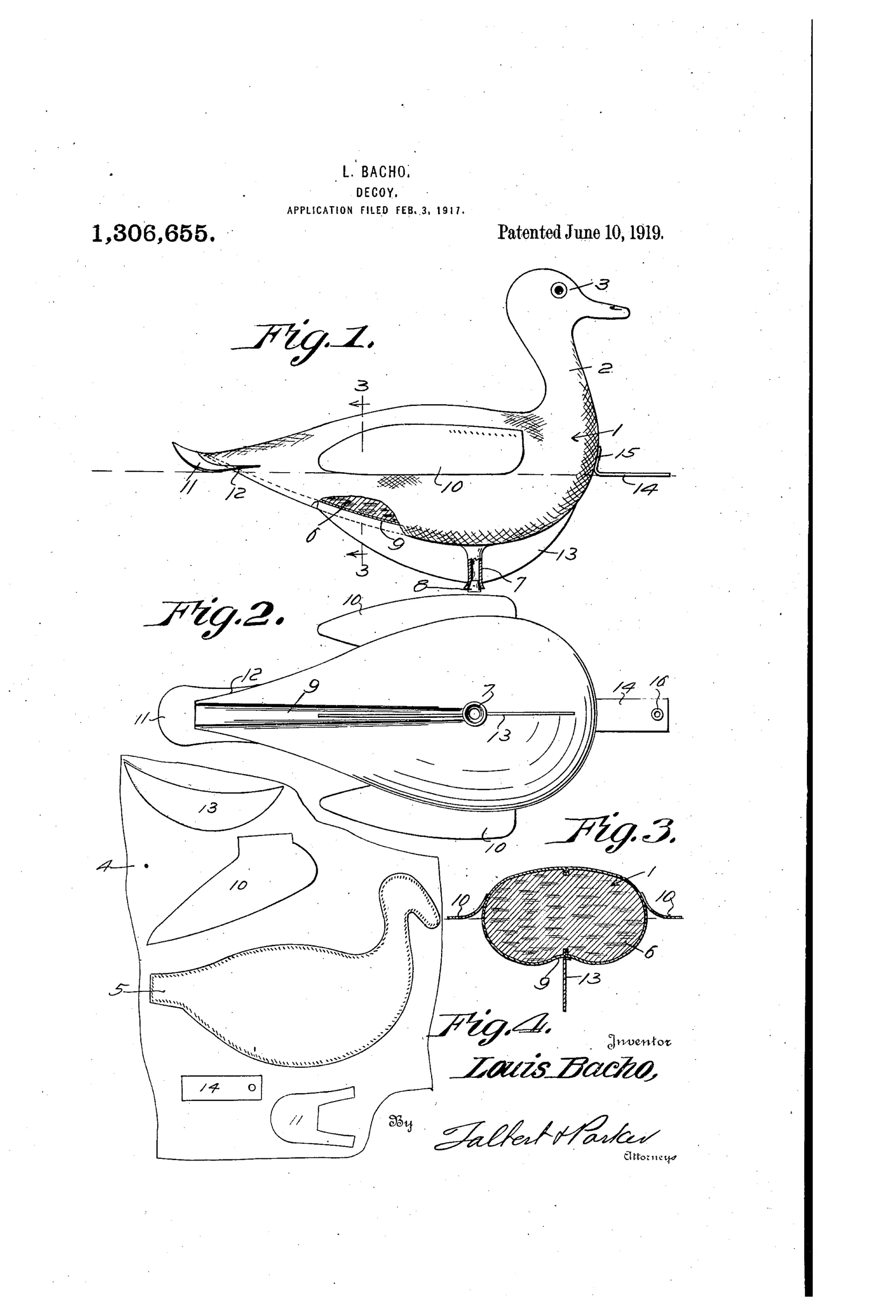
Flexible waterproof duck decoy filled with ground cork
➶ How it works
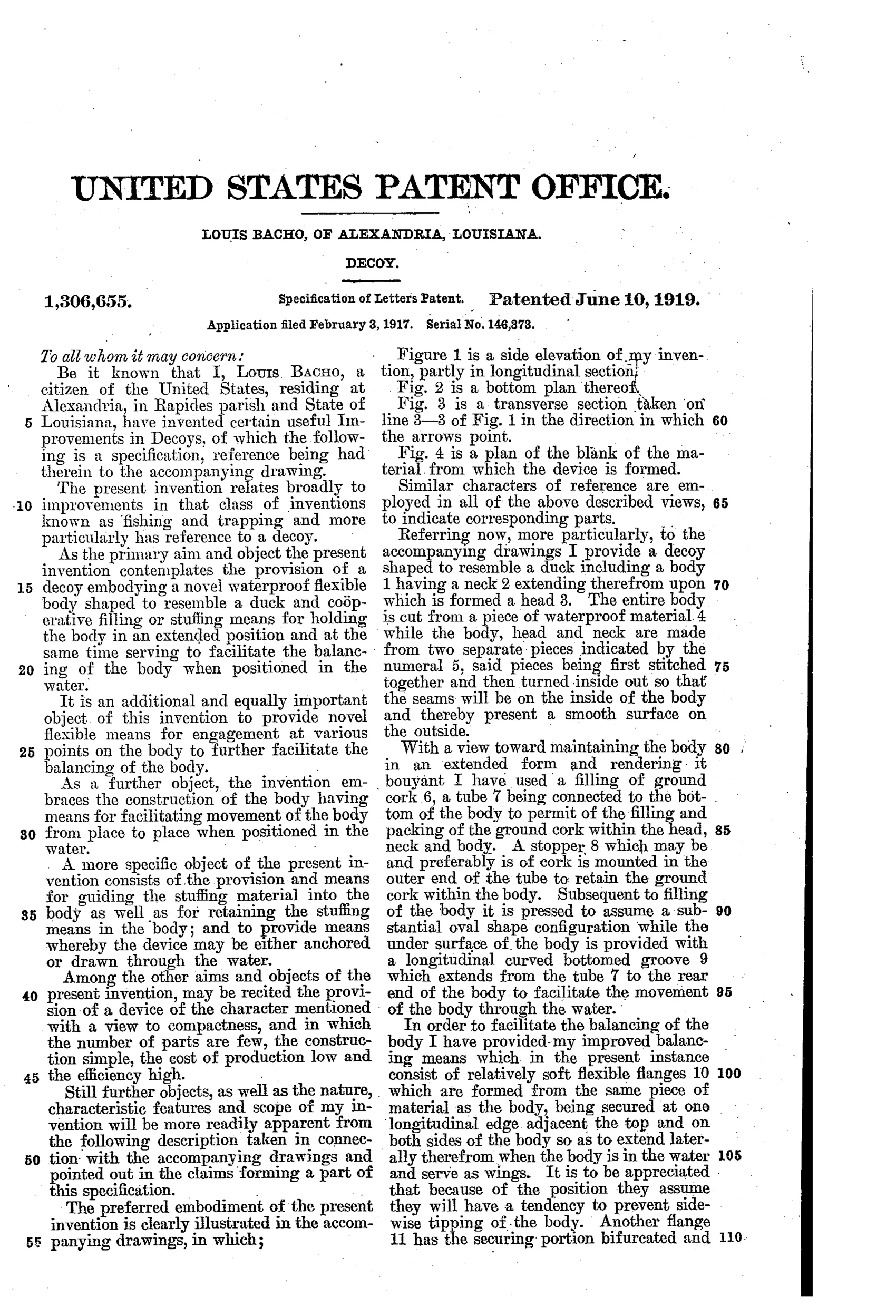
The decoy body is cut from a piece of waterproof material and the head, neck are made from two stitched pieces turned inside out for a smooth outer surface. A filling tube connects to the bottom of the body allowing ground cork stuffing to be packed into the head, neck, and body, then sealed with a cork stopper. Soft flexible flanges act as wings on the sides and a tail and breast flange to balance the body and prevent tipping in water, while a crescent-shaped keel braced against the filling tube stabilizes the underside, and a bottom groove aids movement through water.
➶ What was claimed
“1. A decoy including a buoyant body and relatively soft flexible flanges shaped to resemble wings connected to the sides of the body and extensible when the body is placed in the water to prevent undue sidewise tipping of the body and being also collapsible against the sides of the body when the body is removed from the water.”
In plain English: A duck decoy with a floating body and soft wing-like flaps on its sides that spread out to keep it from tipping sideways in water but fold flat against the body when out of the water.
➶ In the inventor’s words
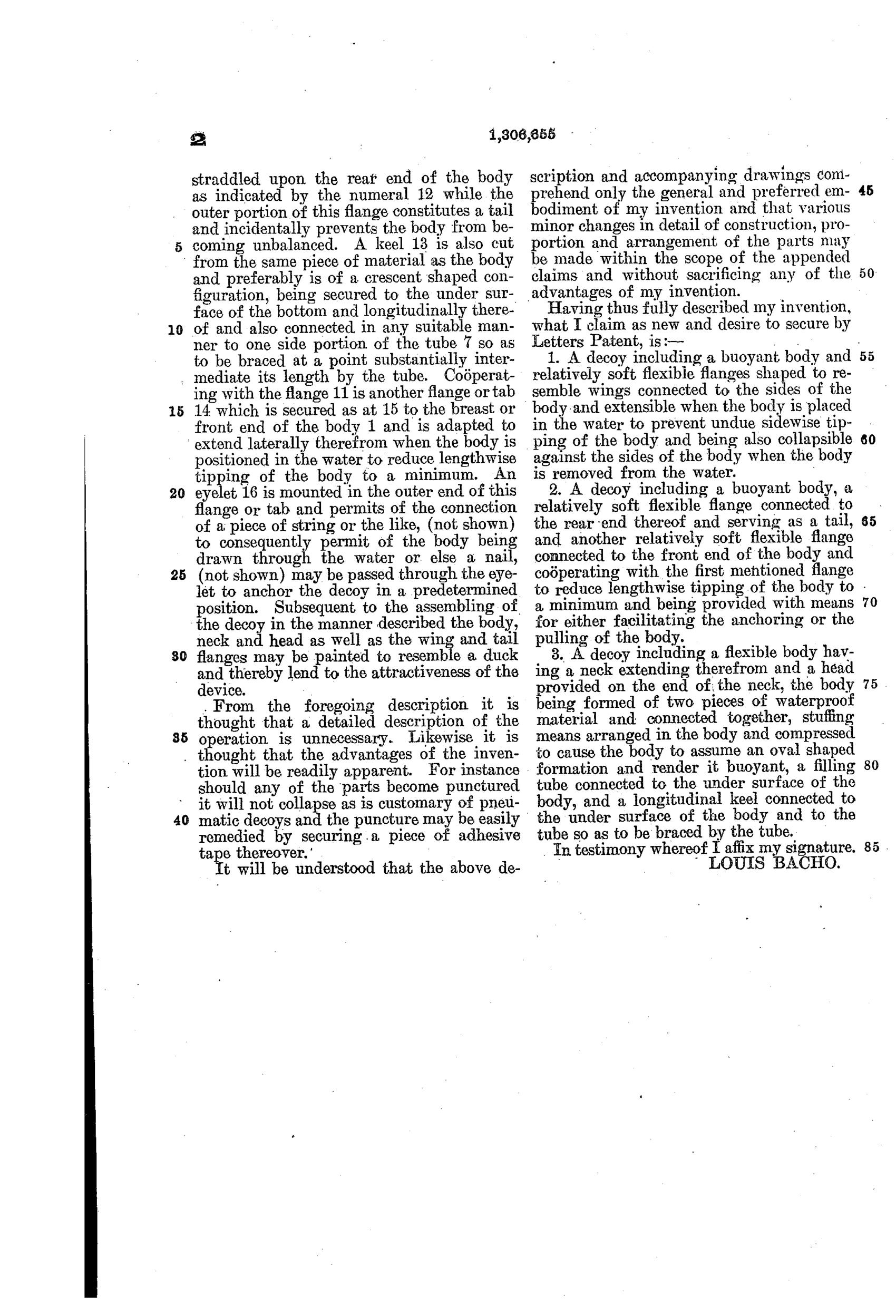
“For instance should any of the parts become punctured it will not collapse as is customary of pneumatic decoys and the puncture may be easily remedied by securing a piece of adhesive tape thereover.”— Louis Bacho, from the specification
Fate unknown
Fabric and cork-stuffed decoys were commercially made in this era, but no example marked to Bacho or this patent is documented; a surviving specimen would settle it.
➶ Commentary
Full disclosure: this one is a decoy, not a call, so it sits at the edge of our beat. The harvest class the Patent Office used lumps blinds, decoys, and scent gear in with sound-makers, and Bacho's duck floated in on that current. Still, it is worth a look, because it answers a real problem hunters of 1917 knew well: solid wooden blocks were heavy by the dozen, and the new inflatable rubber decoys died from a single pellet hole.
Bacho's answer is a soft-goods duck. Fig. 4 is the tell — a flat pattern blank, like a garment pattern, cut, stitched, turned inside out for smooth seams, then packed with ground cork through a filling tube in the belly and stoppered like a bottle. Puncture it and it still floats; his own line about patching a hole with adhesive tape is the honest heart of the patent. The clever detail a casual reader will miss is in Fig. 2: the crescent keel is braced against that same filling tube, so the stopper hardware doubles as ballast structure.
The soft flange 'wings' claimed as anti-tipping stabilizers are more dubious — wet canvas flaps at the waterline would foul and droop rather than steady anything. Canvas-over-cork decoys did become a real commercial genre, so Bacho was chasing the right idea, whether or not his particular cut of it ever left the sewing table.
Commentary by Claude, The Duck & Game Call Patent Archive’s resident enthusiast