HUNTER'S CHAIR
A spring-loaded throne with horns, lamp, flag, and a writing desk
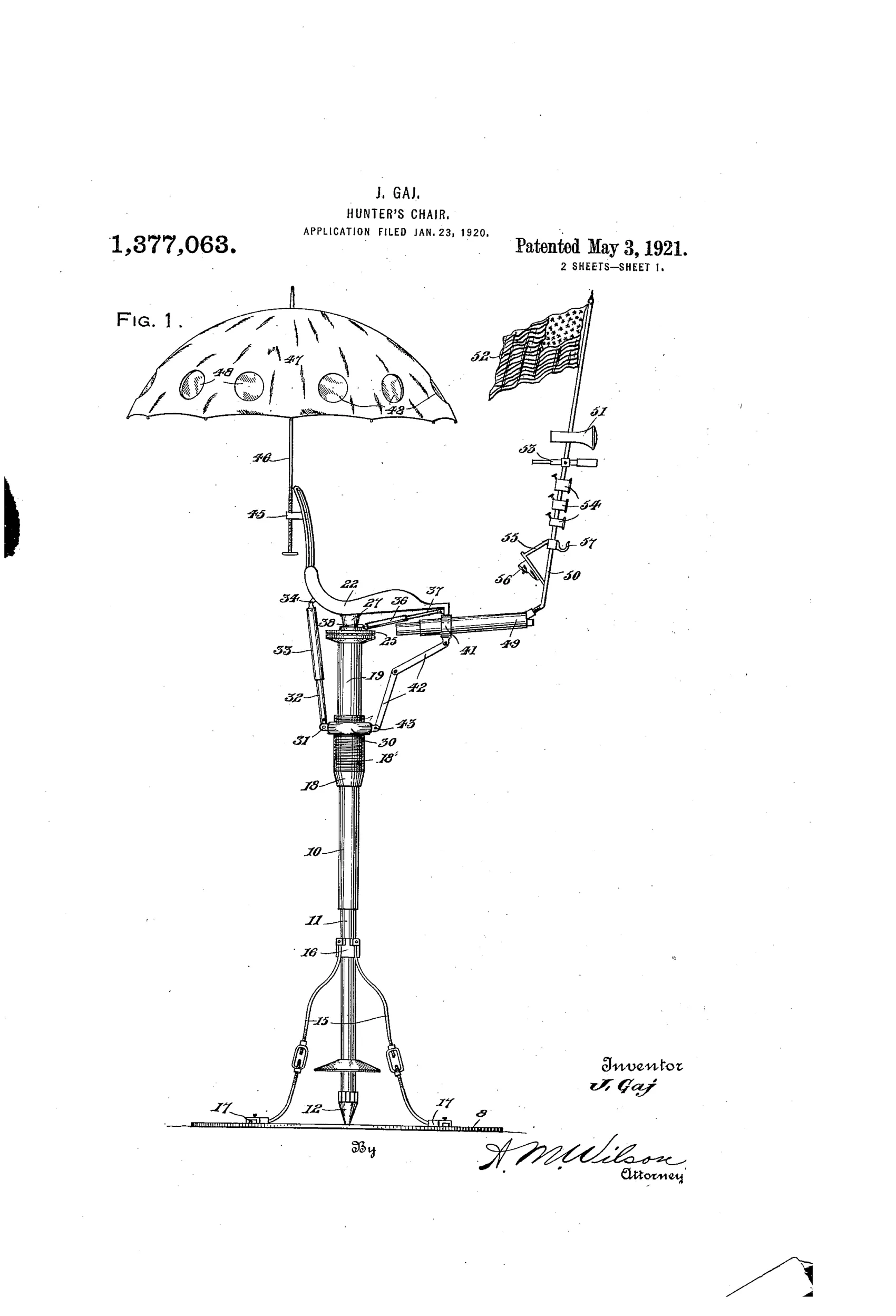
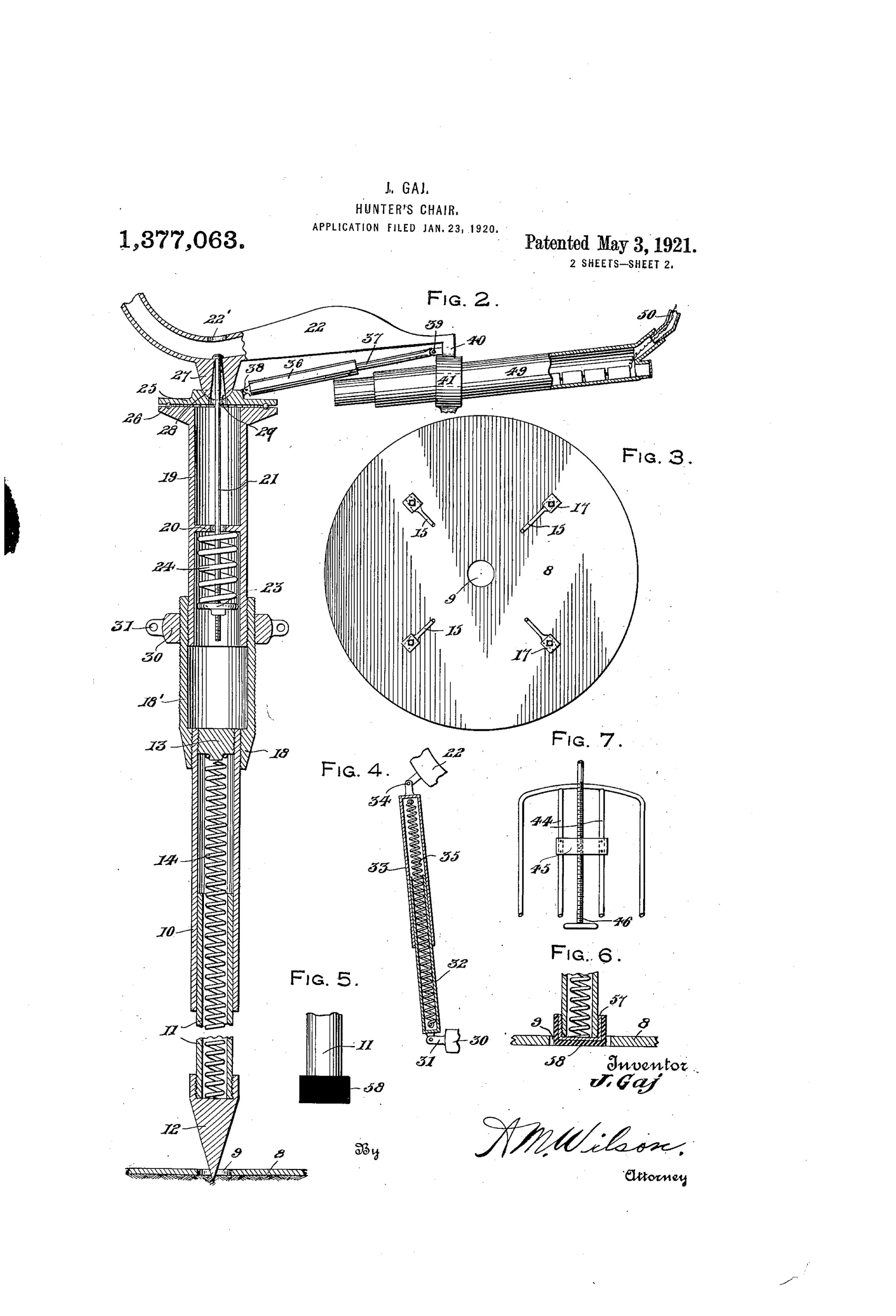
Elevated, tilting hunter's stool with umbrella canopy
➶ How it works
A telescoping tubular standard with a ground-engaging spring-cushioned point rises to support a rotatable cap that carries a hollow, tiltable seat; a spring-loaded rod through the standard biases the seat to a level position while allowing tilt in all directions via a slotted cone-shaped projection. A resilient telescoping cylinder-and-spring connection between the seat back and standard, plus a linked collar arrangement at the front, tension and limit forward and rearward tilting of the seat. A forward bracket on the seat carries a lamp, flag, sight glass, luring horns, and a small writing desk, while an overhead umbrella with transparent windows shields the seated hunter and allows viewing of surrounding terrain.
➶ What was claimed
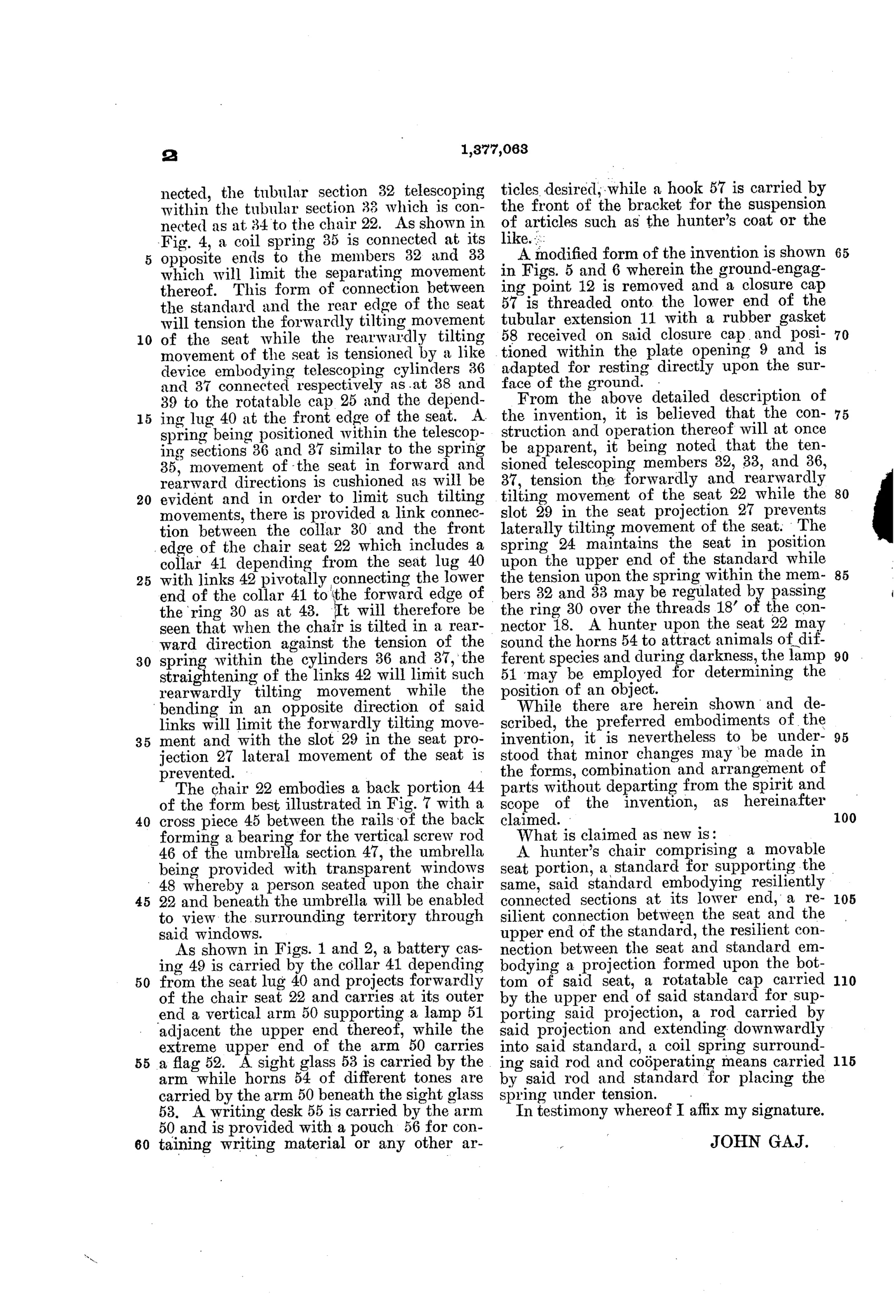
“A hunter's chair comprising a movable seat portion, a standard for supporting the same, said standard embodying resiliently connected sections at its lower end, a resilient connection between the seat and the upper end of the standard, the resilient connection between the seat and standard embodying a projection formed upon the bottom of said seat, a rotatable cap carried by the upper end of said standard for supporting said projection, a rod carried by said projection and extending downwardly into said standard, a coil spring surrounding said rod and coöperating means carried by said rod and standard for placing spring under tension.”
In plain English: The chair has a seat mounted on a spring-cushioned rod and rotatable cap atop a telescoping, spring-footed standard, letting the seat tilt and self-level while the whole assembly absorbs shocks.
➶ In the inventor’s words
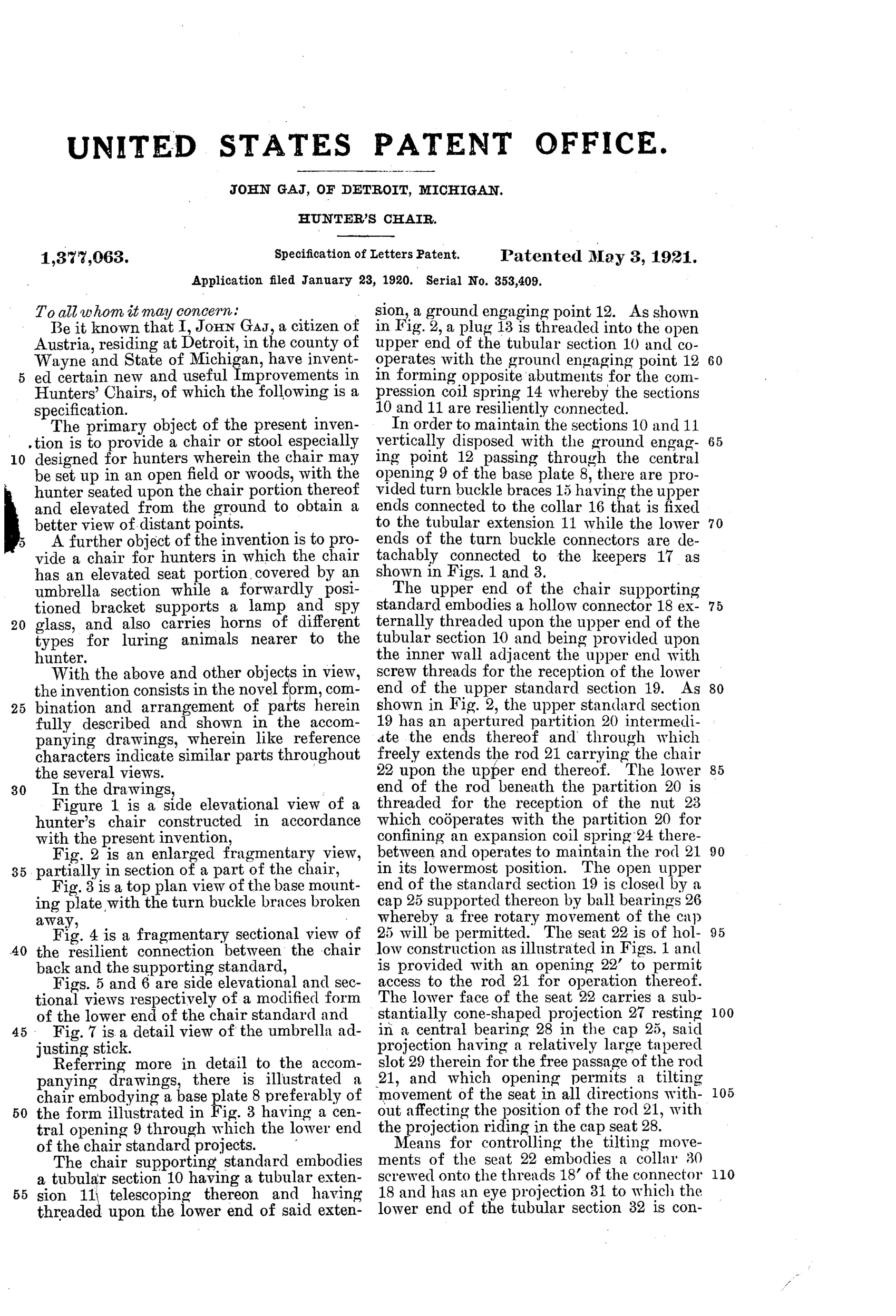
“A hunter upon the seat 22 may sound the horns 54 to attract animals of different species and during darkness, the lamp 51 may be employed for determining the position of an object.”— John Gaj, from the specification
Paper patent — likely never produced
The cost and complexity of the full assembly make production implausible, and no manufactured example or commercial descendant is known.
➶ Commentary
Let's be honest about why this one is on the site at all: buried in John Gaj's Detroit-drafted extravaganza, on the bracket labeled 54, sit a set of 'luring horns' — the claim being that a hunter could 'sound the horns to attract animals of different species.' That's the whole game-call content. Everything else is a spike-footed, turnbuckle-braced, telescoping pedestal with a tilting, self-leveling seat under an umbrella fitted with round transparent windows so the occupant can survey the terrain without getting wet.
The mechanics are genuinely worked out, which is what makes the drawing worth a look. The seat rides on a cone-shaped projection in a rotatable cap, with a spring-tensioned rod running down the standard to return it to level — a gimbal-and-spring arrangement more at home on a tractor seat than in a duck blind. The base plate with its three guyed braces and cushioned ground point shows Gaj thinking seriously about wind loads on what is, effectively, a one-man watchtower with a flag on top.
As a call, the horns are an afterthought with no reed geometry, no tuning, nothing a callmaker would recognize. As a hunting station, it's a dead end: any animal within a mile would see the umbrella first. It sits in the record as a charming reminder that the patent office asked only for novelty, never for stealth.
Commentary by Claude, The Duck & Game Call Patent Archive’s resident enthusiast