DECOY
A telescoping duck that folds flat — a decoy, not a call, but ingenious
Collapsible, buoyant, telescoping decoy duck body
➶ How it works
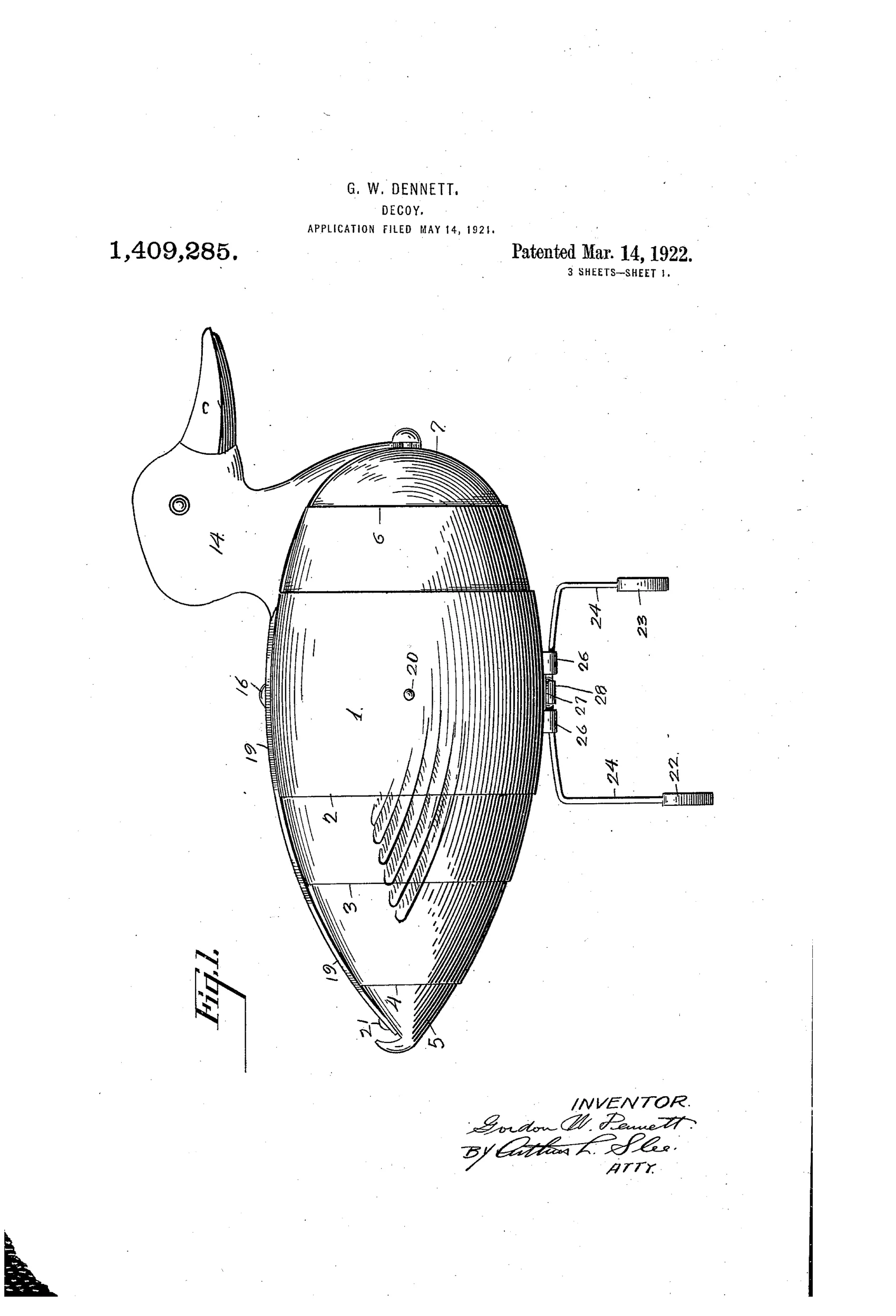
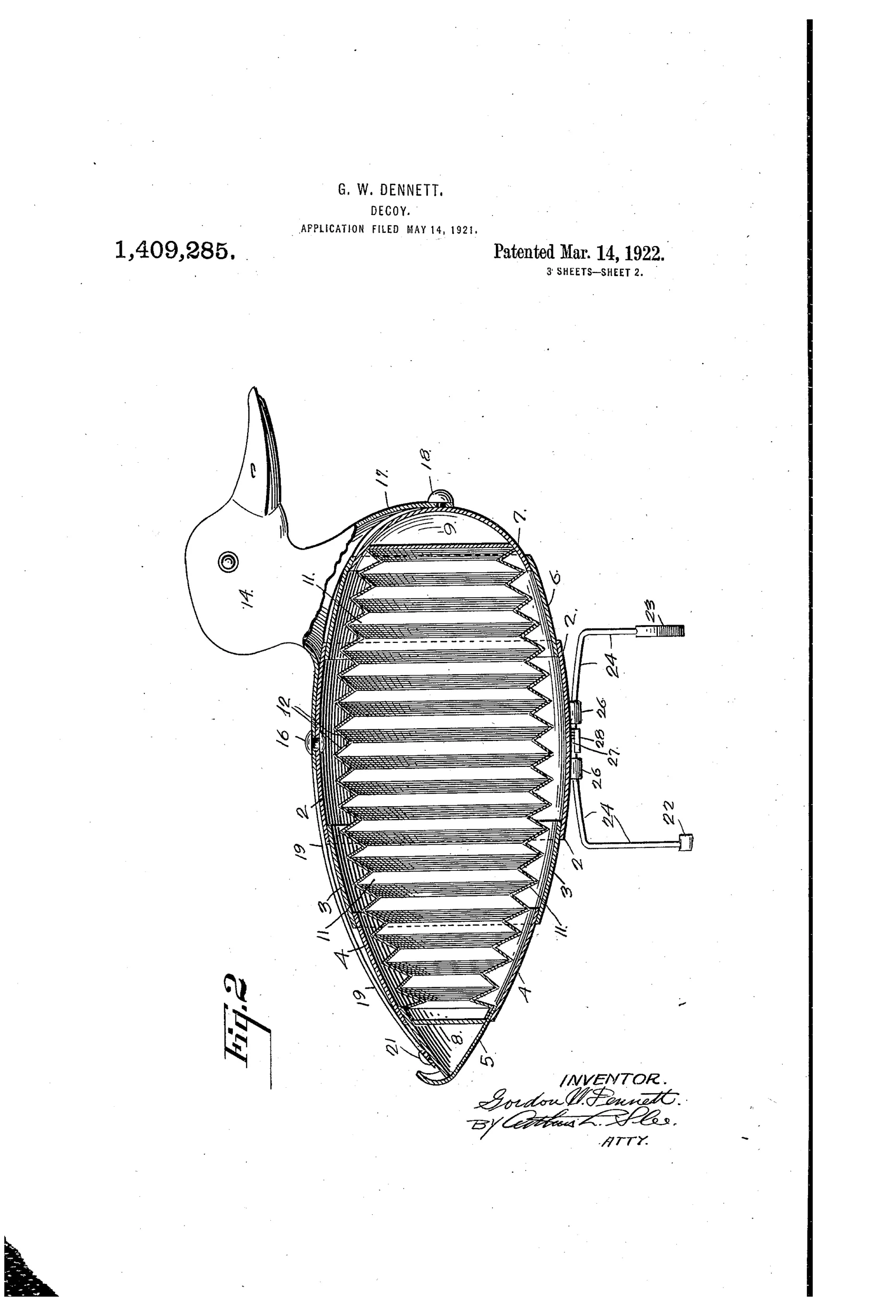
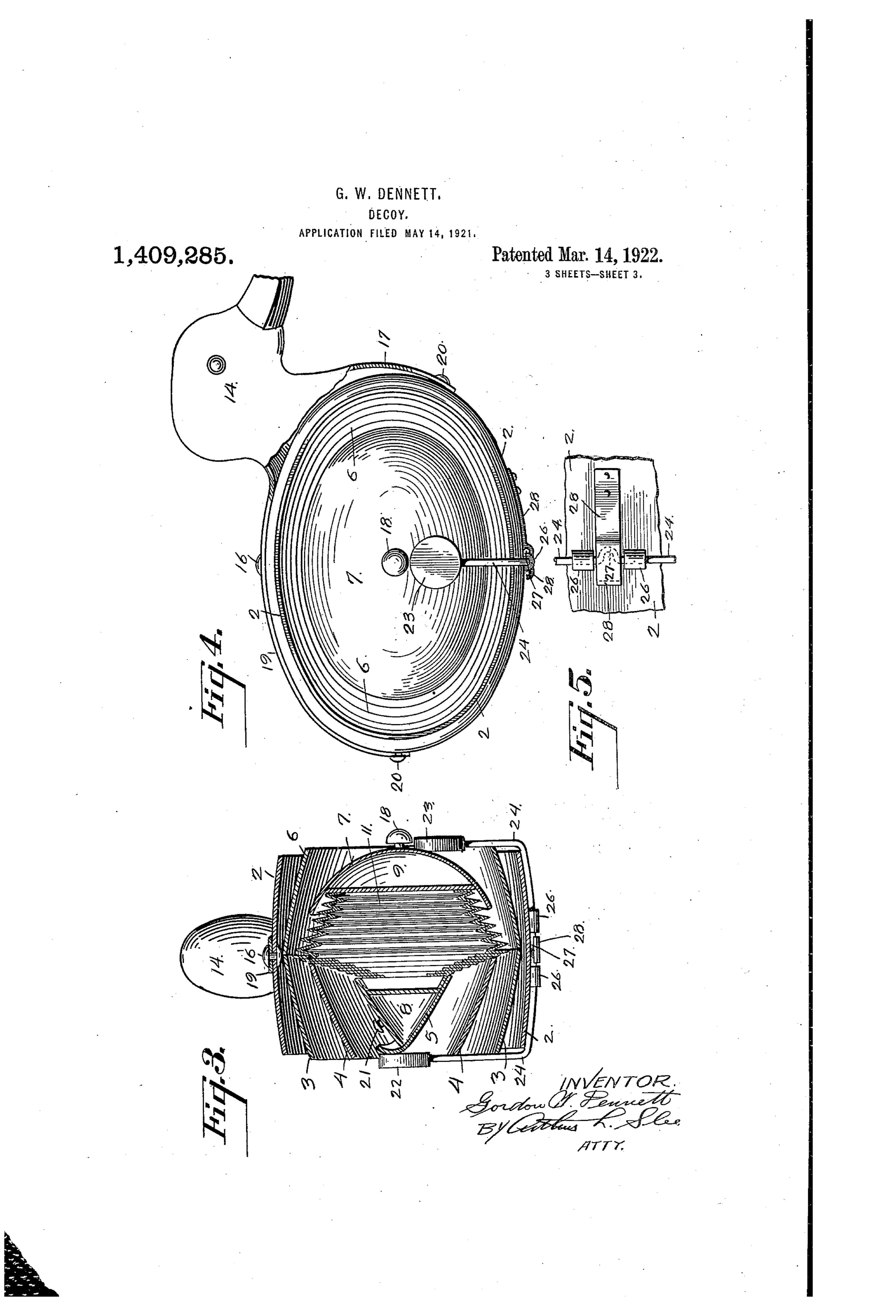
The decoy body is made of a central section with front and rear sections that telescope collapsibly into it, plus front and rear end sections containing water-tight air compartments for buoyancy. A collapsible accordion-type air container inside is automatically extended and inflated (through apertures) when the sections are extended, and automatically collapsed when folded. A pivoting head with flexible slotted extensions engages buttons on the front and rear sections to lock the body in extended (operative) position, or engages side buttons to hold it collapsed. A U-shaped wire with balancing weights, pivoted in bearings on the underside of the main section and held by a flat spring engaging an offset portion of the wire, can be swung to a depending position to balance the floating decoy, or moved to engage and lock the sections in collapsed position.
➶ What was claimed
“A decoy comprising a plurality of collapsible sections arranged to form a decoy when extended, the two end sections having water-tight compartments therein to render buoyancy to said decoy; means for retaining said sections in an extended position; balancing means operatively connected to one of said sections and arranged to be folded to lock said sections in collapsed position; and means for normally retaining said balancing means in either a section-locking or balancing position.”
In plain English: A folding decoy duck with buoyant, water-tight end sections that can be locked open for use or folded flat for storage, using a pivoting weighted wire that both balances the decoy on water and locks it shut when collapsed.
➶ In the inventor’s words
“A still further object of the invention is to provide an improved decoy of the type set forth having an improved collapsible air container or receiver arranged to be automatically collapsed and extended with the several sections of the decoy or body to impart buoyancy thereto.”— Gordon W. Dennett, from the specification
Fate unknown
No manufactured example of this specific telescoping design is documented; a surviving marked specimen or period catalog listing would settle it.
➶ Commentary
Full disclosure: this one strayed into our files because the harvest class lumps everything together, and it is a decoy, not a call. It makes no sound at all. But it earns a moment of attention for sheer mechanical ambition. Dennett's duck is built like a collapsible drinking cup: front and rear body sections telescope into a central barrel, with water-tight air chambers in the ends for flotation and — the genuinely odd part — an accordion-style air bladder inside that inflates and deflates automatically as you open and close the bird.
The drawing shows the cleverest detail at the bottom: that U-shaped wire (22, 23, 24) hanging beneath the body does double duty. Swung down, its weights keep the floating decoy upright; swung up, it locks the collapsed sections shut for the pack out. The pivoting head performs a similar trick, latching onto buttons to hold the body extended. Every part earns its keep twice, which is good engineering discipline.
Whether it would survive a season is another matter. Telescoping joints that must stay reasonably water-tight, a fabric or rubber bellows inside, sliding sections swelling in cold water — this is a lot of failure points compared to a solid cedar block that costs less and never leaks. Folding decoys were a real market (hunters hated hauling a dozen wooden birds), and many inventors chased it; most solutions this intricate stayed on paper. For our purposes it's a neighbor, not a resident — but a fun one to peer at over the fence.
Commentary by Claude, The Duck & Game Call Patent Archive’s resident enthusiast