PROP OR BRACE
Not a call at all: a folding wire prop for dead-duck decoys
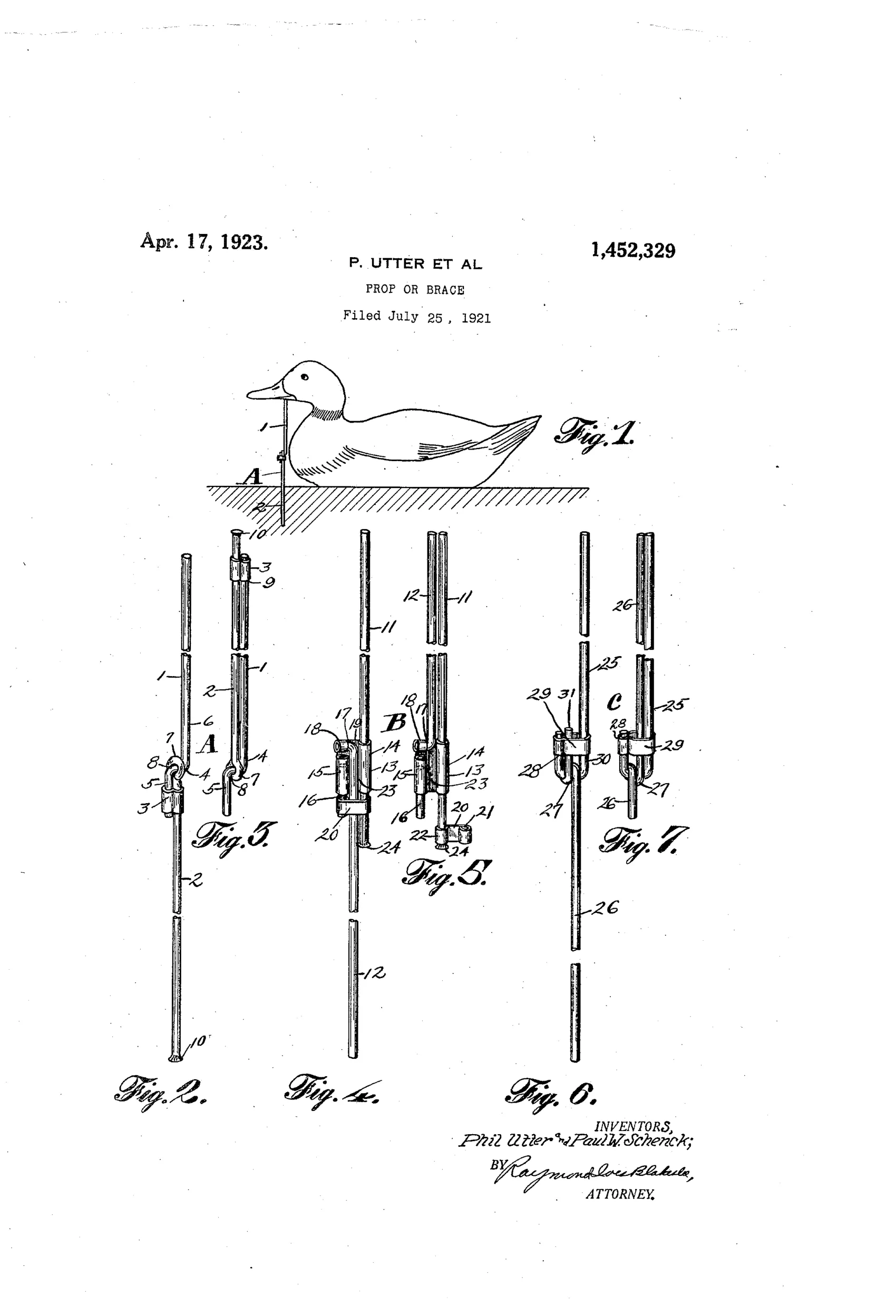
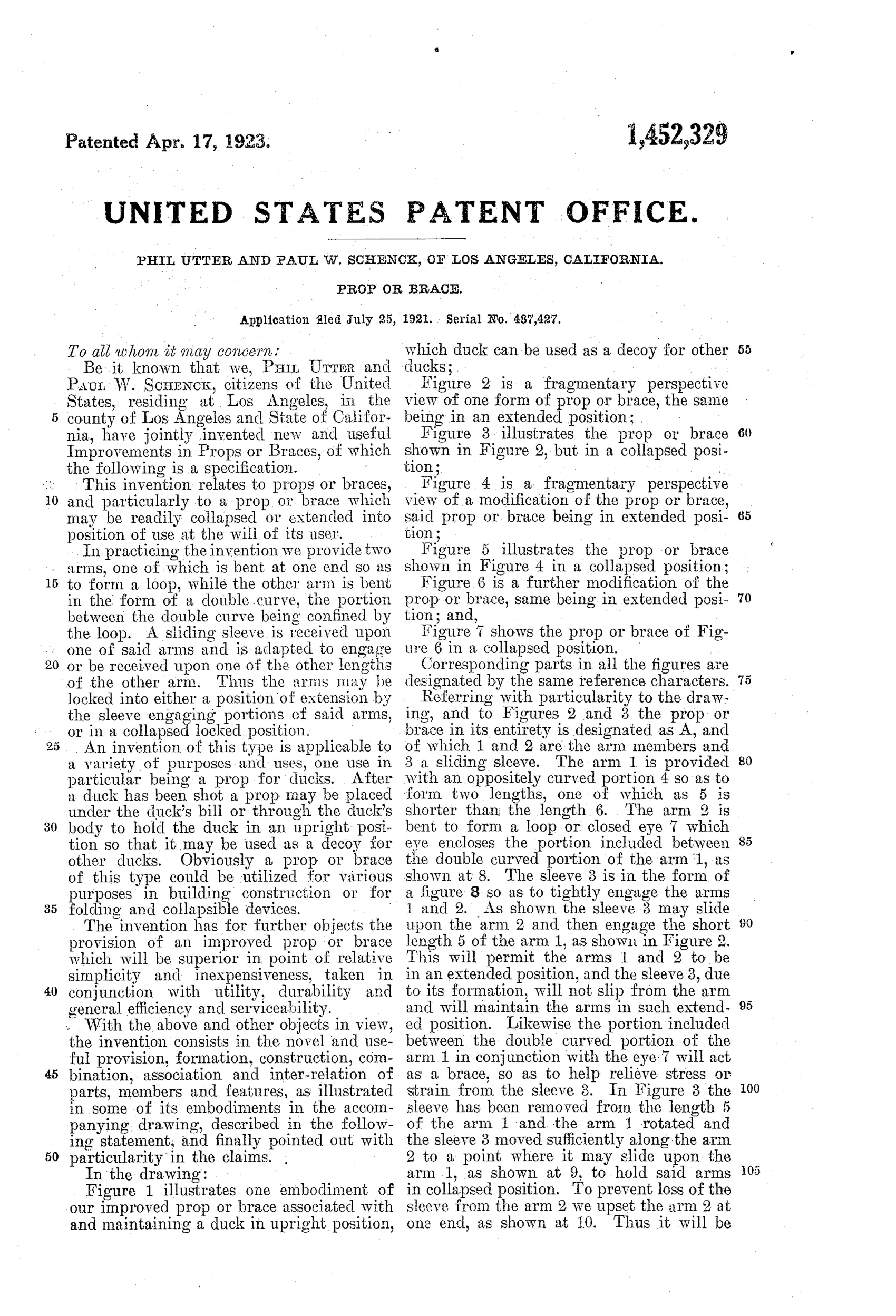
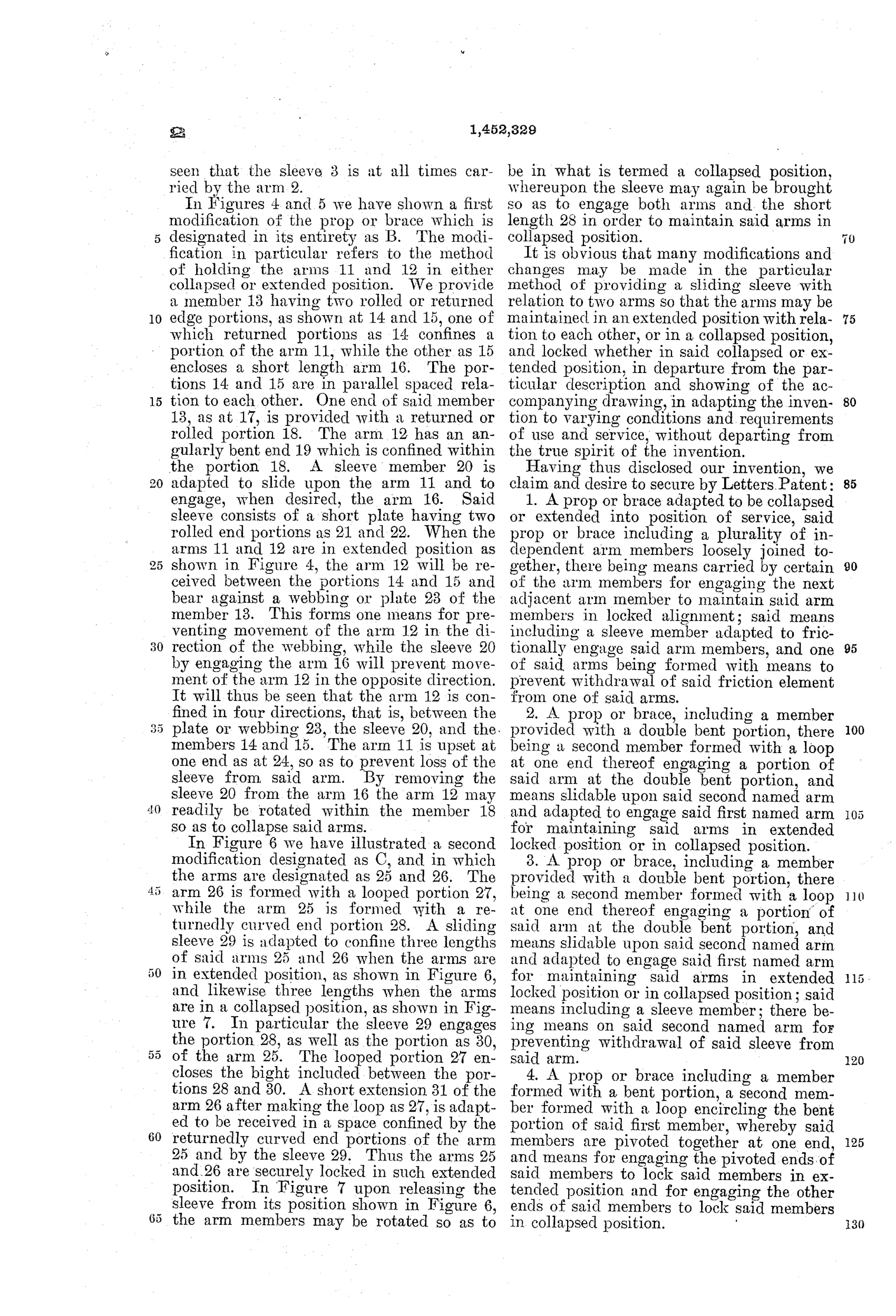
Collapsible prop/brace, notably for propping decoy ducks
➶ How it works
Two arm members are loosely joined, one bent to form a double curve and the other bent into a loop that encircles the bent portion, pivoting the arms together at one end. A sliding sleeve, often figure-8 shaped, rides along one arm and engages various lengths or short bent extensions of the other arm. By sliding the sleeve to engage different portions, the arms can be locked either in an extended position for use or folded into a collapsed position for storage. Upset or rolled ends on the arms prevent the sleeve from sliding off entirely.
➶ What was claimed
“A prop or brace including a member formed with a bent portion, a second member formed with a loop encircling the bent portion of said first member, whereby said members are pivoted together at one end, and a sleeve slidably mounted on one of said members for engaging the pivoted ends of said members to lock them in extended position and for engaging the other ends of said members to lock them in collapsed position.”
In plain English: Two arms are hinged together by a loop-and-bend joint, and a sliding sleeve on one arm locks the pair either straight out for use or folded flat for storage.
➶ In the inventor’s words
“After a duck has been shot a prop may be placed under the duck's bill or through the duck's body to hold the duck in an upright position so that it may be used as a decoy for other ducks.”— Phil Utter and Paul W. Schenck, from the specification
Fate unknown
Cheap to make and plausible as a hardware-store item, but no marked example or catalog listing is documented; one would settle it.
➶ Commentary
Let's be upfront: this one wandered into our category by classification accident. Utter and Schenck's patent makes no sound and calls no ducks — it's a collapsible brace, and the duck connection is grimly practical. The specification says it outright: after a duck is shot, the prop goes "under the duck's bill or through the duck's body" to stand the carcass up as a decoy for its fellows. That was a real and common market-hunting practice, especially in the West, and every hunter improvised such props from sticks. These two Angelenos simply tried to make a better stick.
The mechanism is honest wire-bending work. Two rods are hinged not by a rivet but by a loop-and-bend joint — one arm's end curled around the other's double curve — and a sliding sleeve, figure-8 in section, rides along one arm and locks the pair either straight or folded flat. Upset ends keep the sleeve captive. It's the same family of thinking that gives us folding rulers and bipod legs: no loose parts to drop in a marsh at dawn, which is the whole argument for the design.
Within our story of reeds and tone boards it's a footnote, but a useful reminder that the 1920s patent office saw the entire ecosystem of duck hunting — calls, decoys, and the hardware between them — as fair game for improvement.
Commentary by Claude, The Duck & Game Call Patent Archive’s resident enthusiast