DECOY STRAP
Not a call at all: a leg strap for tethering live decoy ducks
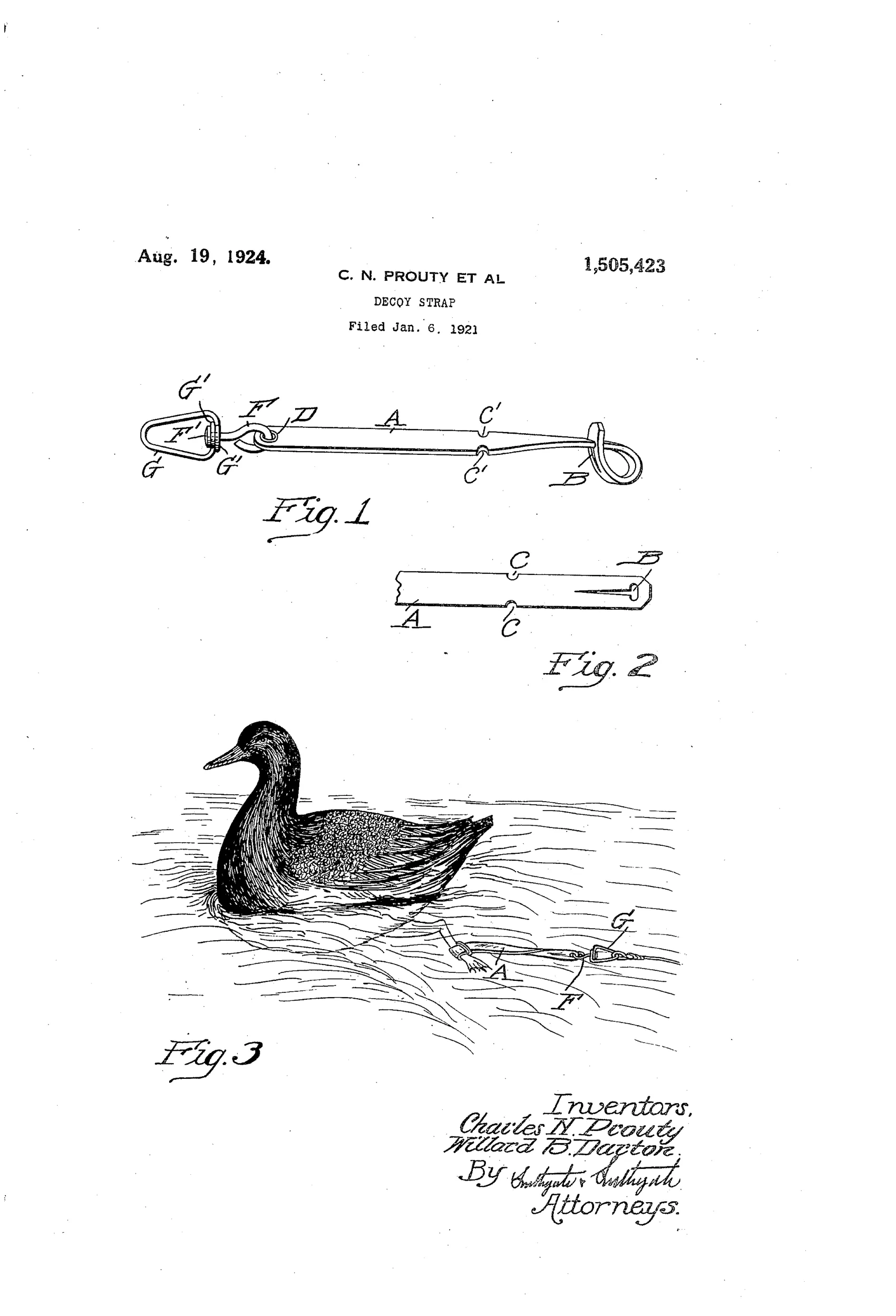
A tethering strap for duck decoys
➶ How it works
A flexible strip of material, such as leather, has a button hole slot near one end and one or more notches near the other end so the strap can be looped through itself to form a locked loop around the decoy's leg or neck. An eyelet is set near the free end of the strap, and a hook with a headed end engages that eyelet. A separate loop with coiled eyes at each end fits around the hook's headed end, forming a swivel joint that lets the anchoring line rotate freely. This swivel action keeps the tether from snarling as the decoy moves in the water.
➶ What was claimed
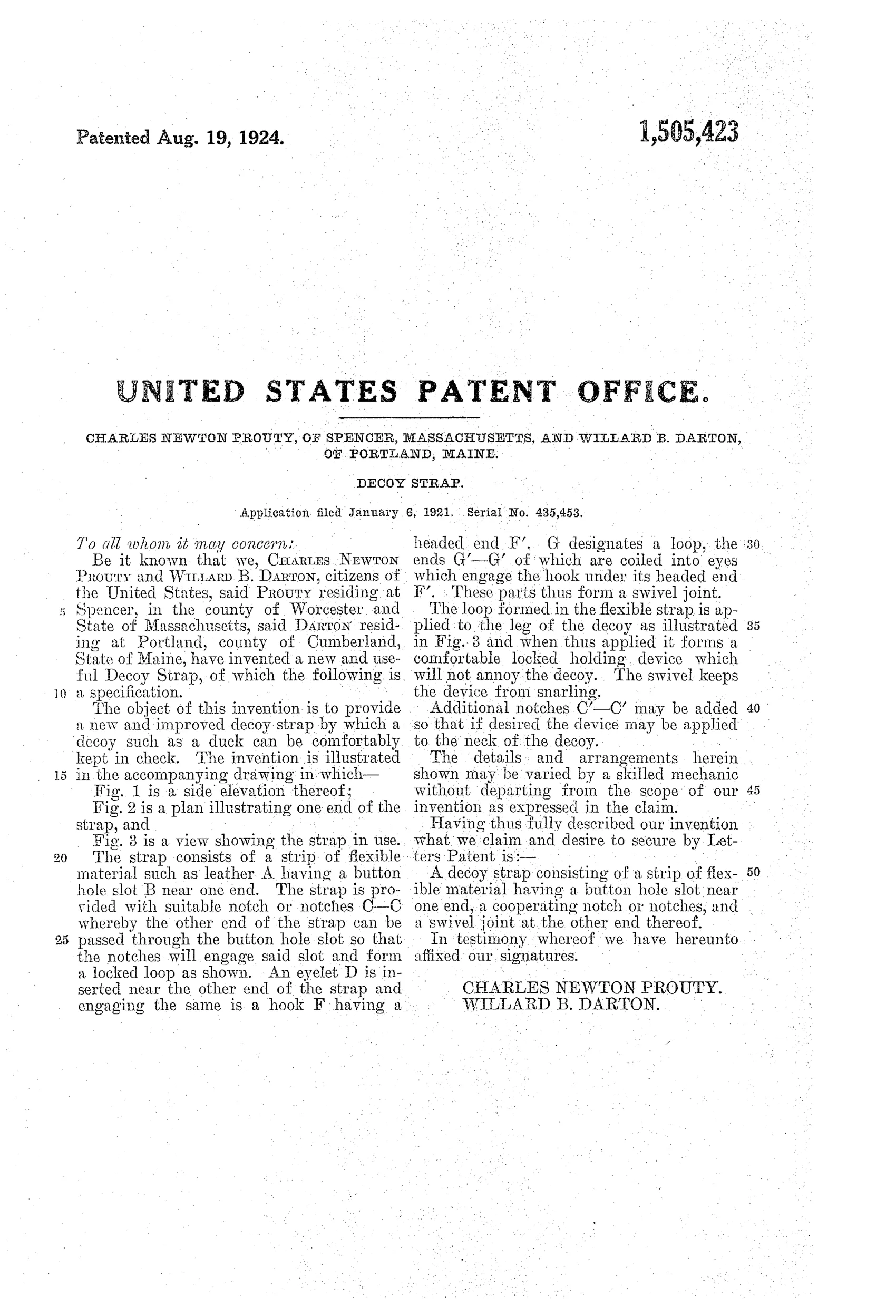
“A decoy strap consisting of a strip of flexible material having a button hole slot near one end, a cooperating notch or notches, and a swivel joint at the other end thereof.”
In plain English: The invention is a decoy strap made of a flexible strip with a buttonhole slot and matching notch at one end to form a locking loop, plus a swivel joint at the other end.
➶ In the inventor’s words
“The loop formed in the flexible strap is applied to the leg of the decoy as illustrated in Fig. 3 and when thus applied it forms a comfortable locked holding device which will not annoy the decoy.”— Charles Newton Prouty and Willard B. Darton, from the specification
Fate unknown
Simple leather goods like this were easily made and rarely marked; no attributed surviving example is documented, and one would be nearly impossible to identify.
➶ Commentary
Let's be upfront: this one wandered into our category by way of the broad hunting-gear class, and it makes no sound whatsoever. But it earns its page for one telling phrase in the specification — the strap "will not annoy the decoy." You don't worry about annoying a block of cedar. Prouty and Darton were building hardware for live decoys, the tame mallards and callers that market and sport hunters staked out on the water to draw wild birds in. Fig. 3 shows exactly that: a real duck swimming with the strap around its leg. Live decoys were entirely legal in 1921 and wouldn't be banned federally until 1935, so this patent sits in the last legal decade of the practice.
The mechanics are humble and sensible. A leather strip with a buttonhole slot and notches locks around the bird's leg without a buckle to chafe, and the business end carries a hook-and-eyelet swivel so the anchor line rotates freely as the duck paddles in circles — which a live, bored duck will do all day. Anyone who has watched a tethered animal wind itself into a knot understands the problem being solved.
As invention it's a leash with a swivel, which harness makers had known for a century. As a document of how ducks were actually hunted before the Migratory Bird Treaty Act regulations tightened, it's a nice small artifact — adjacent to our calls, and a reminder that the best "call" of the era was often a live hen quacking on a string.
Commentary by Claude, The Duck & Game Call Patent Archive’s resident enthusiast