HUNTER'S DECOY DUCK
A silent decoy that borrows wave power to shake its own head
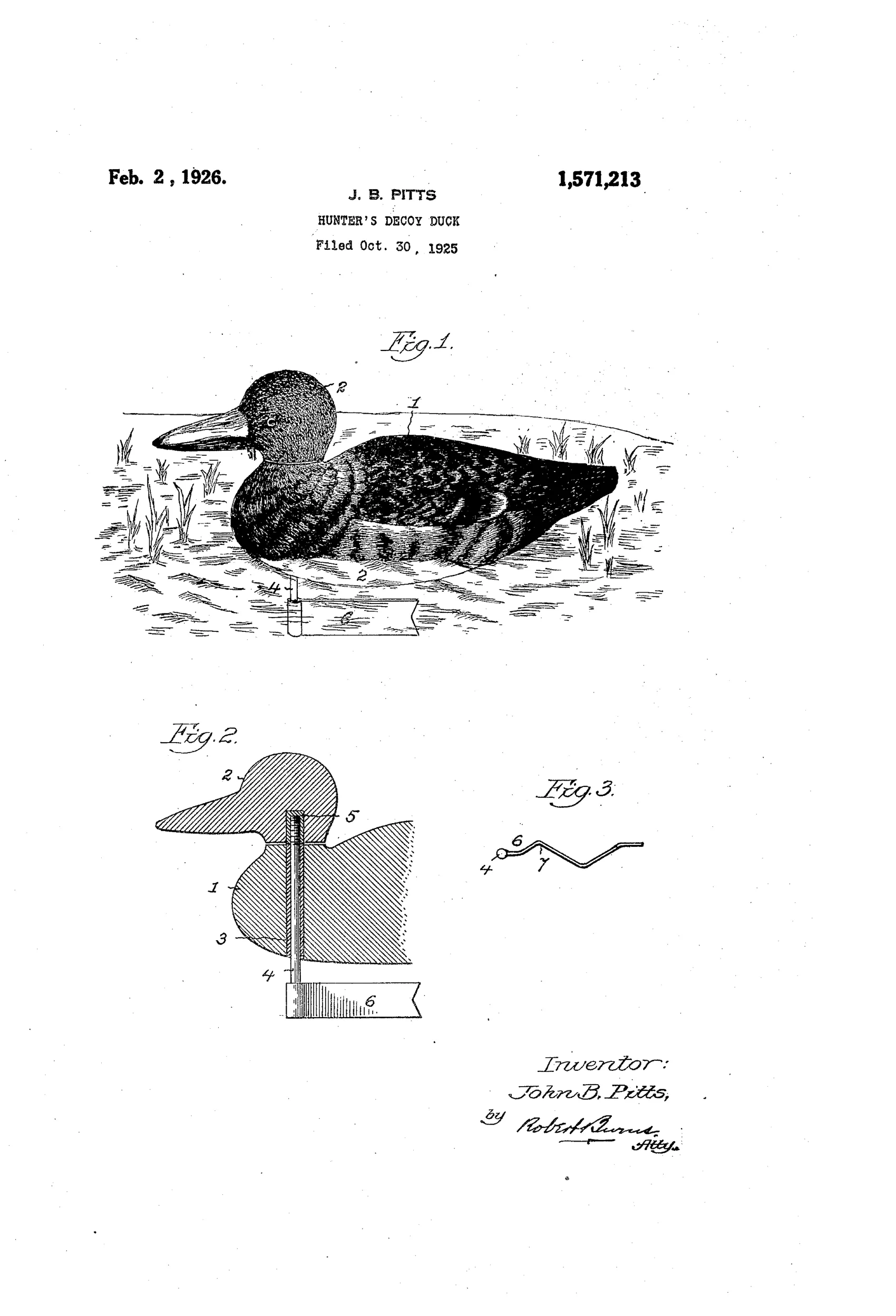
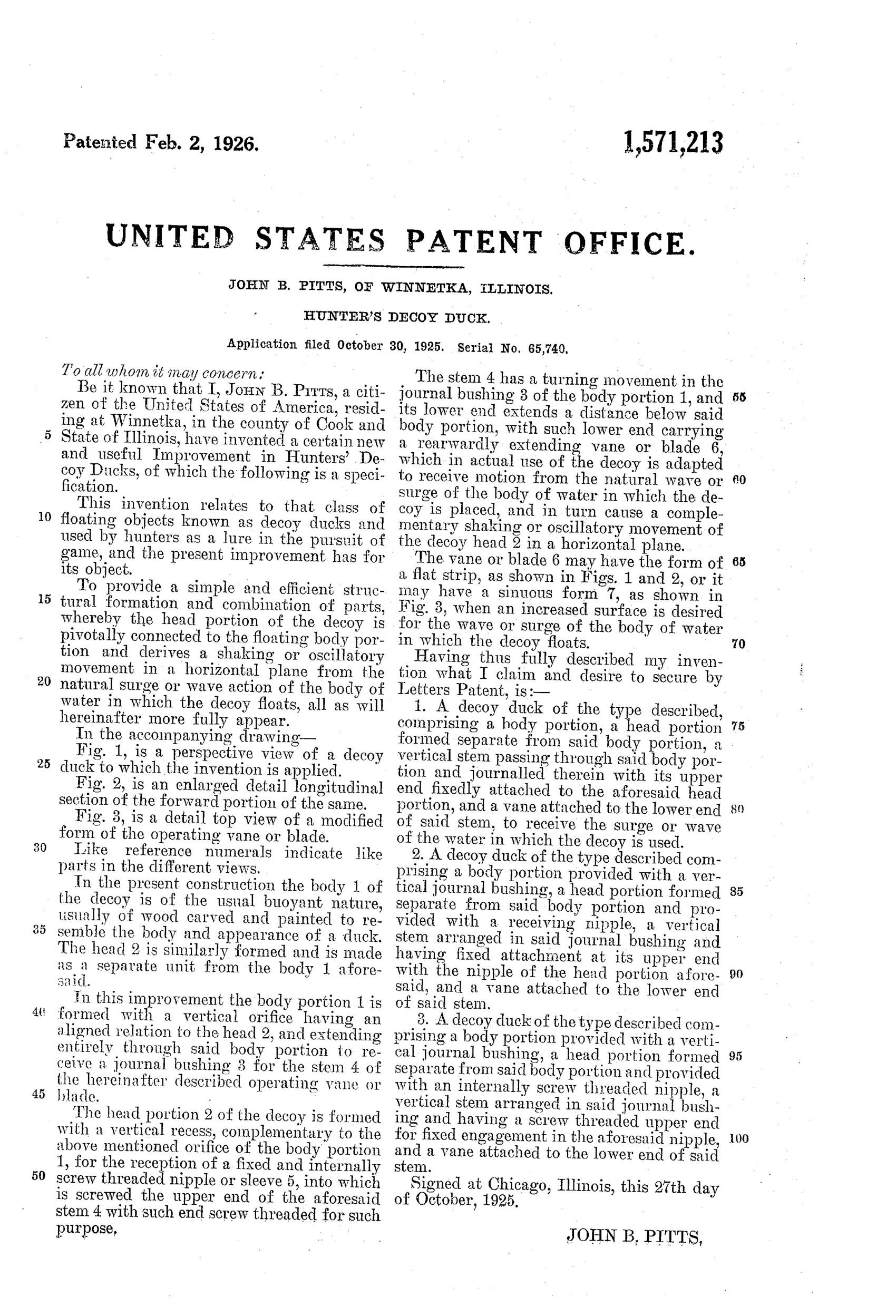
Decoy duck with wave-actuated pivoting head
➶ How it works
The decoy body floats normally on the water while a separate head portion is joined to it through a vertical stem passing through a journal bushing in the body. The stem's upper end fixes into a threaded nipple in the head, and its lower end extends below the body carrying a rearwardly extending vane or blade. As the surge or wave motion of the water strikes this submerged vane, it turns the stem within its bushing, producing a complementary shaking or oscillatory movement of the head in a horizontal plane. The vane may be a simple flat strip or a sinuous blade of increased surface area to better catch the water's motion.
➶ What was claimed
“A decoy duck of the type described, comprising a body portion, a head portion formed separate from said body portion, a vertical stem passing through said body portion and journalled therein with its upper end fixedly attached to the aforesaid head portion, and a vane attached to the lower end of said stem, to receive the surge or wave of the water in which the decoy is used.”
In plain English: A decoy duck with a separate head mounted on a stem through the body, where a vane on the stem's lower end catches water movement to turn the head.
➶ In the inventor’s words
“whereby the head portion of the decoy is pivotally connected to the floating body portion and derives a shaking or oscillatory movement in a horizontal plane from the natural surge or wave action of the body of water in which the decoy floats”— John B. Pitts, from the specification
Fate unknown
No manufactured example or maker attribution is documented; a decoy with this stem-and-vane hardware surfacing in a collection would settle it.
➶ Commentary
Full disclosure up front: this one makes no sound at all, so it sits at the edge of our beat. Pitts's 1925 filing is a decoy, filed in the broad hunting-gear class that also houses calls, and it earns a look here mostly as a reminder of what call makers were competing against — the arms race to make dead-still spreads look alive. Callers do it with sound; Pitts tries to do it with mechanics.
The idea is genuinely tidy. The head is a separate piece, fixed to a vertical stem that runs down through a journal bushing in the body. Below the waterline the stem carries a rearward vane — Fig. 3 shows the fancier sinuous version, kinked to catch water from more angles. Every surge or ripple that pushes the vane rotates the stem, and the head swivels in response. No springs, no clockwork, no strings back to the blind: the lake itself is the motor. Fig. 2 is the part a casual reader skips — the threaded nipple in the head and the bushing detail show he actually thought about how you'd assemble and service this in a wet, freezing marsh.
Would it work? In chop, probably yes, and a subtly bobbing head beats a frozen one. In flat calm — exactly when ducks study a spread hardest — the mechanism goes dead. Motion decoys kept getting reinvented for a century after this, which tells you both that the problem was real and that no wave-driven answer ever quite settled it.
Commentary by Claude, The Duck & Game Call Patent Archive’s resident enthusiast