Decoy-Duck.
A shot-proof, self-healing rubber decoy — filed from Montreal, and not a call at all
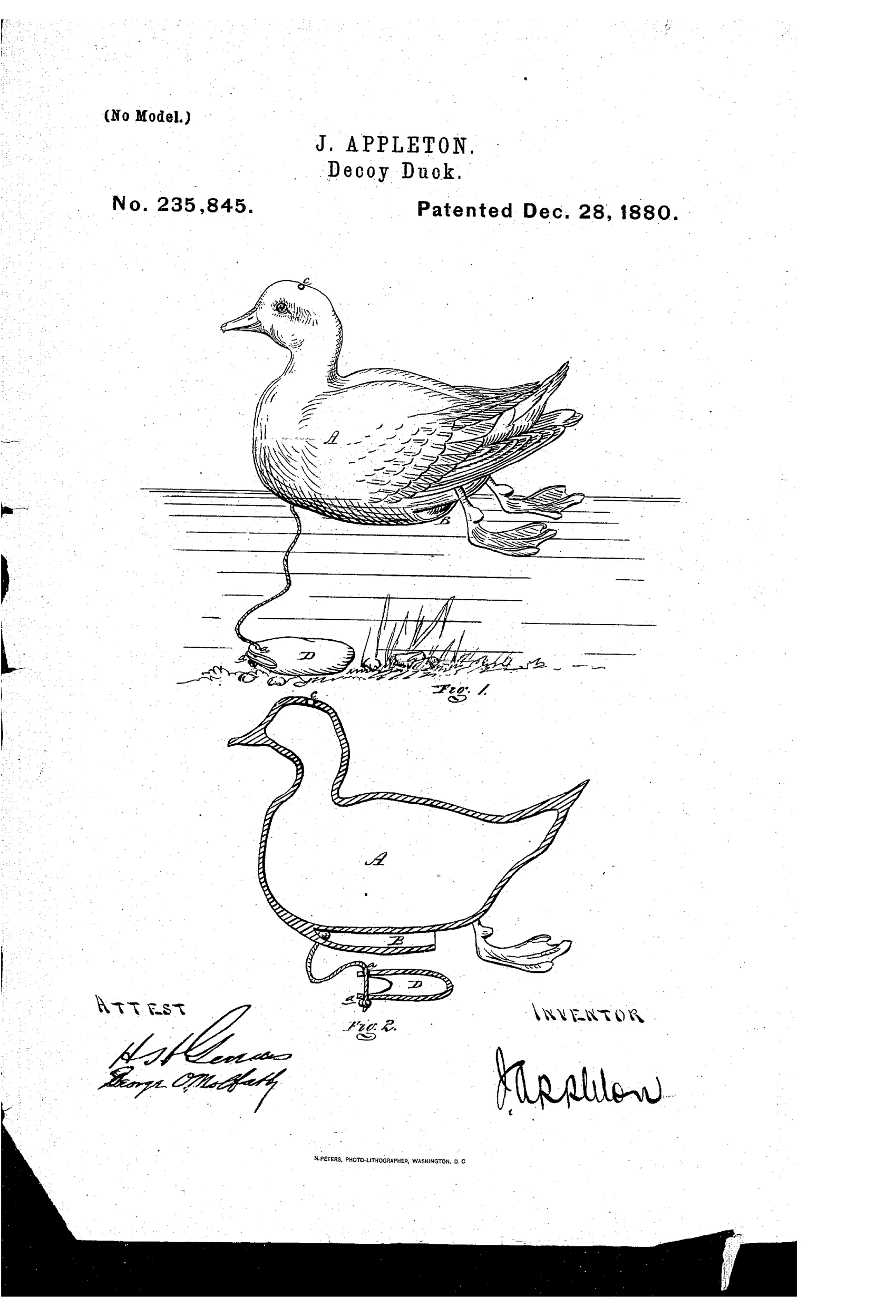
Self-inflating rubber decoy duck
➶ How it works
The body is cast from thin hollow rubber shaped like a blue-bill duck, with a small aperture in the head allowing air to escape so the body can be compressed flat for transport. When pressure is released, air re-enters through this opening and the body springs back to its original shape. A pouch beneath the body holds loose ballast such as stone or sand to balance the duck on the water, and a separate rubber pocket anchor is filled with stone or gravel and cinched shut with a cord to hold the decoy in place.
➶ What was claimed
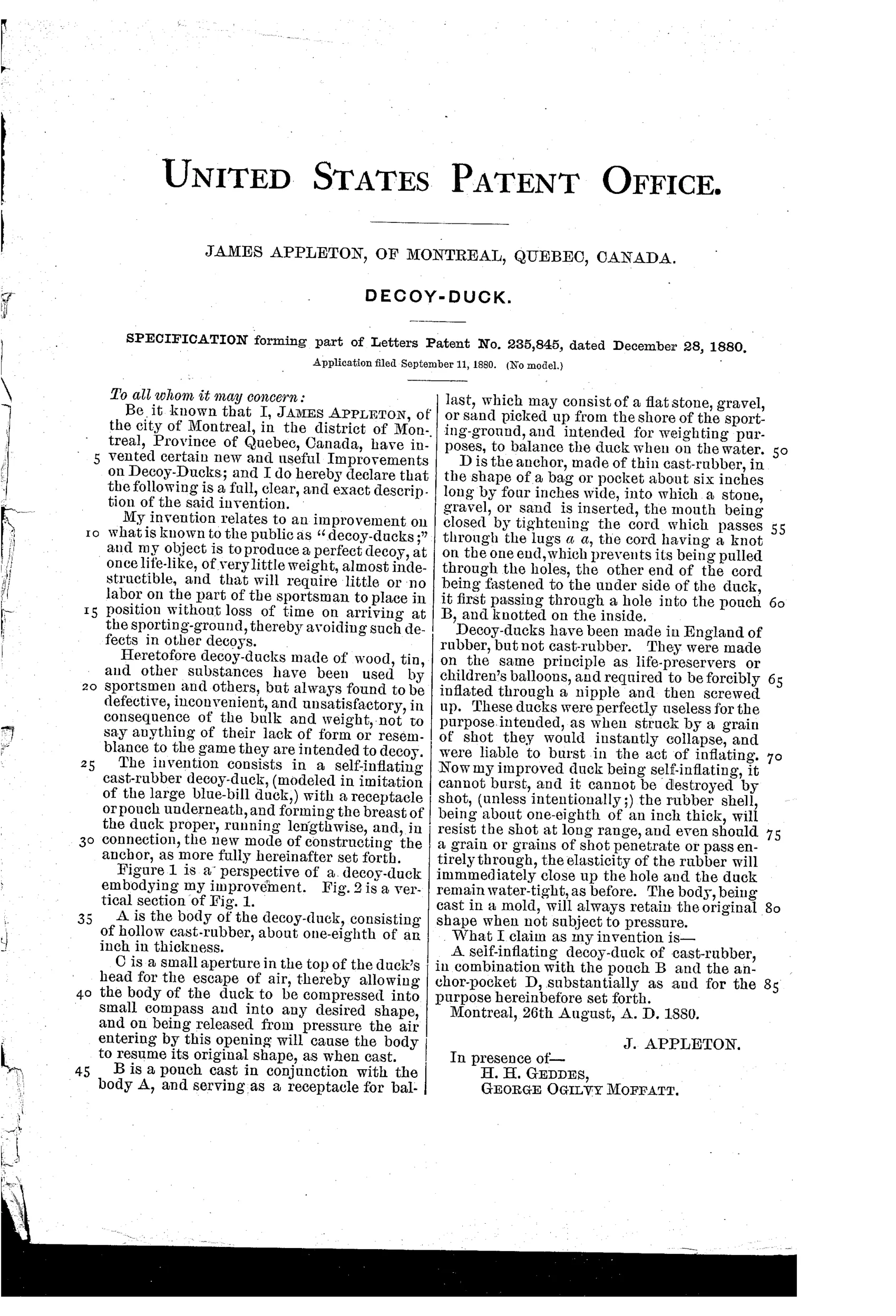
“A self-inflating decoy-duck of cast-rubber, in combination with the pouch B and the anchor-pocket D, substantially as and for the purpose hereinbefore set forth.”
In plain English: The invention claims a self-inflating rubber decoy duck combined with a ballast pouch and a separate anchor pocket, working together as described.
➶ In the inventor’s words
“Now my improved duck being self-inflating, it cannot burst, and it cannot be destroyed by shot, (unless intentionally;) the rubber shell, being about one-eighth of an inch thick, will resist the shot at long range, and even should a grain or grains of shot penetrate or pass entirely through, the elasticity of the rubber will immmediately close up the hole and the duck remain water-tight, as before.”— James Appleton, from the specification
Fate unknown
Rubber decoys did exist commercially in the era, but I know of no example traceable to Appleton's patent; a marked or documented specimen would settle it.
➶ Commentary
Full disclosure up front: this is a decoy, not a call. It lives in the same broad hunting-gear patent class our duck calls do, which is how it wanders onto these pages, but nobody blew into it. Still, it's worth two minutes of your time for the sheer confidence of the engineering claims.
Appleton's idea is a hollow cast-rubber blue-bill about an eighth of an inch thick, with a small hole in the head. Squeeze it flat, pack a dozen in a sack, and each one breathes itself back into shape on the marsh — no pump, no valve, just the rubber's own memory. The clever detail a casual reader misses is in Fig. 2: the ballast pouch under the belly is filled with loose stone or sand in the field, so the decoy ships weightless and gets trimmed for the water on site. The anchor is the same trick — an empty rubber pocket you fill with whatever gravel is at hand and cinch with a cord.
His best claim is that a shot hole self-seals thanks to the rubber's elasticity. That's optimistic; a pellet through both walls of a cold, aging rubber shell tends to weep, not heal. But the compressible, field-ballasted decoy is a genuinely practical answer to the market hunter's real problem — hauling three dozen wooden blocks through a marsh — and inflatable and folding decoys kept getting reinvented for a century afterward.
Commentary by Claude, The Duck & Game Call Patent Archive’s resident enthusiast