PORTABLE SPORTSMAN'S SEAT
A tree seat, not a call — but the self-locking prong hinge earns a look
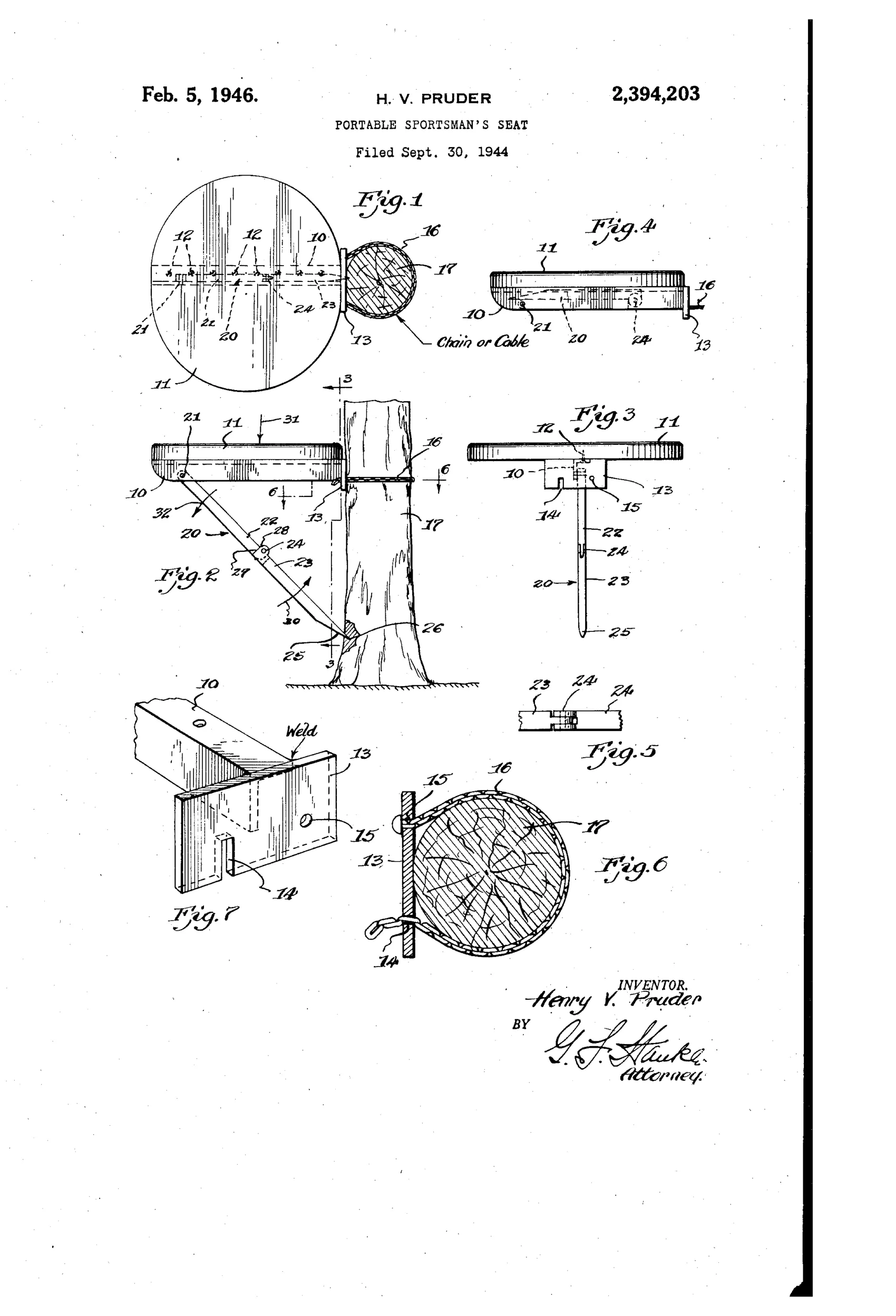
Folding seat that straps and stakes onto a tree
➶ How it works
A seat panel is mounted on an angle-bar frame with a flange welded to one end. A flexible chain or cable is permanently secured to the flange and looped around a tree or post, its free end locking into a downward-opening slot to hold the loop taut. A hinged two-part prong swings down from beneath the seat and its pointed tip is driven into the tree trunk beneath the seat level, bracing it against collapse. The prong's off-center hinge causes the seated person's weight to press the two prong sections together rather than fold them, so the leg locks rigid under load and can be folded flat against the seat underside for carrying.
➶ What was claimed
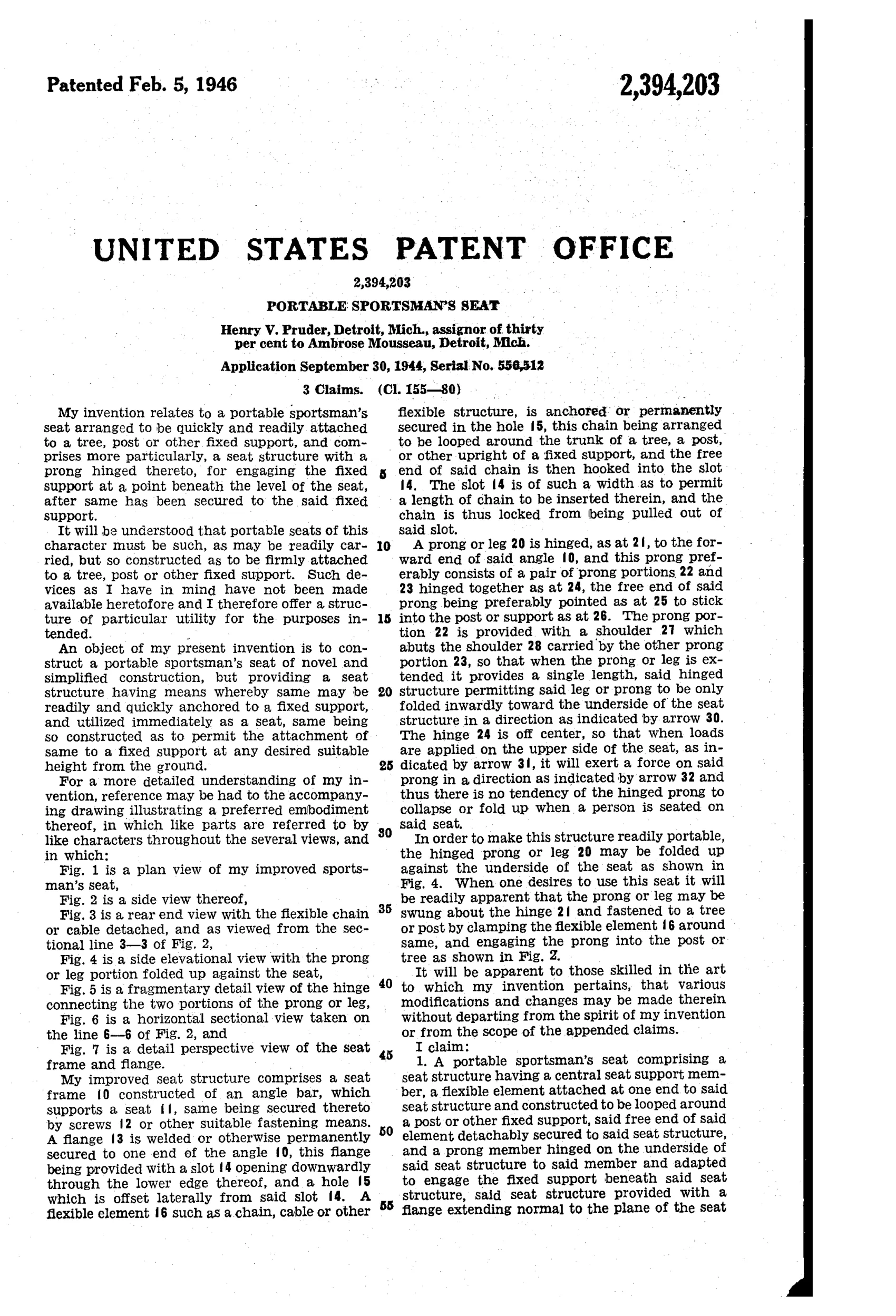
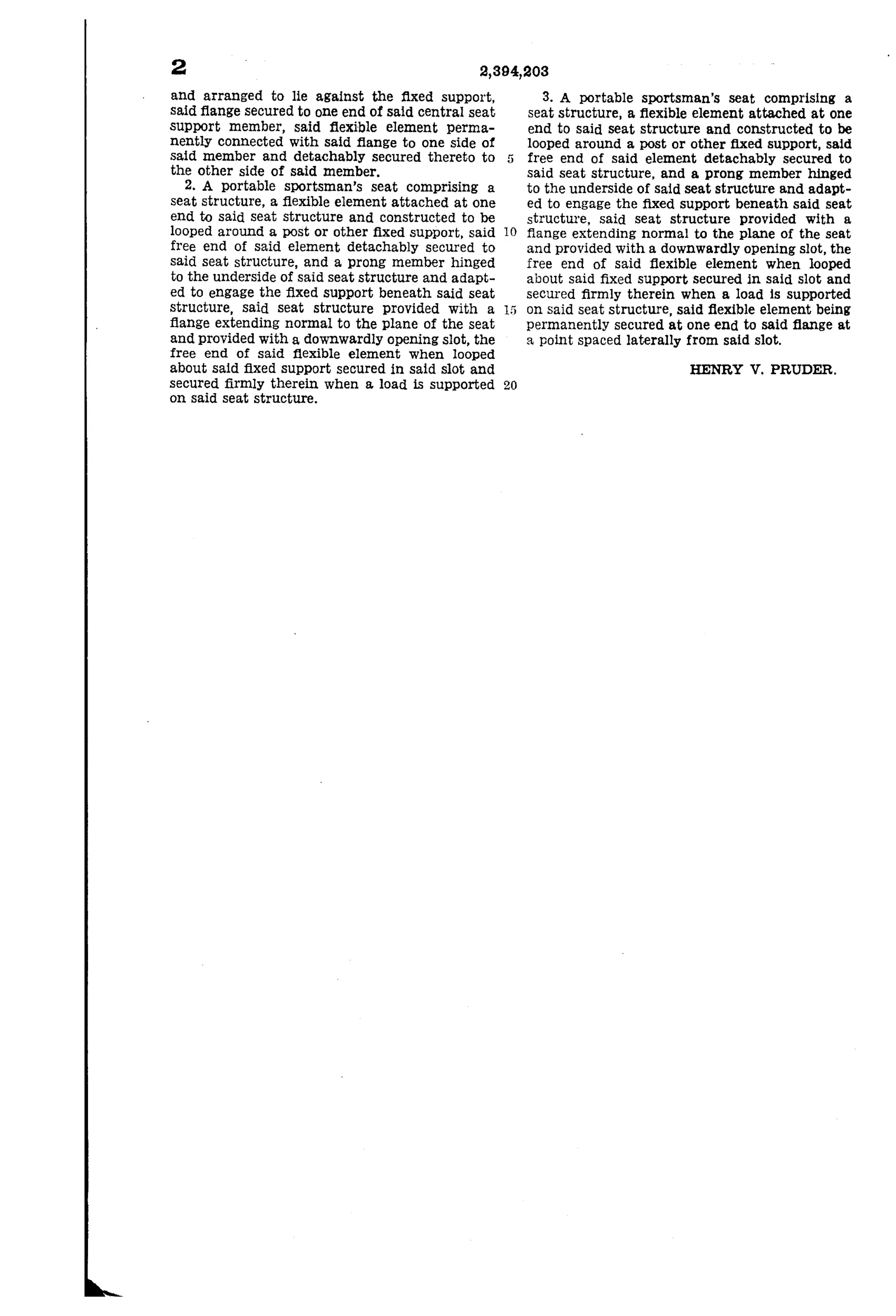
“1. A portable sportsman's seat comprising a seat structure having a central seat support member, a flexible element attached at one end to said seat structure and constructed to be looped around a post or other fixed support, said free end of said element detachably secured to said seat structure, and a prong member hinged on the underside of said seat structure to said member and adapted to engage the fixed support beneath said seat structure, said seat structure provided with a flange extending normal to the plane of the seat and arranged to lie against the fixed support, said flange secured to one end of said central seat support member, said flexible element permanently connected with said flange to one side of said member and detachably secured thereto to the other side of said member.”
In plain English: The seat has a support bar with a chain that loops around a tree and locks in a slot, plus a hinged prong underneath that digs into the tree trunk to brace the seat.
➶ In the inventor’s words
“Such devices as I have in mind have not been made available heretofore and I therefore offer a structure of particular utility for the purposes intended.”— Henry V. Pruder, from the specification
Fate unknown
No documented commercial production of this Detroit design is known to me; a marked example or a period catalog listing would settle it.
➶ Commentary
Full disclosure up front: this one is not a game call. Pruder's 1946 patent is a strap-on tree seat, the kind of broad hunting gear that shares a classification shelf with calls but makes no sound beyond the creak of a chain. It ends up on hunters' pages because it lived in the same corner of the woods — a duck hunter's backside got as much engineering attention in the 1940s as his reed and tone board.
That said, there is one genuinely tidy piece of thinking here. The folding leg is a two-part prong with a deliberately off-center hinge, shown in the Fig. 5 detail. Because the hinge pin sits off the load line, a seated hunter's weight forces the two prong sections to press together rather than fold — the leg locks itself rigid exactly when it matters, with no latch, pin, or wing nut to fumble in cold gloves. Unweighted, it folds flat under the seat for the walk in. That's the sort of self-acting geometry a good call maker would appreciate: the mechanism disciplined by use itself.
The chain-and-slot mount is more ordinary — loop the tree, drop the free end into a downward-opening slot, let tension hold it. It works on a straight trunk and gets dicey on a tapered or barky one. As a design it's a workmanlike wartime filing, a direct ancestor of the modern tree-stand seat, and a reminder of how broad the 'sportsman's equipment' patent class really is.
Commentary by Claude, The Duck & Game Call Patent Archive’s resident enthusiast