MECHANICAL DECOY
Wave power flaps the wings: a decoy, not a call, but a clever one
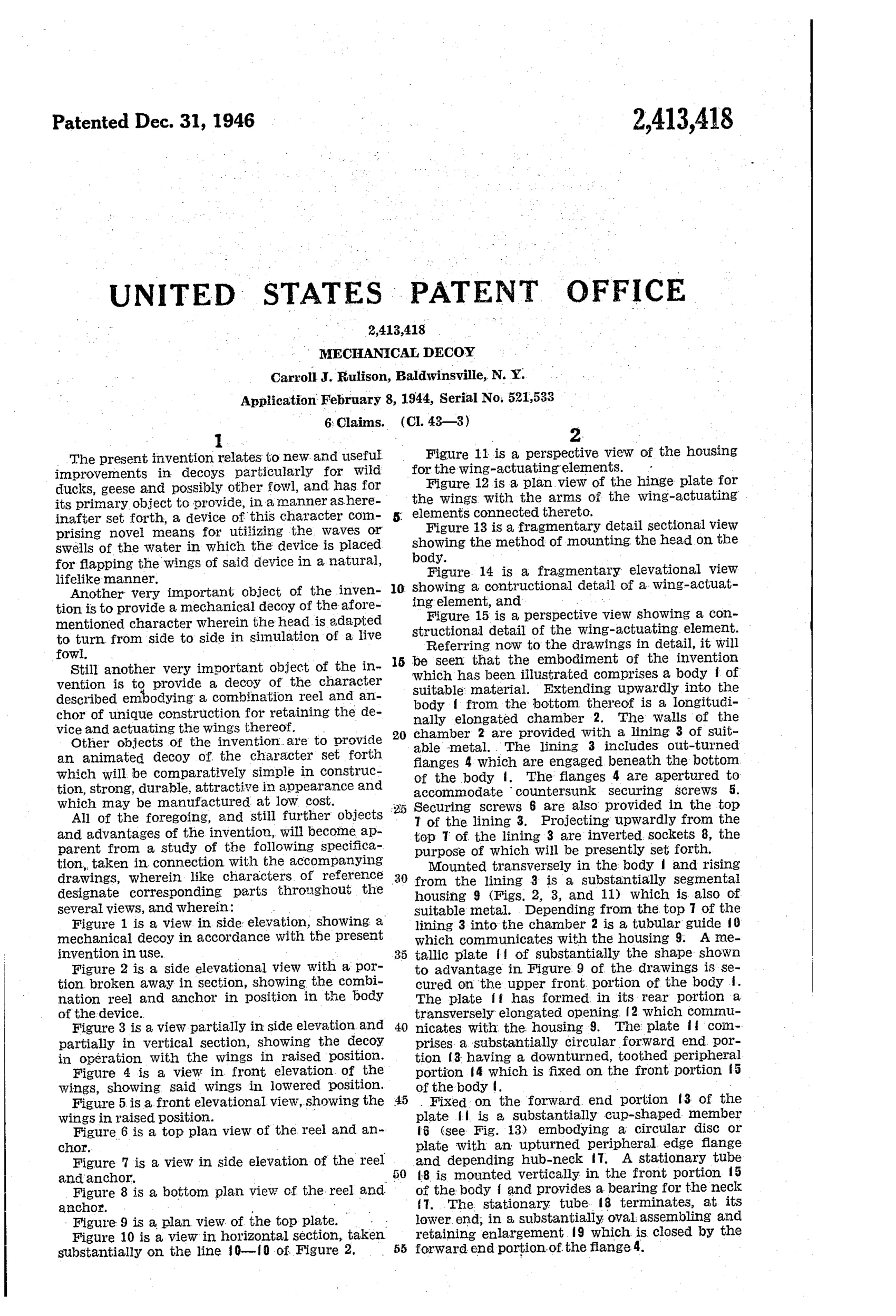
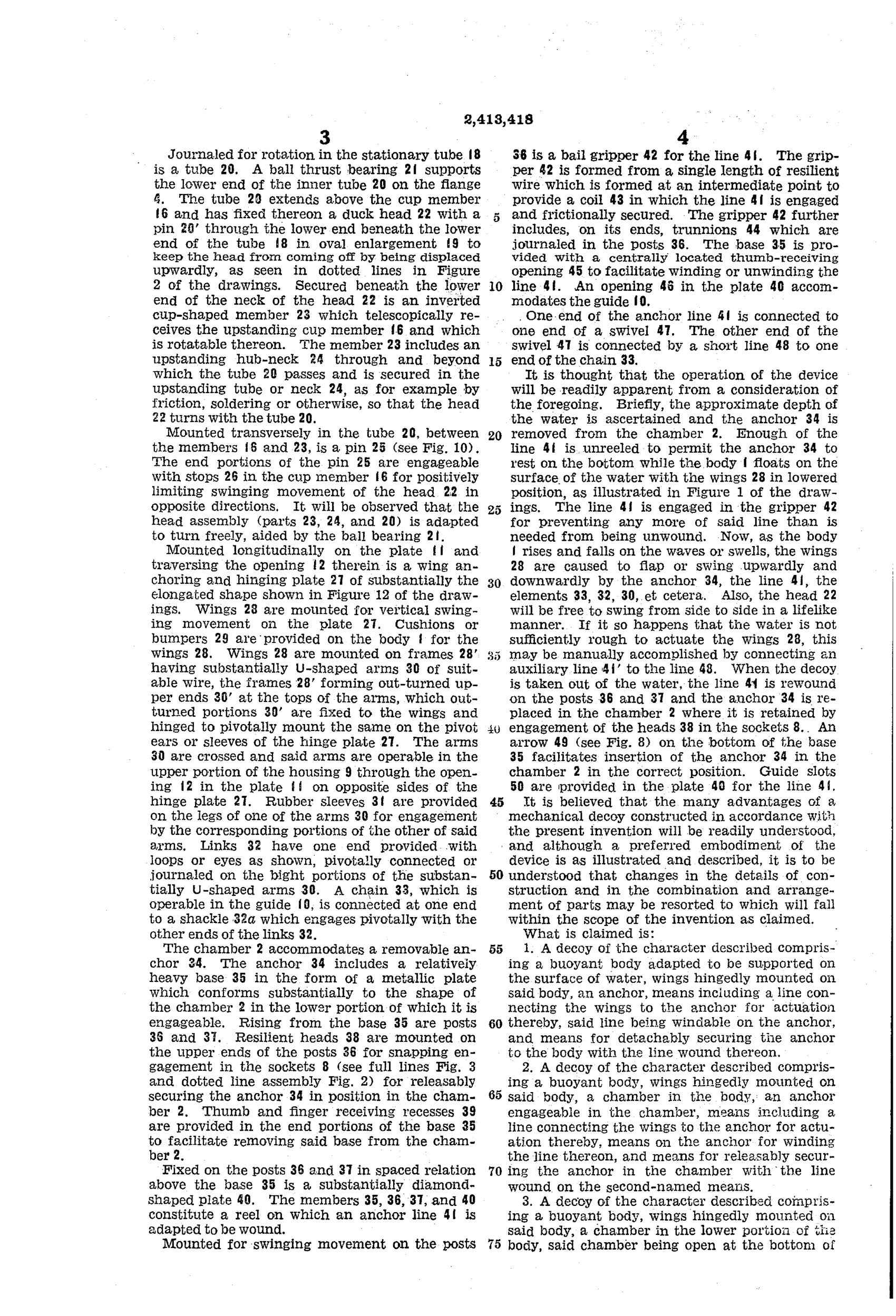
Wave-powered flapping-wing waterfowl decoy
➶ How it works
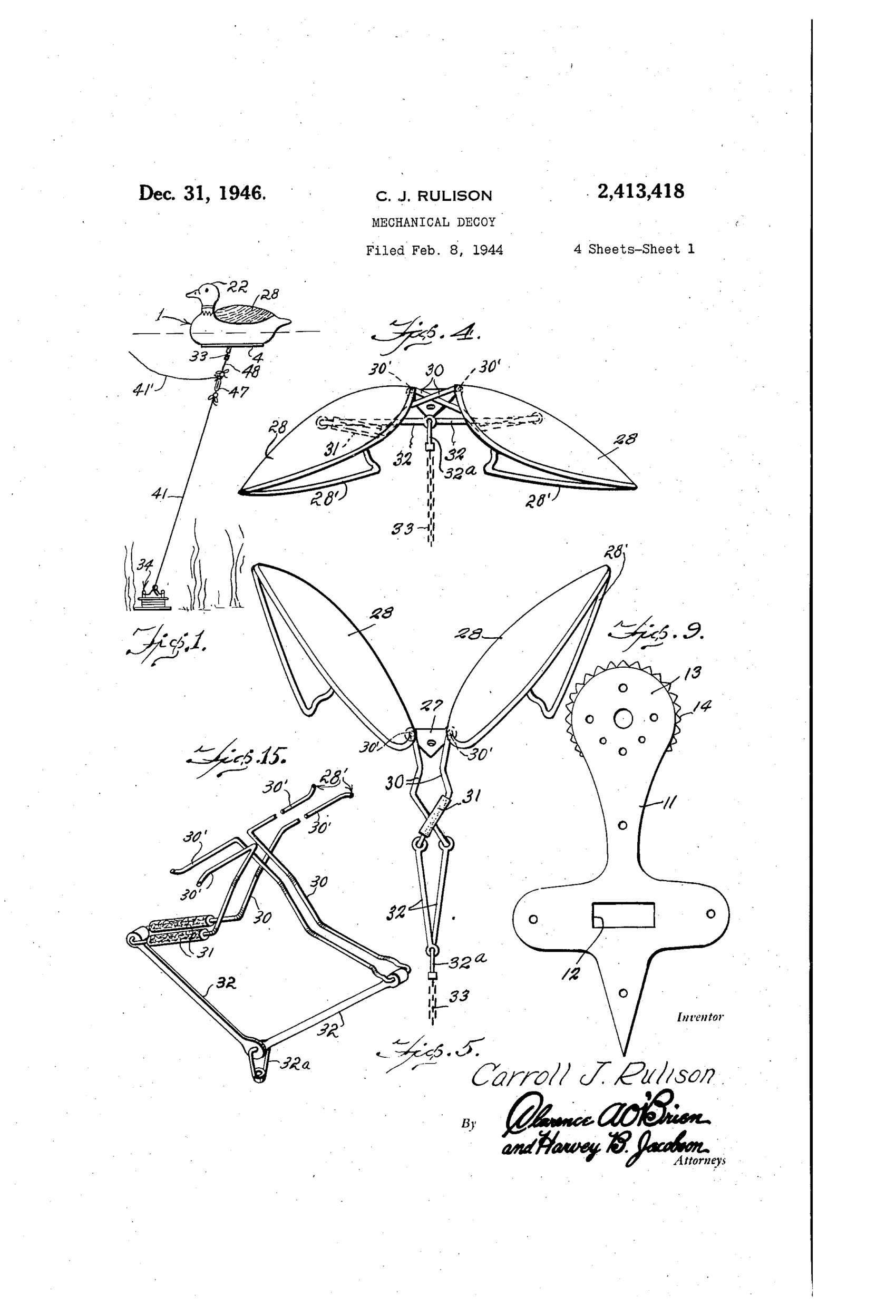
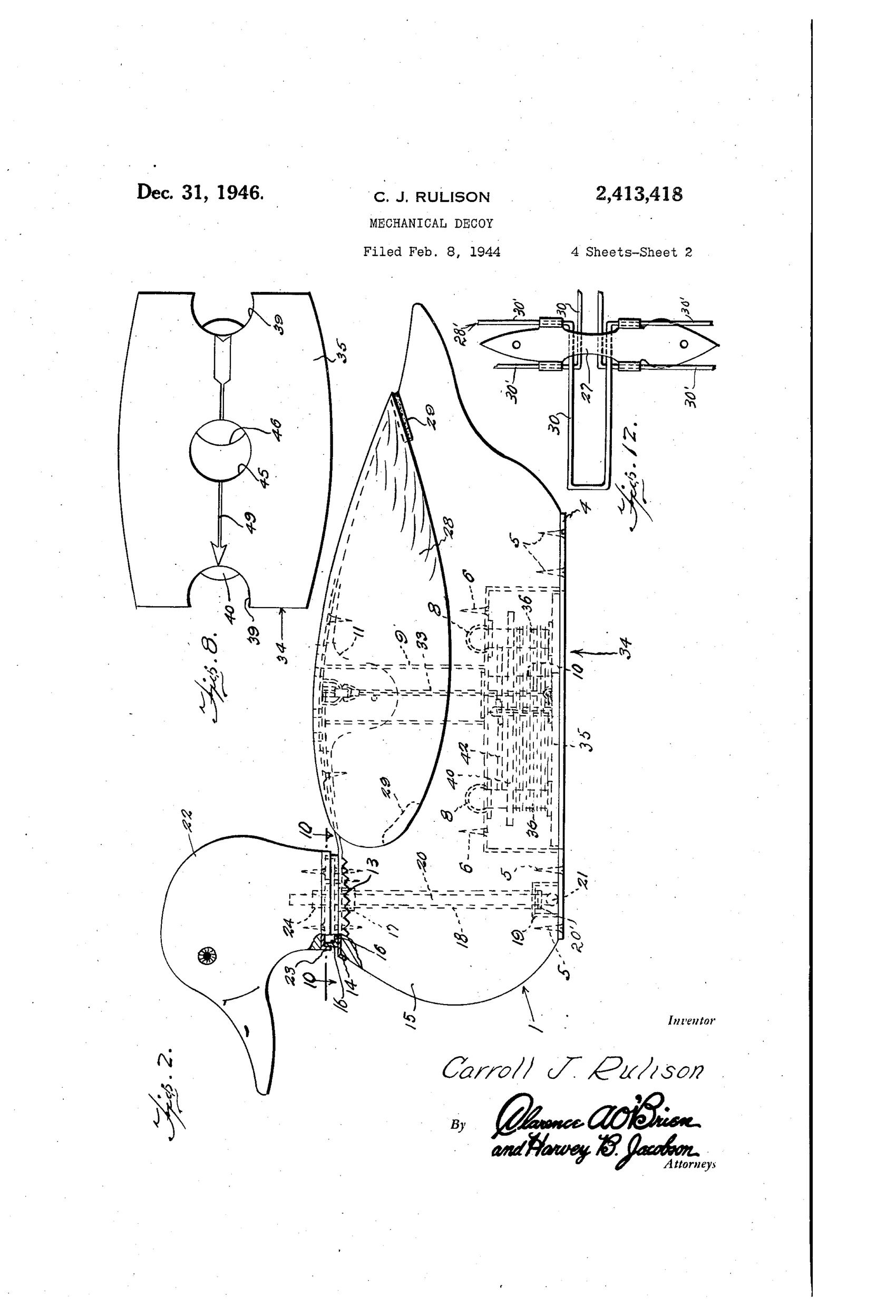
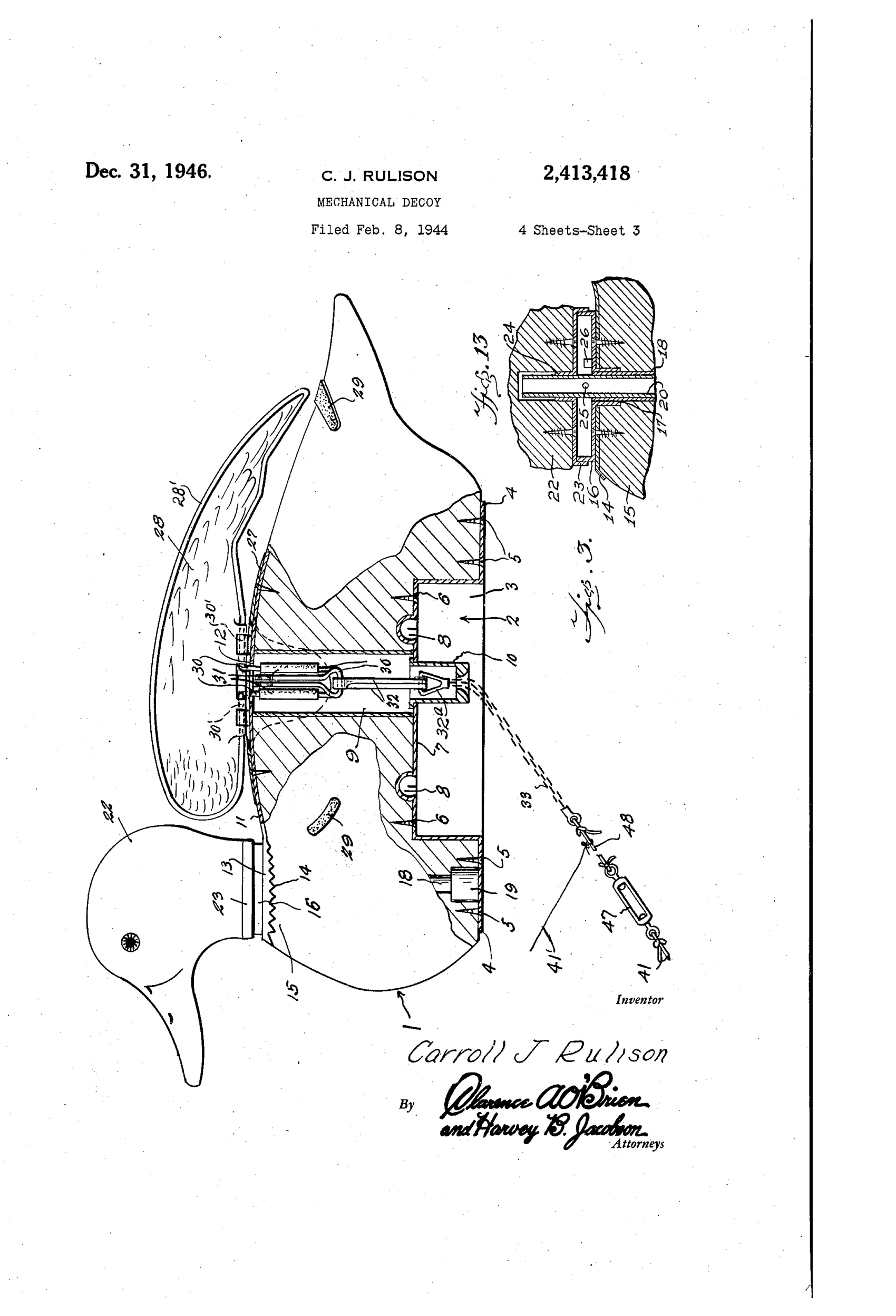
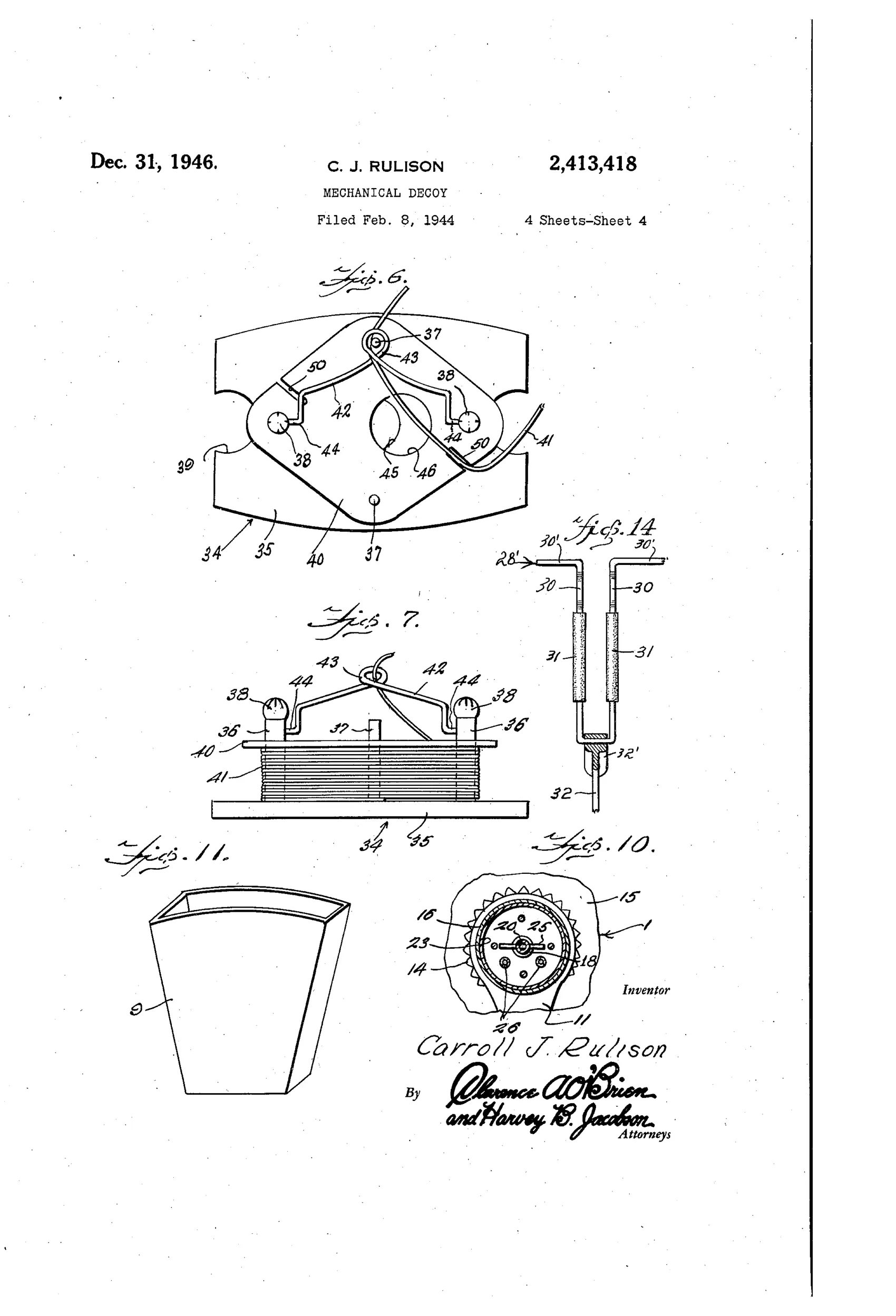
A buoyant duck-shaped body floats on the water with hinged wings connected by arms and links to a chain running through a guide down into a bottom chamber. An anchor with a reel of line rests on the bottom, and as the body rises and falls on waves the line pulls and releases the chain, causing the wings to flap up and down. A separate tubular shaft with a duck head is journaled on a ball thrust bearing so the head can swing side to side, simulating a live bird's movement. The anchor detaches from its reel posts and stows inside the body's chamber, secured by resilient snap heads engaging sockets, when not in use.
➶ What was claimed
“1. A decoy of the character described comprising a buoyant body adapted to be supported on the surface of water, wings hingedly mounted on said body, an anchor, means including a line connecting the wings to the anchor for actuation thereby, said line being windable on the anchor, and means for detachably securing the anchor to the body with the line wound thereon.”
In plain English: A floating decoy body has hinged wings moved by a line connected to a bottom anchor, and the anchor with its wound line can be detached and stored in the body.
➶ In the inventor’s words
“Now, as the body I rises and falls on the waves or swells, the wings 28 are caused to flap or swing upwardly and downwardly by the anchor 34, the line 41, the elements 33, 32, 30, et cetera.”— Carroll J. Rulison, from the specification
Fate unknown
No manufactured example of Rulison's decoy is documented to my knowledge; a surviving marked specimen or period advertisement would settle it.
➶ Commentary
Full disclosure: this one strays outside our lane. It's a decoy, not a call — it makes no sound at all. It landed in the same broad hunting-gear classification our calls live in, and it's worth a moment because the mechanism is genuinely resourceful in a way call collectors will appreciate.
Rulison's idea is to steal energy from the water itself. An anchor sits on the bottom holding a line taut; as the floating body rises and falls on swells, that line alternately pulls and slackens a chain running up through the keel, and a linkage of arms and links (Fig. 15 shows the wiry heart of it) converts that motion into wing flaps. No springs to wind, no clockwork to keep dry. The detail a casual reader will miss is the housekeeping: the anchor doubles as a reel for the line and snaps up into a chamber inside the body for transport — Figs. 2 and 6-8 are all about stowage, which tells you Rulison actually thought about a hunter's boat. The head even swivels on a ball thrust bearing for good measure.
The catch is obvious: on a calm day, the decoy goes dead still, and mechanical flapping-wing decoys of this era have a long history of looking better on paper than on water. It's a charming dead end from the golden age of animated-decoy patents — just not a call.
Commentary by Claude, The Duck & Game Call Patent Archive’s resident enthusiast