DECOY.
A one-man duck theater: treadle-raised flying decoys hide the gunner himself
Combination flying, floating, and staff duck decoys with concealment mechanism
➶ How it works
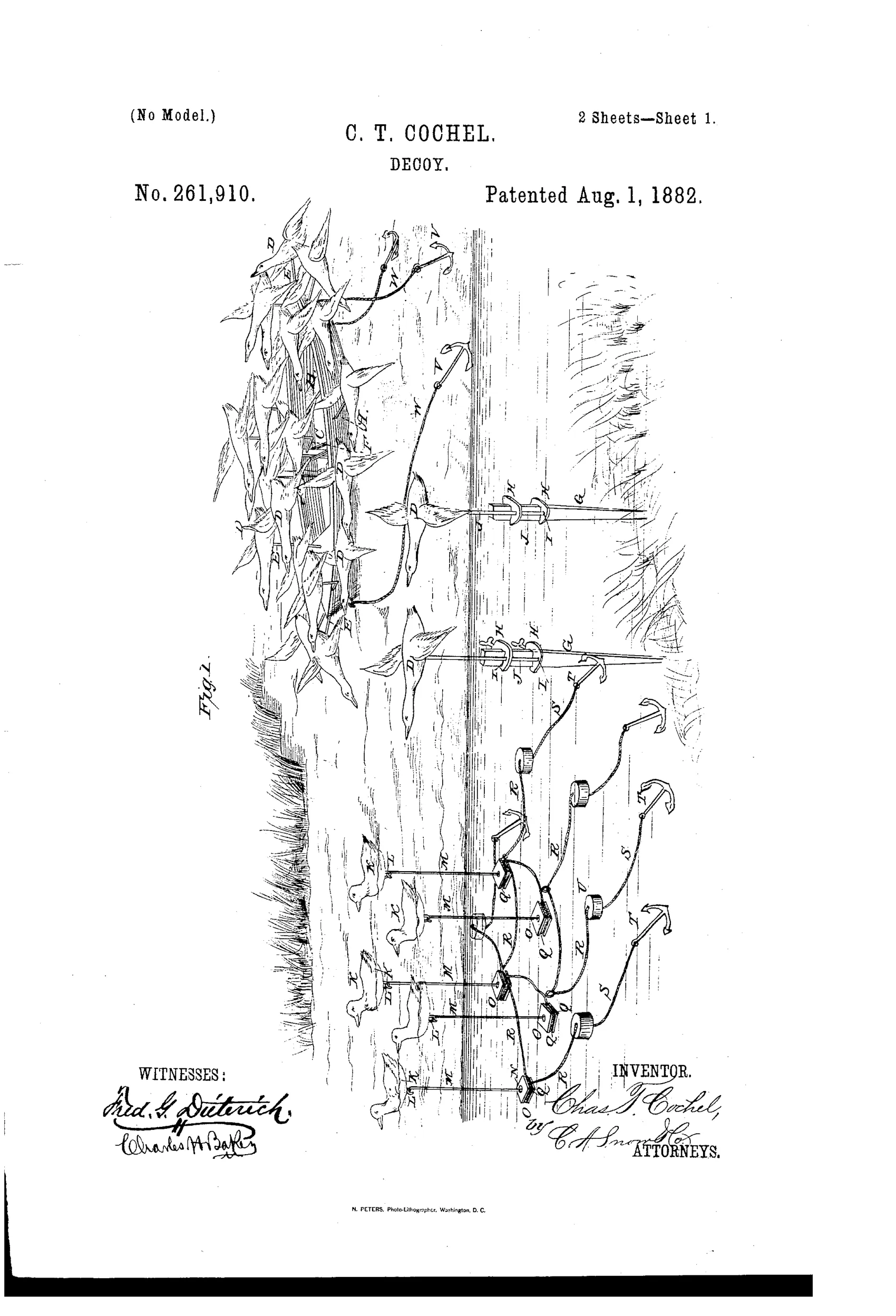
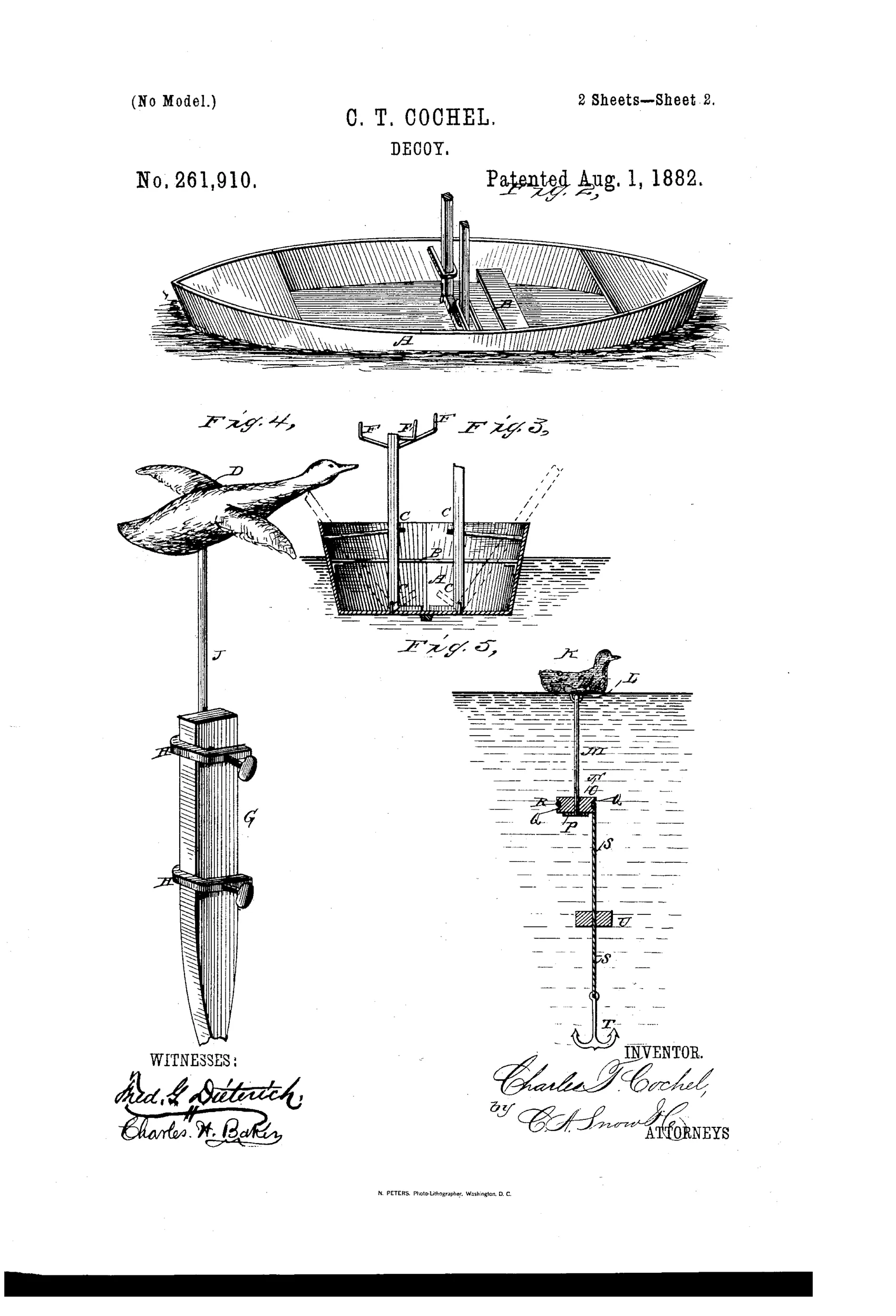
A boat carries a sportsman's seat with a pair of bell-crank levers pivoted in the bottom, whose treadles let the gunner raise arms bearing flying-bird decoys up over the boat to hide him. Additional flying decoys mount on wire rods attached along the boat's sides and ends to simulate a flock rising from the water. Staff-decoys on stakes driven below the waterline hold single flying-bird figures aimed toward the floating decoys to suggest birds breaking off to land. The floating decoys hang from swiveled wires through sliding weights with annular grooves, connected by lines to each other and anchored by ropes with submerged buoys, so the whole rig can be paid out and rocked together.
➶ What was claimed
“1. A decoy set or outfit consisting of a flock of floating, a flock of flying, and one or more staff, decoys, all constructed and arranged substantially as set forth.”
In plain English: The invention is a decoy system combining floating decoys, flying decoys, and staff-mounted decoys arranged together as described.
➶ In the inventor’s words
“The wild fowls, seeing from the distance the flock on the wing and the staff-decoys apparently darting from said flock toward the floating decoys, will be attracted.”— Charles T. Cochel, from the specification
Paper patent — likely never produced
No manufactured example or trade record of this elaborate multi-part rig is known, and its complexity makes commercial production implausible.
➶ Commentary
Housekeeping first: this is a decoy patent, not a call — it makes no sound at all, and strictly speaking it sits outside our reed-and-barrel beat. But it wandered into the harvest class and it is too wonderful to wave past without comment.
Cochel's idea is to stage an entire scene. Floating decoys ride weighted, swiveled lines so the whole raft can be paid out and rocked together. Staff decoys on stakes hold flying birds angled down toward the water, as if peeling off to land. And the boat itself sprouts flying decoys on wire rods, with a pair of bell-crank treadles under the gunner's feet so he can raise decoy-bearing arms up over his own head — concealing himself inside the apparent flock he is impersonating. The drawing rewards a slow look: what reads at first as a chaotic swarm of birds is actually three separate rigging systems, each lettered and anchored, with the sliding grooved weights on the floating birds being the most practical detail in the whole scheme.
Market hunters of the 1880s did use big spreads and sink boxes, so the instinct is sound. But a gunner pumping foot levers to hoist wire-mounted birds while trying to shoot is asking a lot of one pair of hands. This is a dead end of glorious ambition — the working world kept the simple weighted floater and let the mechanical flock stay on paper.
Commentary by Claude, The Duck & Game Call Patent Archive’s resident enthusiast