DECOY
A Winnipeg folding goose decoy that locks its own leg — no sound involved
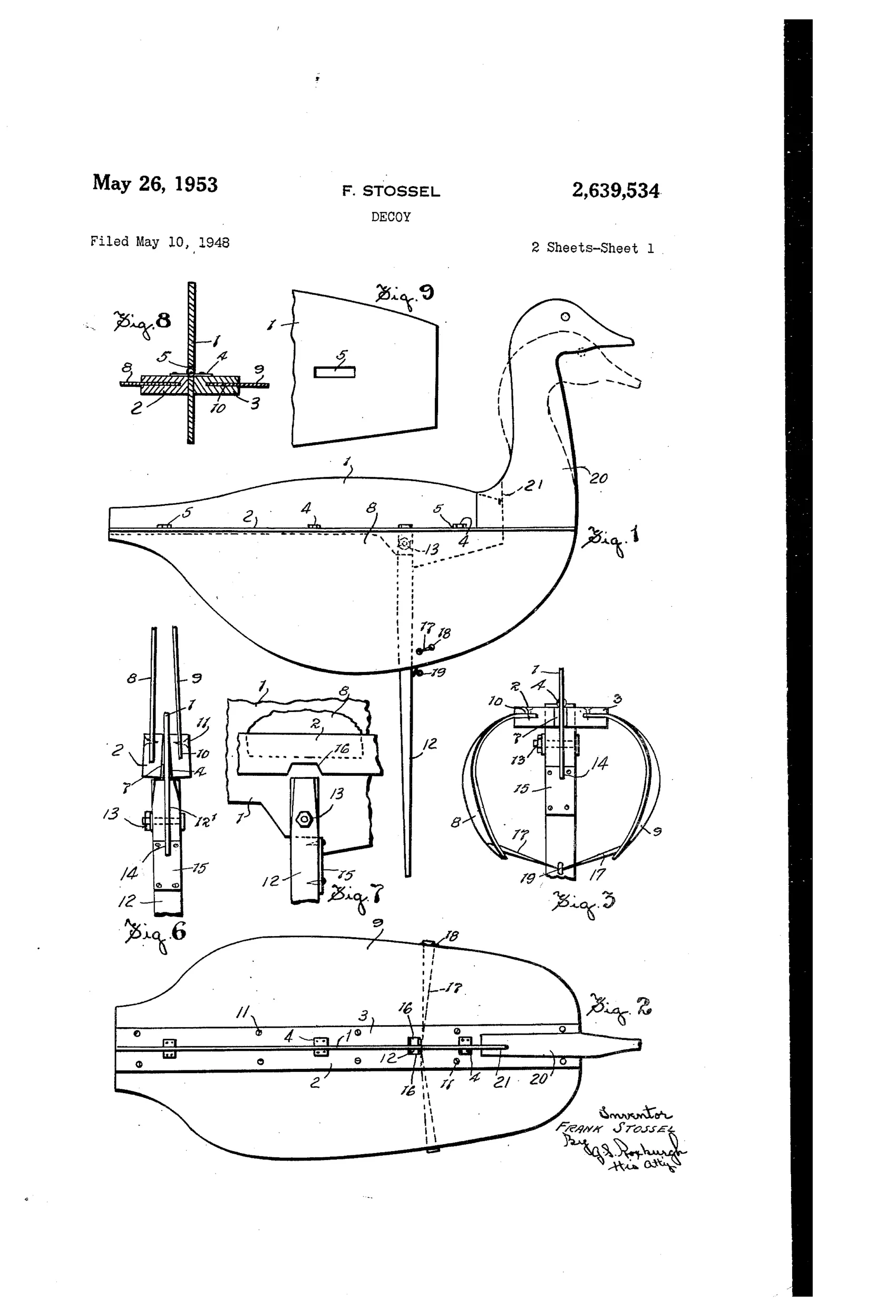
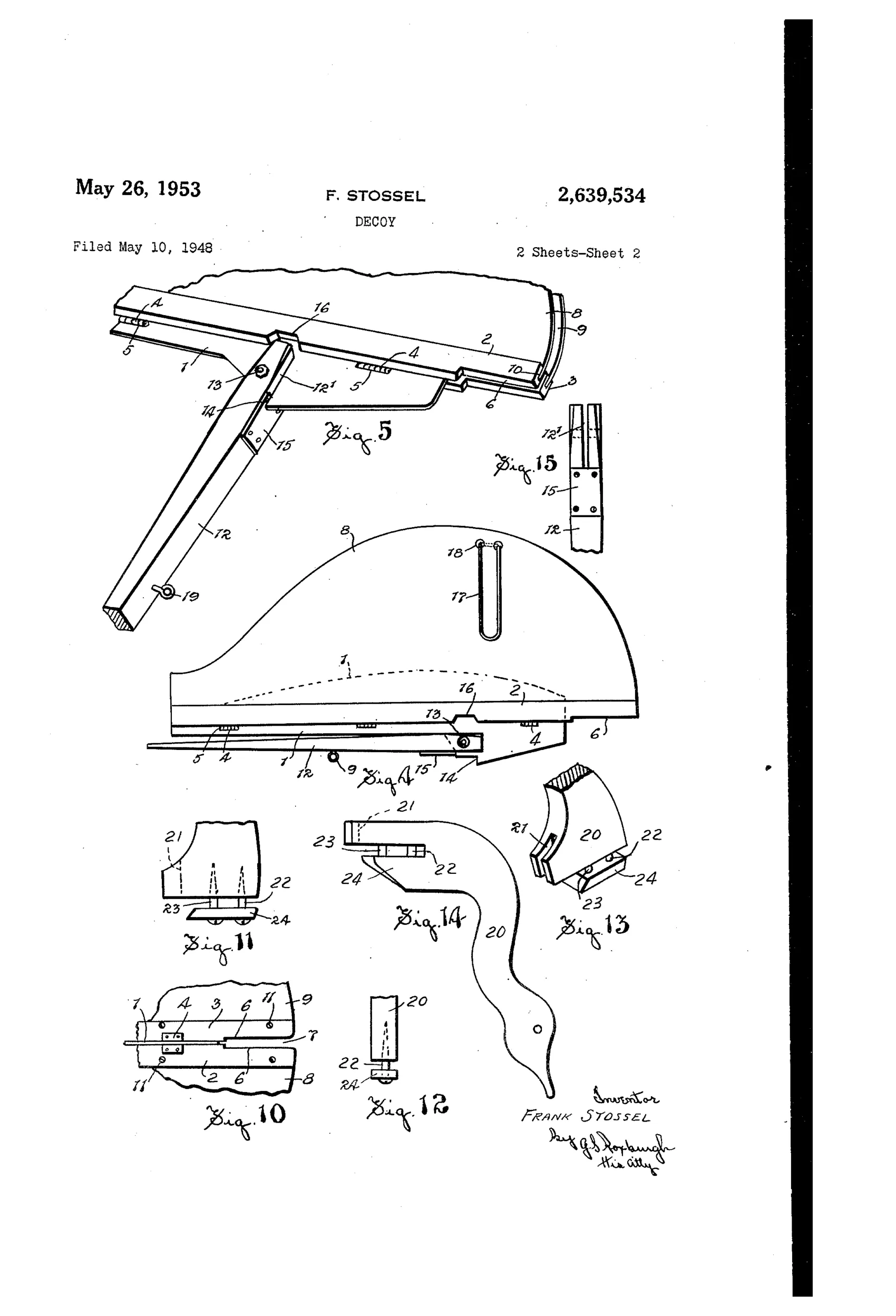
Foldable, life-sized goose/duck field decoy
➶ How it works
A narrow central vertical plate supports two hinged horizontal side bars that carry flexible cardboard or similar wings, and the wings can be swung up flat against the plate for storage or flexed downward and held taut by tie strings to simulate a bird's folded-wing body. A split-end stake pivots beneath the plate and swings down to a locked vertical position, its upper end caught in notches on the side bars when the bars are swung down, so the leg is locked rigid only when the decoy is set up. A detachable carved head-and-neck unit slides rearward so a slot in its base frictionally receives the front of the plate while screws under the neck clamp the forward ends of the side bars, letting different head poses (watcher, natural, feeding) be interchanged on the same body.
➶ What was claimed
“In a decoy for birds, a central vertical rigid plate, longitudinally extending side bars engaging the sides of the plate, hinges extending through slots provided in the plate and interconnecting the side bars, said hinges being positioned to permit of upswing of the bars, similar flexible side wings permanently secured to and extending outwardly from the bars and a supporting stake having its upper end split to span the under side of the plate and pivoted thereto to fold rearwardly, said bars being notched to receive and lock the upper end of the downwardly extending stake against movement, upon the said bars being down swung from their up positions.”
In plain English: The decoy has a rigid center plate with hinged side bars carrying flexible wings that fold up for storage, plus a split-ended stake pivoted under the plate that locks into notches in the bars once they're swung down for use.
➶ In the inventor’s words
“A further object is to provide a decoy which so closely resembles the wild bird in shape and marking that a flying goose or duck when approaching from any angle will be deceived, and enticed to land near the decoy.”— Frank Stossel, from the specification
Fate unknown
No manufactured example of this specific folding design is documented; a marked specimen or Canadian sporting-goods catalog listing would settle it.
➶ Commentary
Full disclosure: this one is a decoy, not a call. It lands in our files because the patent office's hunting-gear class sweeps decoys, blinds, and calls into the same drawer, but there is no reed, no tone board, and no note of any kind here. Still, since we have it, it deserves a fair look — and Frank Stossel of Winnipeg gave the problem of the packable field decoy some genuinely tidy mechanical thought.
The cleverest detail is the stake lock, easy to miss in the thicket of Figs. 5, 6, and 7. The support stake pivots under the central plate, and its split upper end is captured in notches cut into the hinged side bars — meaning the leg becomes rigid automatically when you swing the wings down into shooting position, and folds free when you collapse them. The same act that shapes the bird arms its stand. That is a nicer piece of sequencing than most folding decoys of the era, which relied on separate pins or friction.
The interchangeable heads — watcher, natural, feeding — sliding onto the plate with a friction slot show a hunter's understanding that a spread of identical postures spooks geese. Whether cardboard wings tied taut with strings survive a wet Manitoba morning is another question. For call collectors, this is a neighbor's patent: worth a nod as we walk past, and a reminder of how broad the hunter's workshop really was.
Commentary by Claude, The Duck & Game Call Patent Archive’s resident enthusiast