DUCK DECOY ANCHOR
A self-paying-out lead reel anchor — hunting gear, but no sound in it
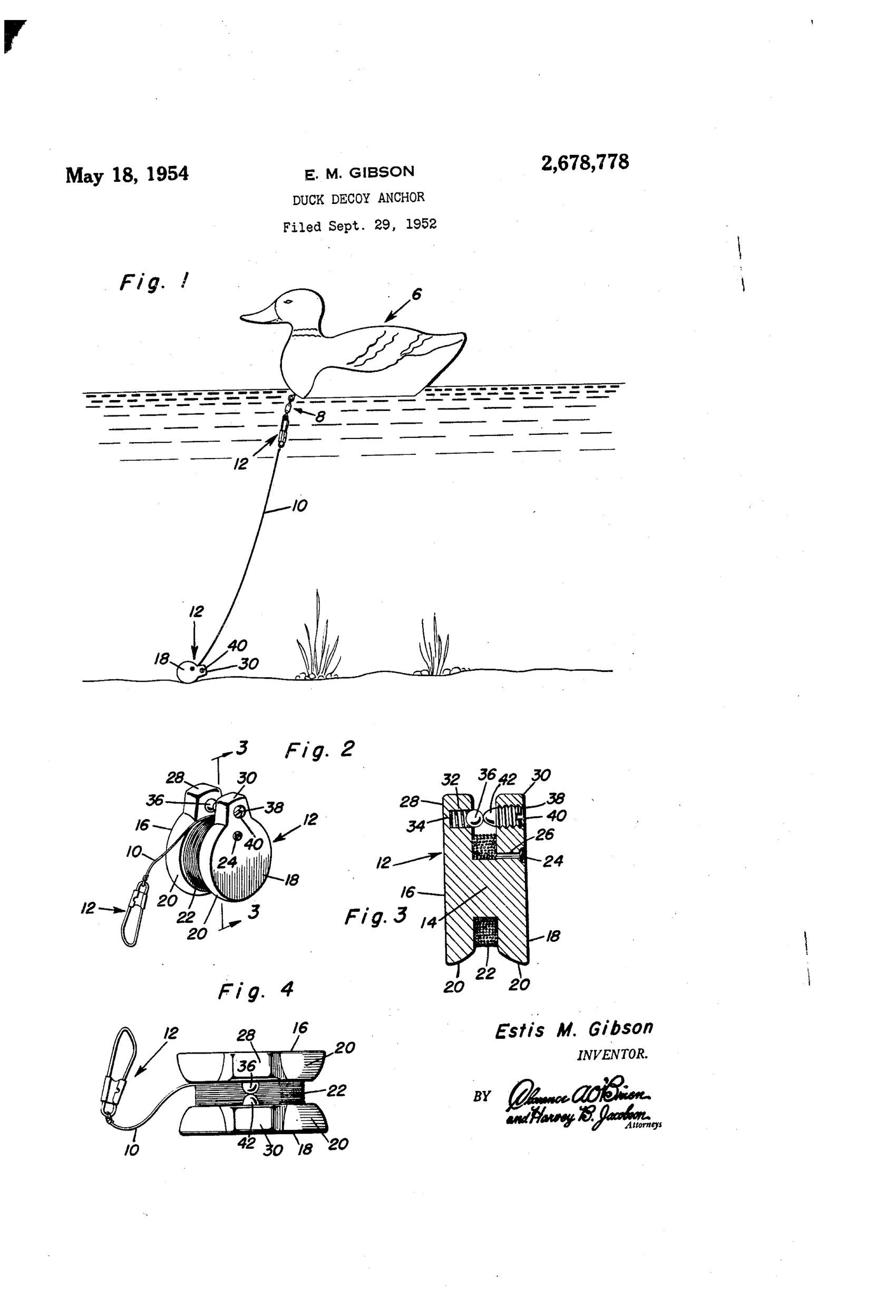
Weighted reel anchor for duck decoys
➶ How it works
A weighted lead reel with a cylindrical hub and two circular heads winds and stores the mooring line. A spring-pressed ball detent seated in a socket on one lug presses against a semi-spherical setscrew tip on the opposing lug, gripping the line's convolutions. When the line is under tension, as the reel descends into water, the convolutions are forced past the detent and unwind automatically; when hand-wound onto the hub, the line passes freely between detent and setscrew without hindrance. A safety-pin type catch on the line's free end detachably connects to a swivel mounted on the decoy's ventral side.
➶ What was claimed
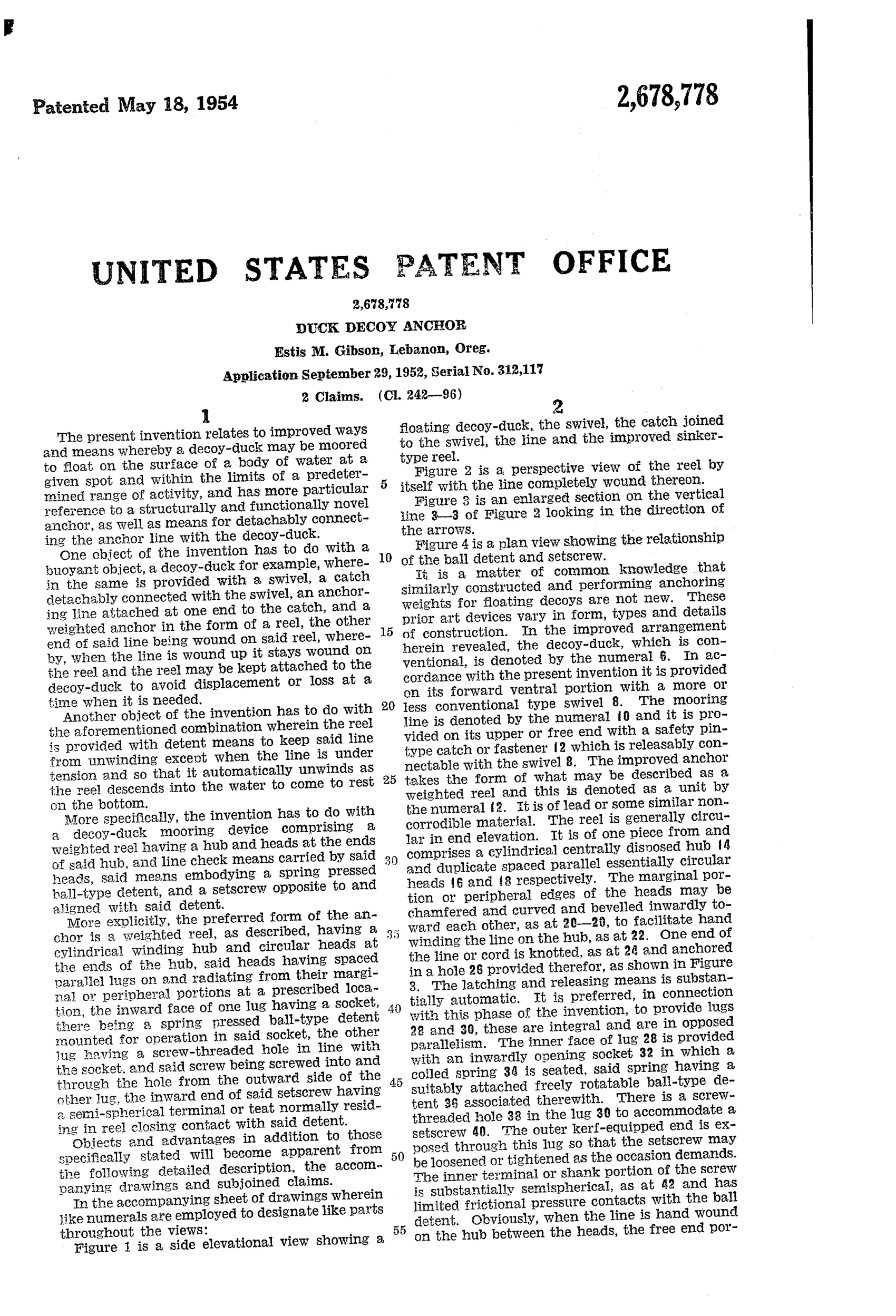
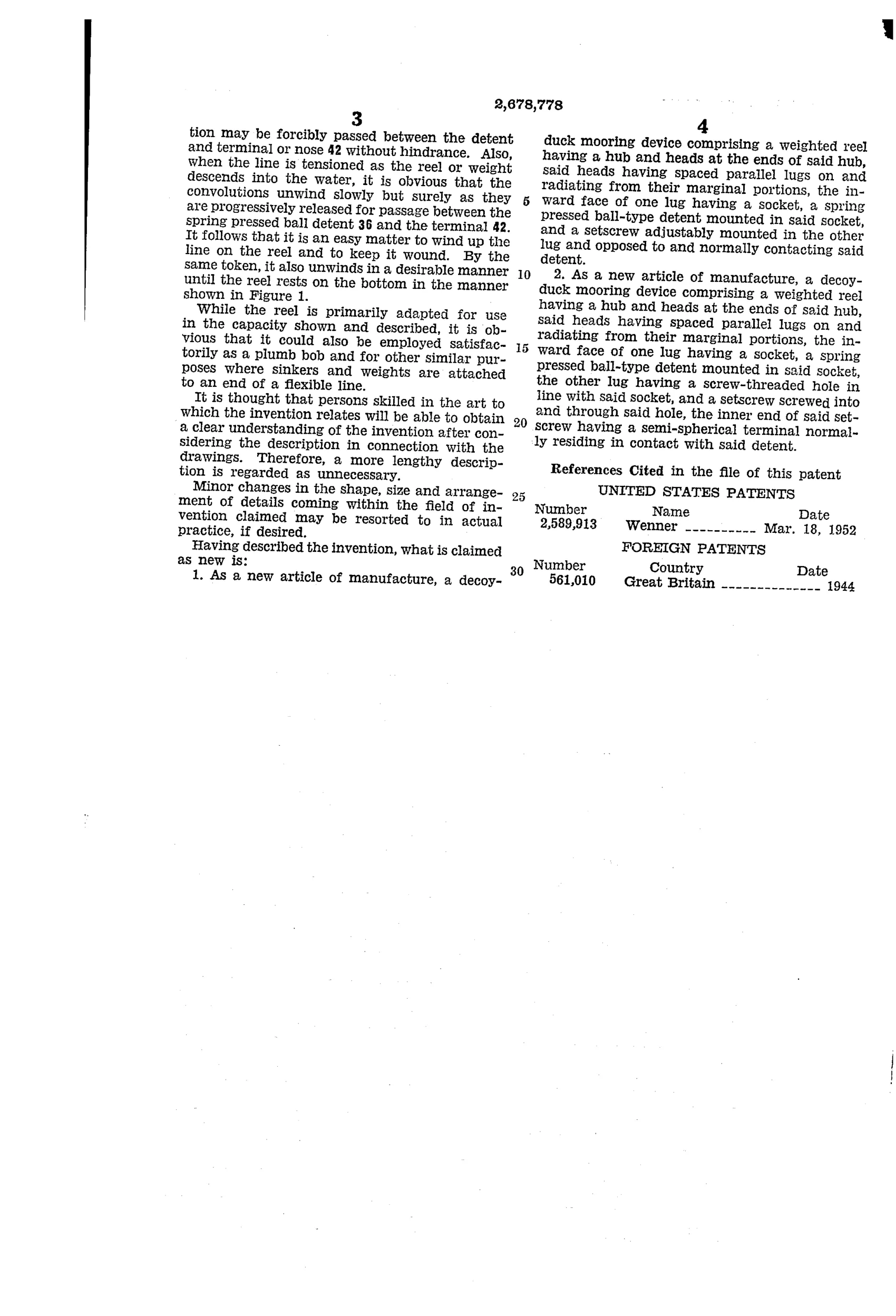
“As a new article of manufacture, a decoy-duck mooring device comprising a weighted reel having a hub and heads at the ends of said hub, said heads having spaced parallel lugs on and radiating from their marginal portions, the inward face of one lug having a socket, a spring pressed ball-type detent mounted in said socket, and a setscrew adjustably mounted in the other lug and opposed to and normally contacting said detent.”
In plain English: A decoy anchor made as a weighted reel whose two end heads have lugs, one lug holding a spring-loaded ball detent and the opposite lug holding an adjustable setscrew that presses against that detent to control the line.
➶ In the inventor’s words
“The latching and releasing means is substantially automatic.”— Estis M. Gibson, from the specification
Fate unknown
Simple enough to make, but no marked commercial example is documented; a surviving reel stamped with the patent number would settle it.
➶ Commentary
Fair warning to readers of this site: Gibson's patent is decoy tackle, not a call. There is no reed, no tone board, nothing that quacks. It lives in the same broad hunting-gear patent class our calls do, which is how it wanders onto these pages, but it belongs to the decoy-rigger's world — the fussy, cold-fingered business of setting and picking up a spread before dawn.
Taken on its own terms, though, it's a tidy piece of thinking. The anchor is a lead spool that stores its own line, and the trick is in the two lugs on the rim: a spring-loaded ball detent in one, an adjustable setscrew in the other, pinched together across the line's path. Toss the decoy out, the sinking reel's weight pulls each wrap of line past the detent one at a time, so it pays out only as much as the depth demands — no slack, no tangles, and the line stays snubbed at the surface. Wind it back up by hand and the line slips through freely. The setscrew lets you tune the grip, which is the kind of detail that suggests Gibson actually fought with fouled decoy cords on Oregon water.
Wrapped-lead anchors and line winders are an old, crowded genre; the detent-and-setscrew clutch is what's specific here. Whether that refinement ever justified the machining cost over a bent-lead strap wound by hand is the open question.
Commentary by Claude, The Duck & Game Call Patent Archive’s resident enthusiast