DECOY.
A nesting pasteboard decoy on a weathervane pivot — and not a call at all
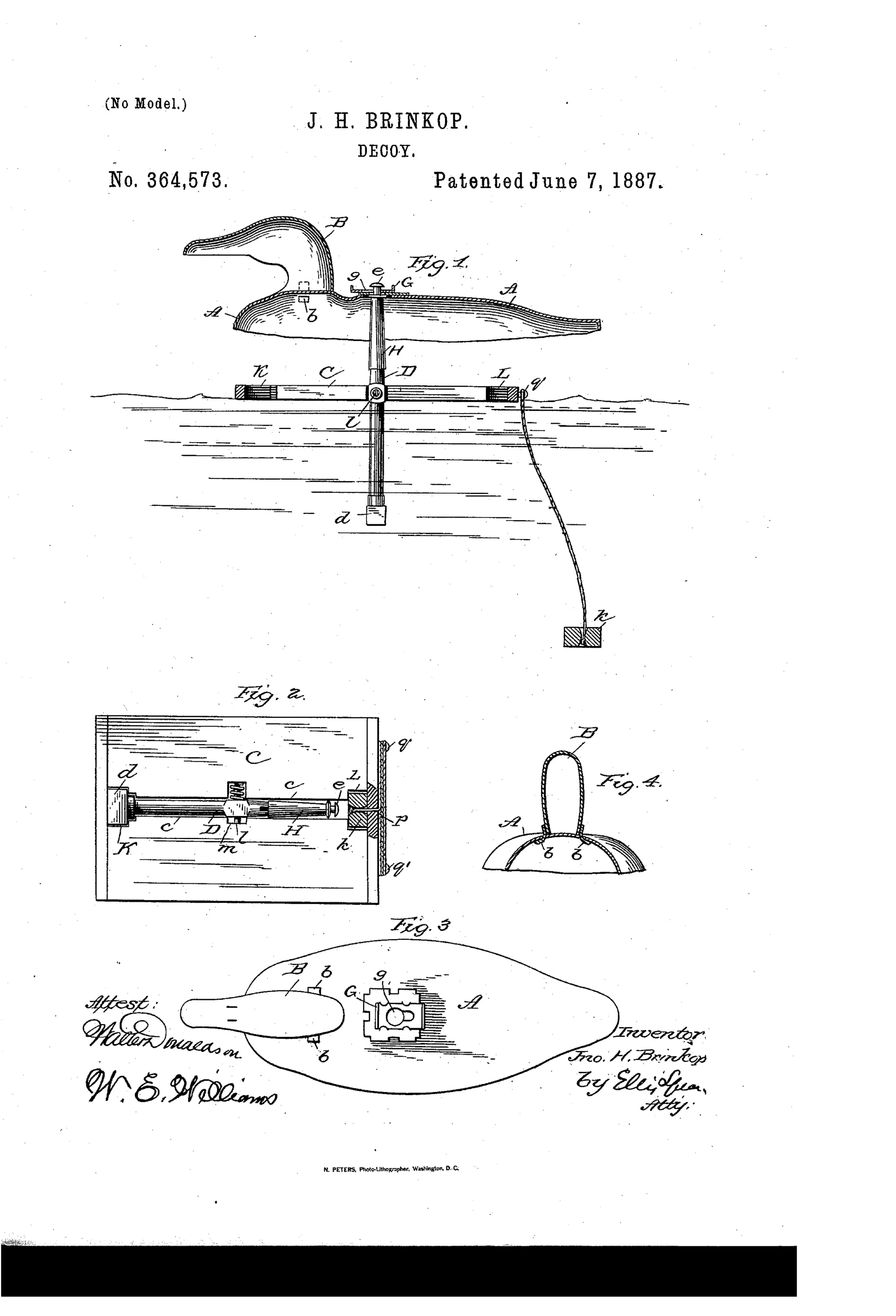
Collapsible waterfowl decoy with balanced floating support
➶ How it works
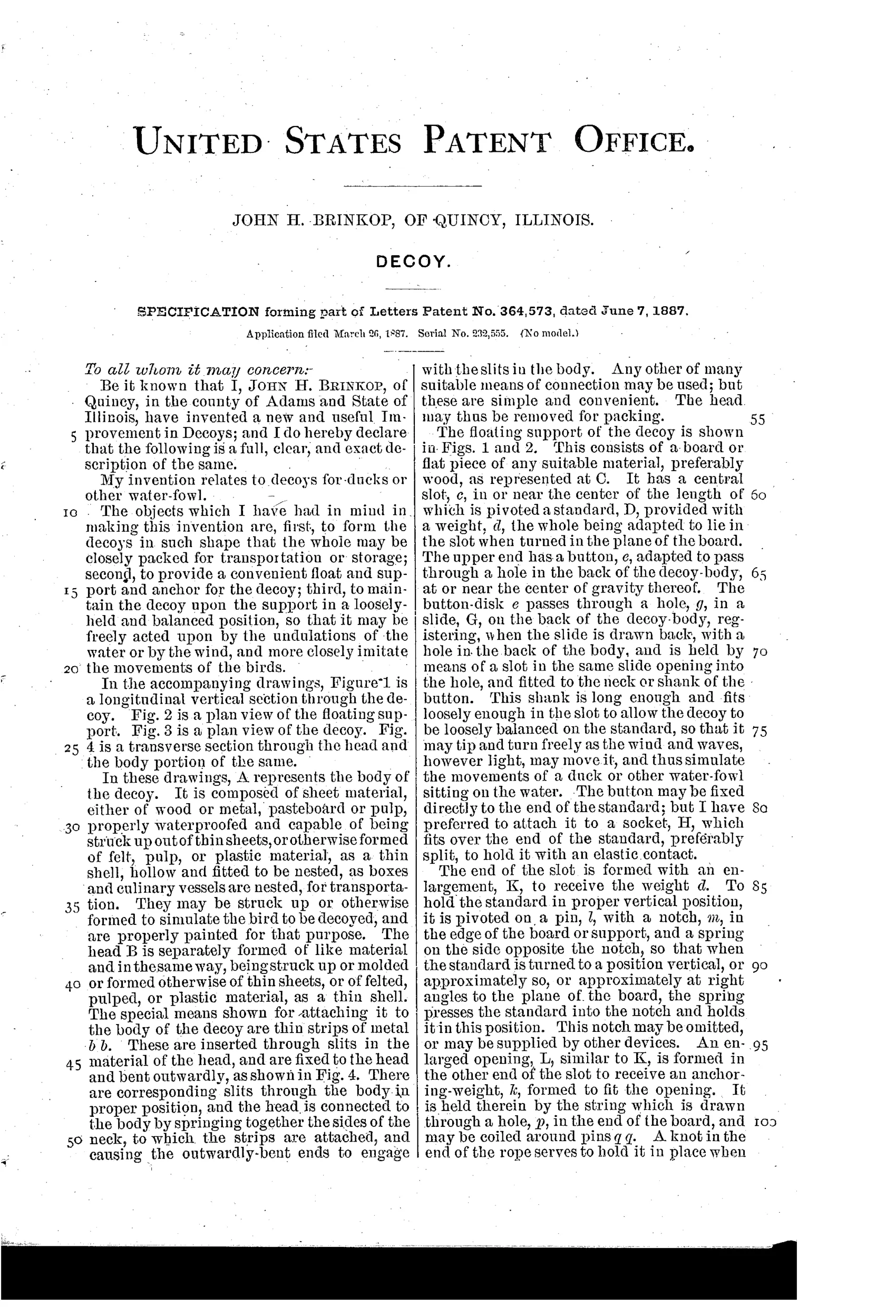
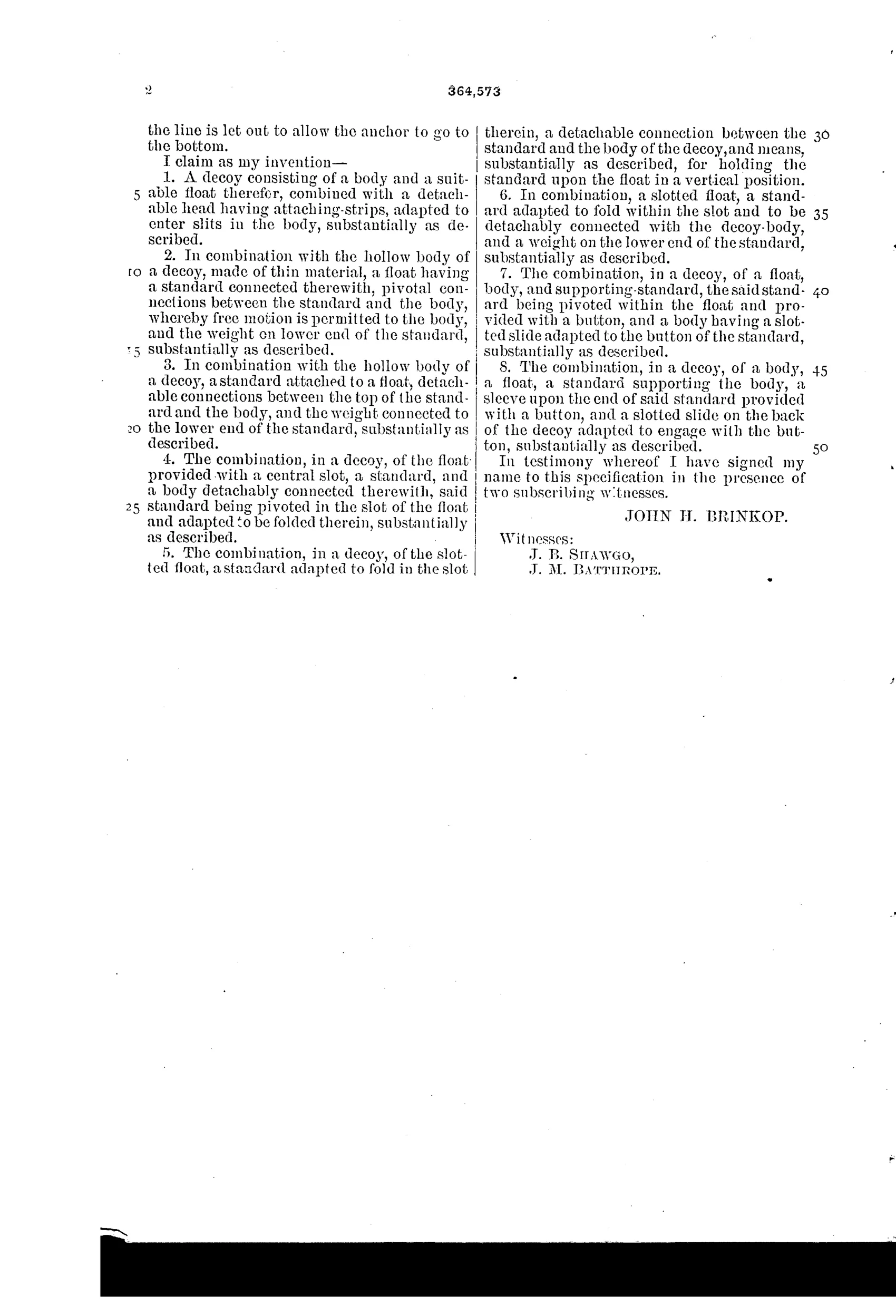
The decoy body and separately formed head are made of thin, waterproofed sheet material (wood, metal, pasteboard, pulp, or felt) so they can be nested for compact storage. The head attaches to the body via metal strips inserted through slits and bent outward to engage the body's slots, making it detachable. A pivoted standard rises from a slotted wooden float, topped with a button that passes through a hole and slotted slide on the decoy's back, allowing the body to tip and balance freely with wind and waves. A weight on the lower end of the standard keeps it upright, with a spring-and-notch mechanism holding it vertical, while an anchoring weight and cord attach at the opposite end of the float.
➶ What was claimed
“1. A decoy consisting of a body and a suitable float therefor, combined with a detachable head having attaching-strips, adapted to enter slits in the body, substantially as described.”
In plain English: The decoy has a body, a float, and a removable head that attaches using metal strips that fit into slits in the body.
➶ In the inventor’s words
“This shank is long enough and fits loosely enough in the slot to allow the decoy to be loosely balanced on the standard, so that it may tip and turn freely as the wind and waves, however light, may move it, and thus simulate the movements of a duck or other water-fowl sitting on the water.”— John H. Brinkop, from the specification
Fate unknown
No documented example of a Brinkop sheet-material decoy is known to me; a surviving marked specimen or period catalog listing would settle it.
➶ Commentary
Full disclosure: this one strays outside our beat. Brinkop's patent is a decoy, silent as a stone — it lives in the broad hunting-gear class alongside blinds and scent bottles, not among the reeds and tone boards we usually fuss over. But since it's here, it deserves a fair look, because the mechanics are genuinely thoughtful.
The body and head are separate shells of thin waterproofed sheet — pasteboard, felt, pulp, or metal — so a hunter could nest a dozen bodies like paper cups and carry a whole rig in a sack. That was a real problem in 1887: solid wooden blocks were heavy, and market hunters set spreads by the hundred. The detachable head fastens with metal tabs bent through slits, tin-toy fashion.
The clever part is in Fig. 1: the decoy doesn't sit rigidly on its float. It perches loosely on a button atop a pivoted, weighted standard, so the lightest wind or ripple tips and turns the body — Brinkop's own words promise it will 'simulate the movements of a duck... sitting on the water.' Dead decoys sit dead; a jiggling one reads as alive. That insight resurfaces in motion-decoy patents for the next century. Whether pasteboard survived a wet October is another question — my guess is a season, at best.
Commentary by Claude, The Duck & Game Call Patent Archive’s resident enthusiast