DECOY-DUCK.
A decoy with a built-in anchor reel — and not a call at all
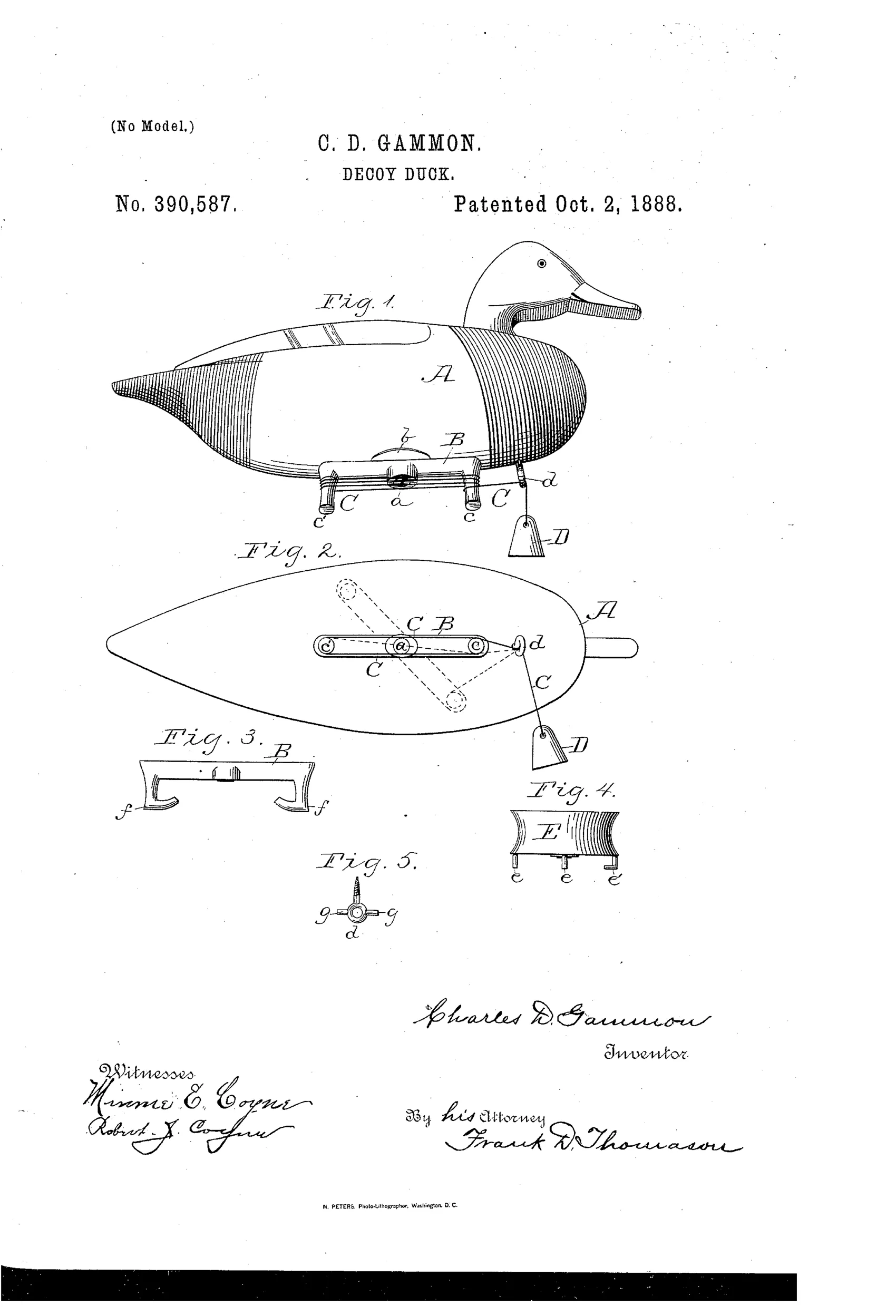
Decoy duck with built-in anchor cord reel
➶ How it works
A stud projects downward from a plate secured to the belly of the decoy duck. A reel, formed of a bar with downward-projecting pins at its ends, is journaled on this stud so it can revolve. An anchor cord is fastened to one pin, passes through an eye secured to the decoy's breast, and carries a weight on its free end. By inverting the decoy and turning the reel via the pins, the cord winds up or pays out, and lifting the cord over the nearest pin locks the reel against further turning.
➶ What was claimed
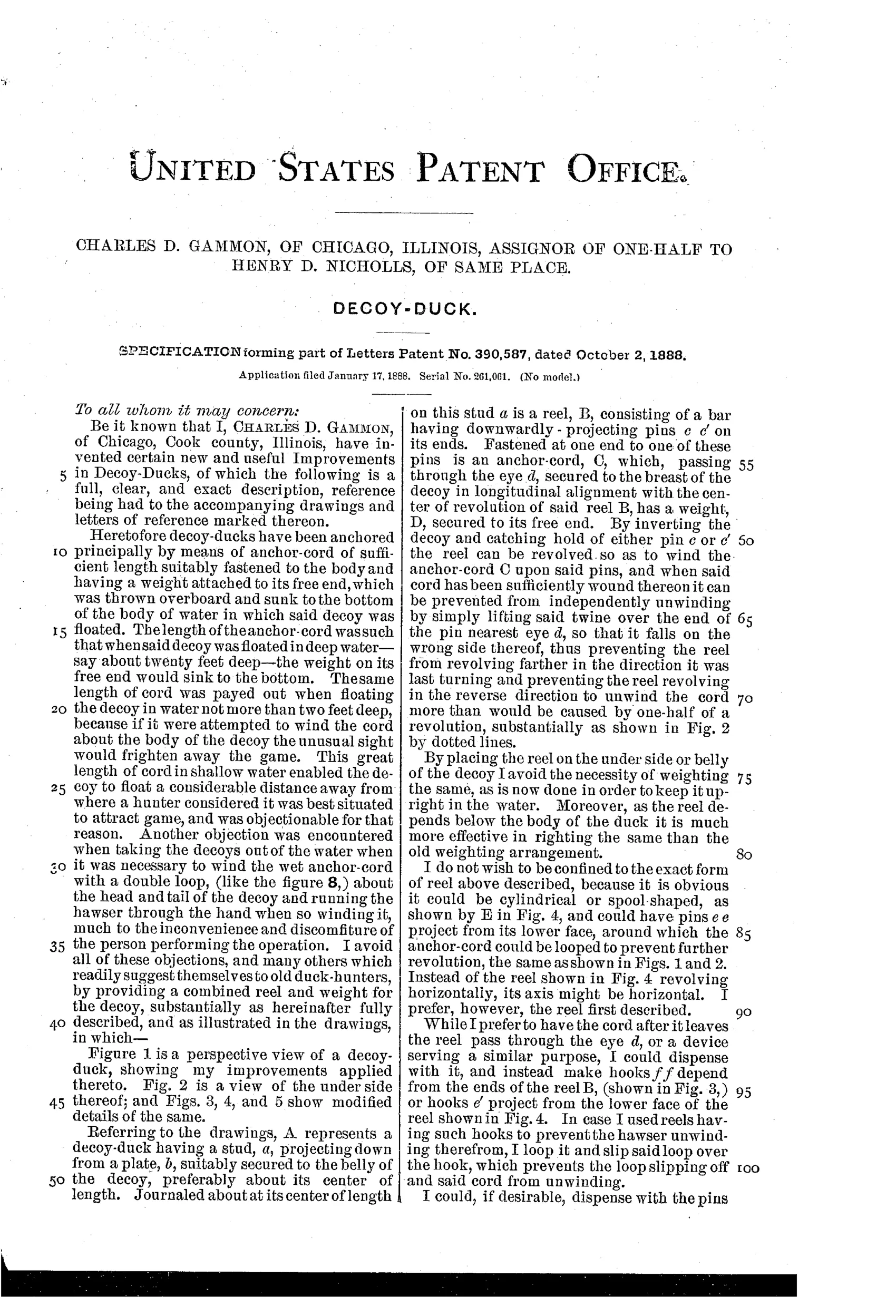
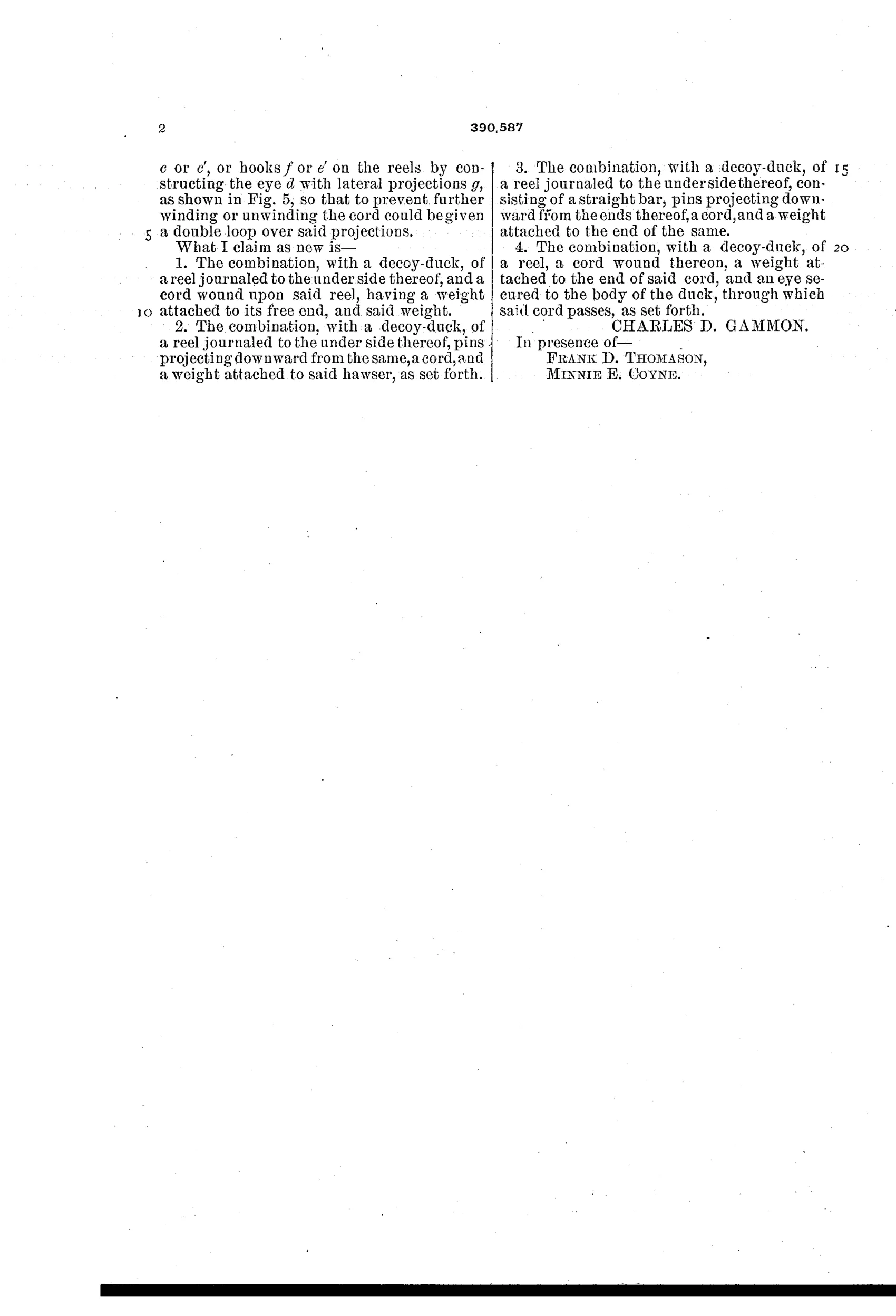
“The combination, with a decoy-duck, of a reel journaled to the under side thereof, and a cord wound upon said reel, having a weight attached to its free end, and said weight.”
In plain English: The invention combines a decoy duck with a reel mounted underneath it, onto which a weighted cord is wound.
➶ In the inventor’s words
“This great length of cord in shallow water enabled the decoy to float a considerable distance away from where a hunter considered it was best situated to attract game, and was objectionable for that reason.”— Charles D. Gammon, from the specification
Fate unknown
Belly-mounted line winders became common on decoys, but no example marked to this 1888 patent is documented; a surviving decoy with this reel would settle it.
➶ Commentary
Full disclosure: this one wandered into the game-call file because it lives in the same hunting-gear patent class, but Gammon's duck makes no sound whatsoever. It's a decoy with a cord-management problem solved on its belly, and as such it sits at the edge of our beat. Still, it's worth a minute, because the problem it attacks was real and universal: every decoy rig needed an anchor line, and loose cord meant tangles in the bag and a decoy that drifted off station in shallow water because the hunter had paid out far too much line.
Gammon's answer is almost aggressively simple. No spool housing, no ratchet — just a flat bar journaled on a stud under the belly, with a pin sticking down at each end. Flip the bird over, spin the bar by its pins, and the cord winds figure-style around them. To lock it, you lift the cord over the nearest pin and let tension hold everything fast. Fig. 2 shows the trick clearly, with the bar's swept positions dashed in. Figs. 3 and 4 offer variants — hooked ends and a proper cylindrical spool — suggesting he knew the bare-bar version might shed line.
Would it work? Probably, in the crude way most anchor-line winders work. Decoy makers spent the next century wrapping cord around keels, necks, and every manner of belly hardware, so Gammon was early to a chore everyone eventually solved somehow.
Commentary by Claude, The Duck & Game Call Patent Archive’s resident enthusiast