FOOT-BOARD FOR WOOD-CHOPPERS.
Not a call at all: a logger's pivoting springboard, filed from Washington Territory
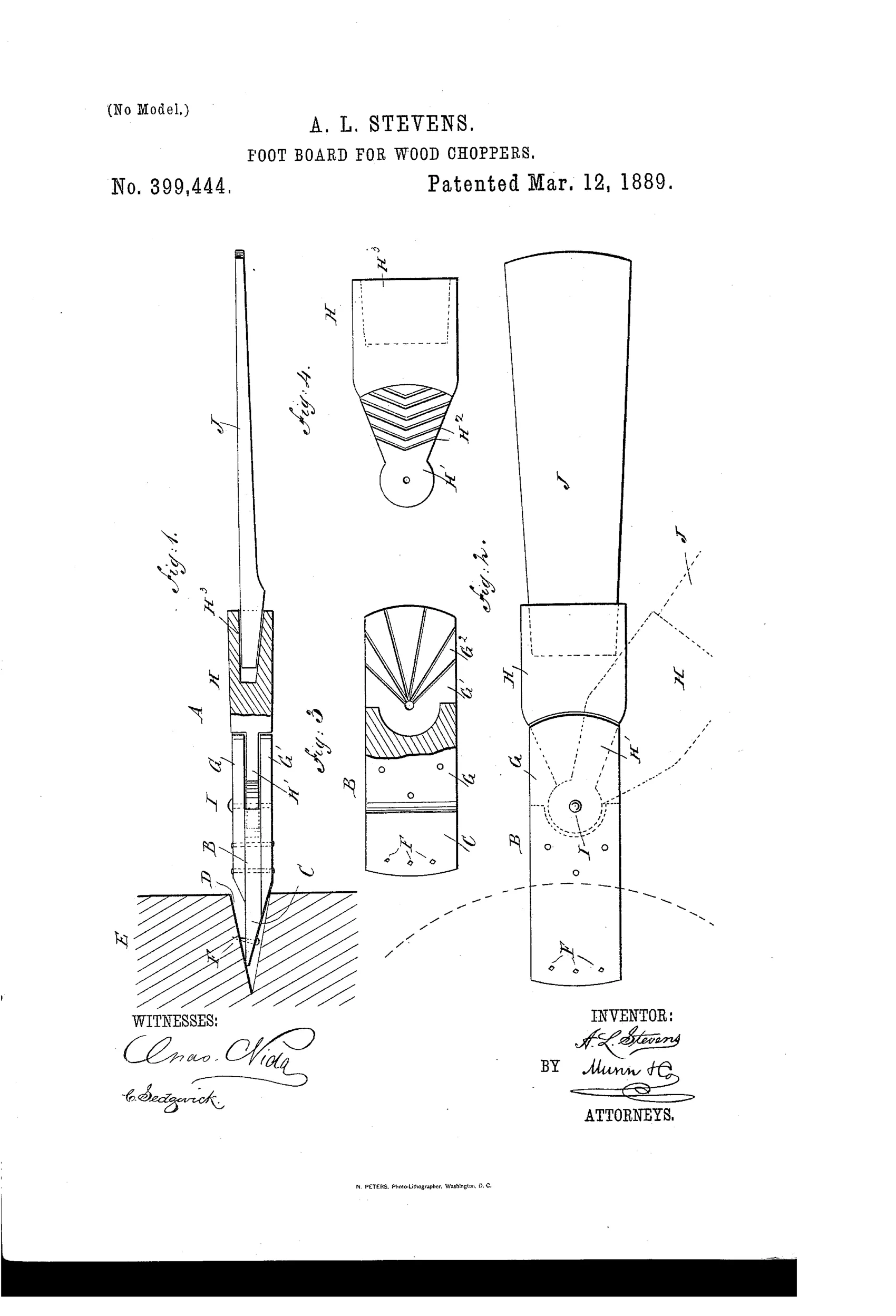
Pivoting adjustable foot-board for tree chopping
➶ How it works
An arm with a beveled front end is inserted into a notch cut into a tree so its points bite into the wood and hold it in place. A head with a forwardly-projecting tenon pivots within a forked slot at the outer end of the arm, allowing it to swing horizontally. A flat board is fixed to this head so the operator can stand on it while chopping, and mating roughened (notched) surfaces on the arm and tongue create friction so the board holds any desired angular position. To reposition, the worker steps onto the arm itself, swings the board and head to a new spot, then steps back onto the board to resume work.
➶ What was claimed
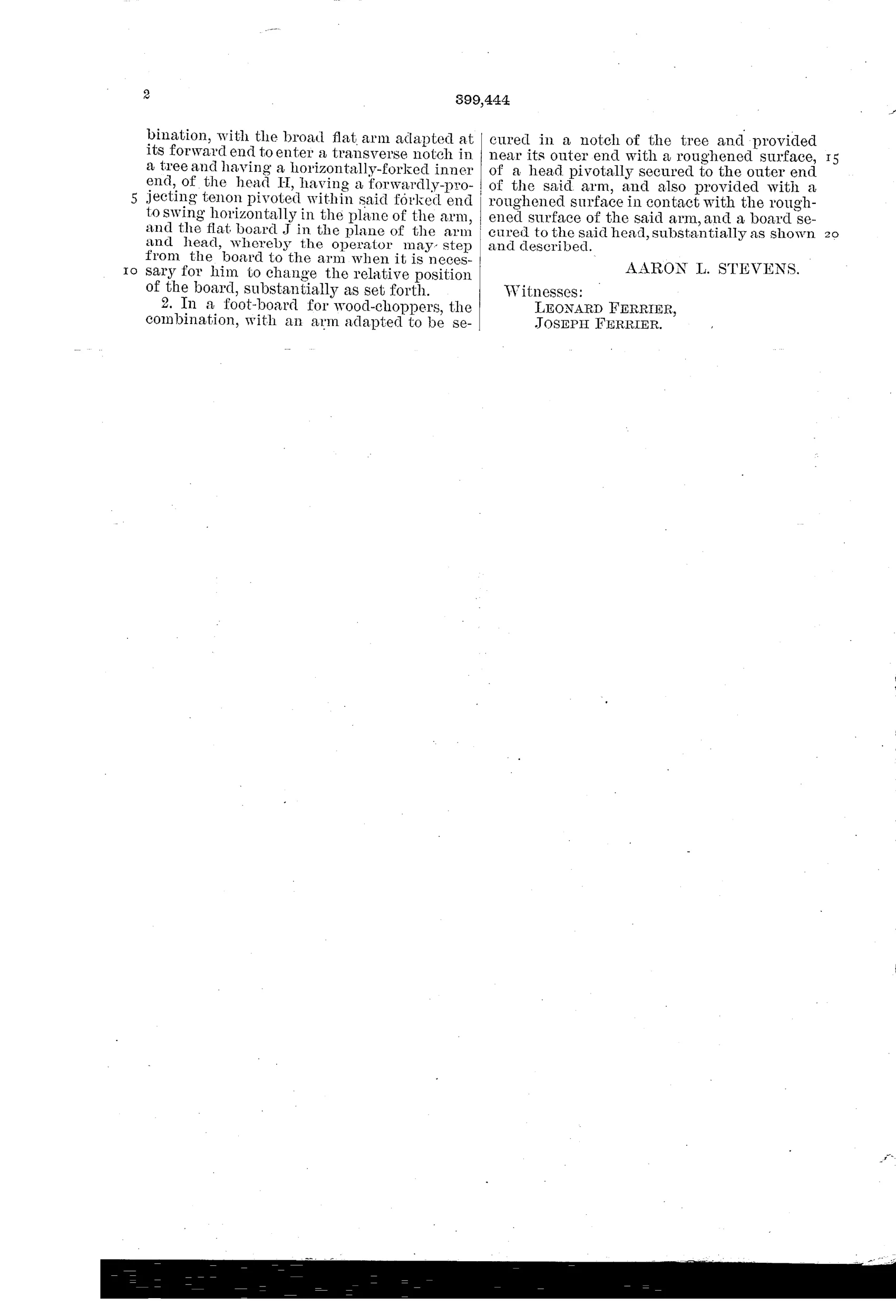
“In a wood-chopper's foot-board, the combination, with the broad flat arm adapted at its forward end to enter a transverse notch in a tree and having a horizontally-forked inner end, of the head H, having a forwardly-projecting tenon pivoted within said forked end to swing horizontally in the plane of the arm, and the flat board J in the plane of the arm and head, whereby the operator may step from the board to the arm when it is necessary for him to change the relative position of the board, substantially as set forth.”
In plain English: The foot-board consists of a flat arm that wedges into a notch cut in a tree, paired with a pivoting head and board so the worker can step off onto the arm and swing the board to a new position without leaving the tree.
➶ In the inventor’s words
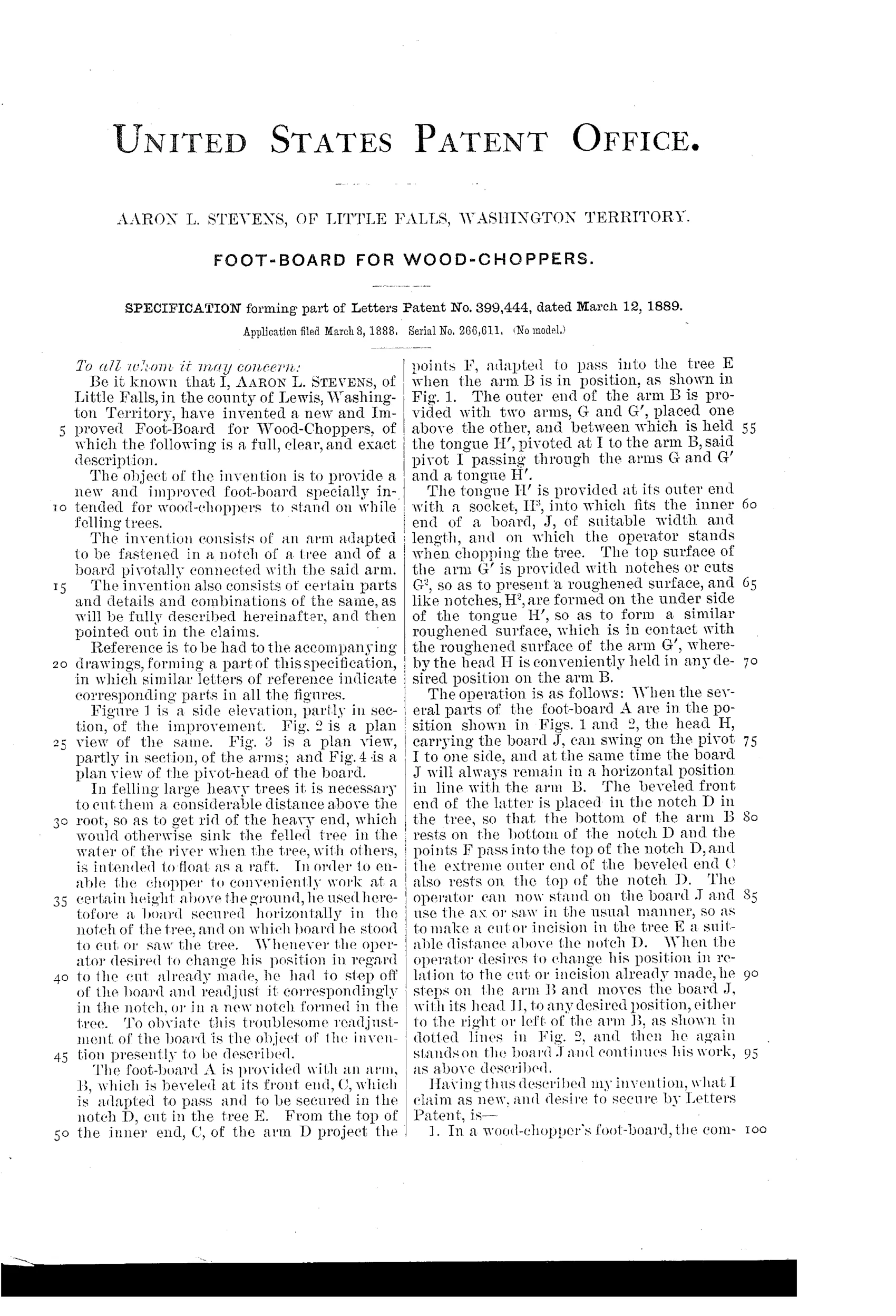
“In felling large heavy trees it is necessary to cut them a considerable distance above the root, so as to get rid of the heavy end, which would otherwise sink the felled tree in the water of the river when the tree, with others, is intended to float as a raft.”— Aaron L. Stevens, from the specification
Fate unknown
Plain springboards were ubiquitous in Northwest logging, but no example of Stevens's pivoting two-piece version is documented; a marked or provenanced specimen would settle it.
➶ Commentary
Let's be upfront: this patent has wandered into the wrong room. Aaron L. Stevens of Little Falls, Washington Territory, patented a foot-board for tree fellers — the device Pacific Northwest loggers called a springboard. It makes no sound, calls no duck, and belongs to the harvest-gear world we normally keep at arm's length. But since it's here, it deserves an honest look.
The springboard itself was standard equipment by 1889: a plank whose beveled iron toe bites into a notch chopped in the trunk, letting the axeman stand six or ten feet up, above the swollen butt of a big fir or cedar. Stevens's twist is the pivot. His board is split into two pieces — a short arm that stays wedged in the tree, and a longer board joined to it by a forked tenon with roughened mating faces. The chopper steps back onto the arm, swings the outer board to a new angle, and the notched friction surfaces lock it there. His specification even explains why: butt logs so heavy they'd sink a raft on the river drive, so you cut high.
It's a sensible refinement of a real tool, and the drawing's serrated pivot detail (Fig. 4) is the whole invention. It just isn't ours — no reed, no tone board, no quack.
Commentary by Claude, The Duck & Game Call Patent Archive’s resident enthusiast