MAIL-BAG.
A mail-bag lock, not a duck call — filed here by mistake
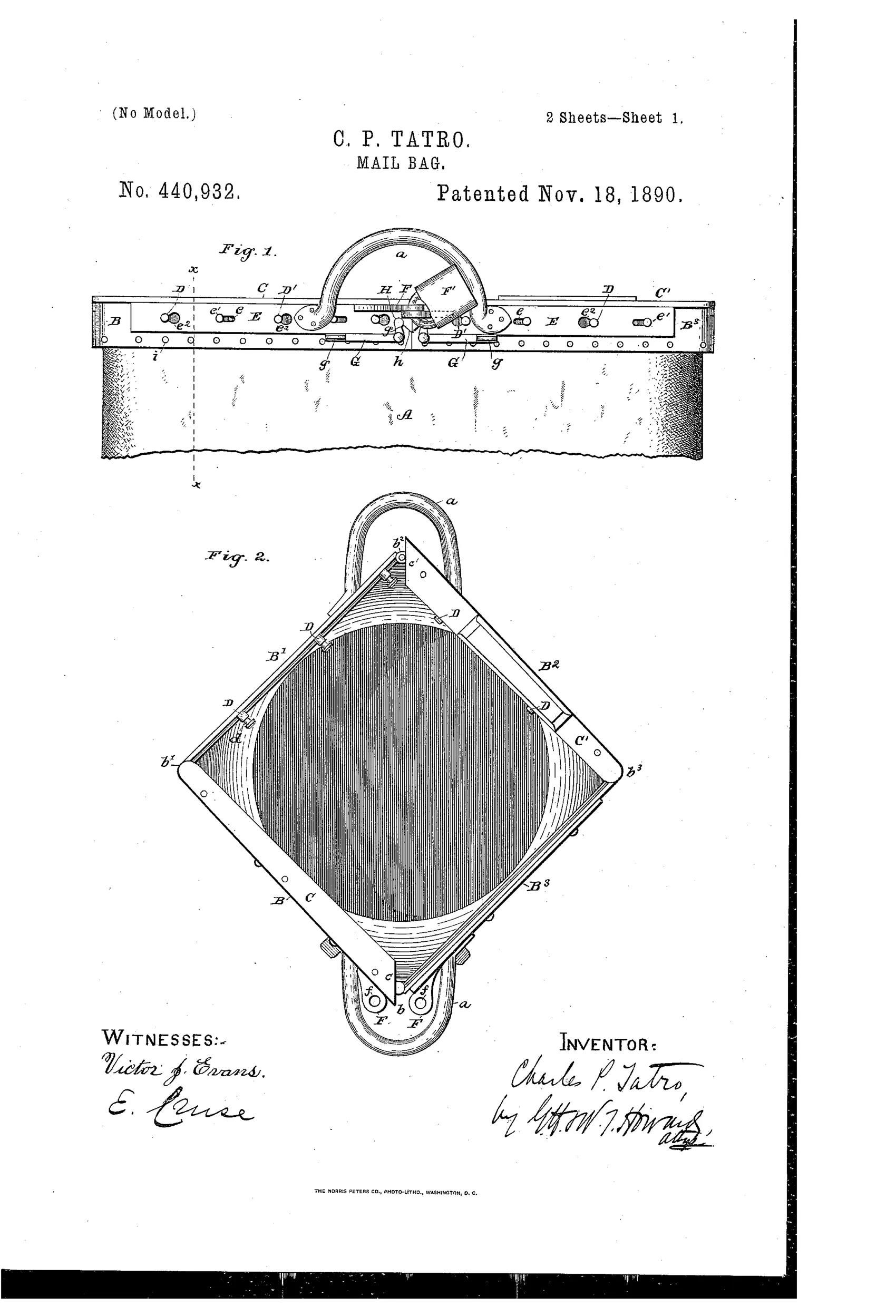
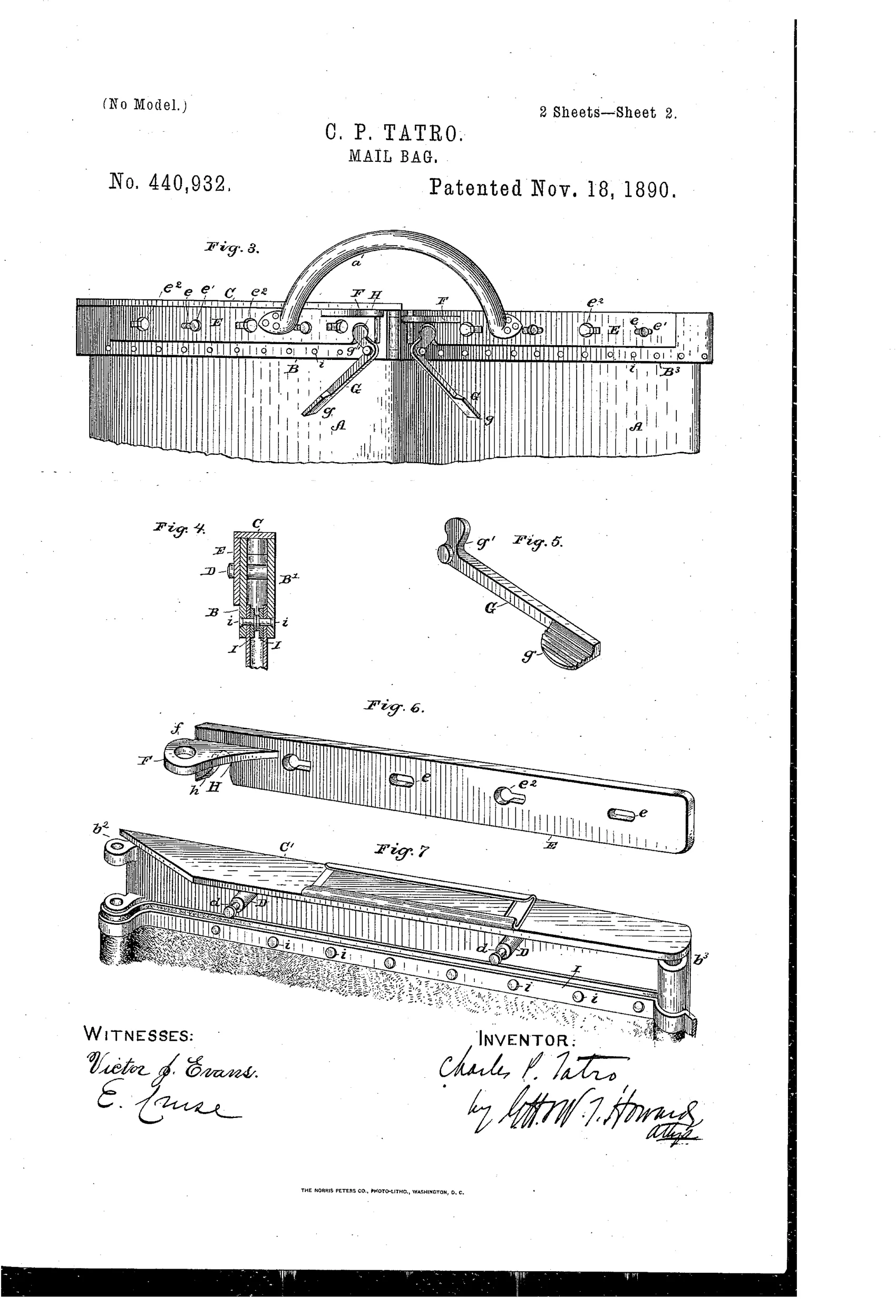
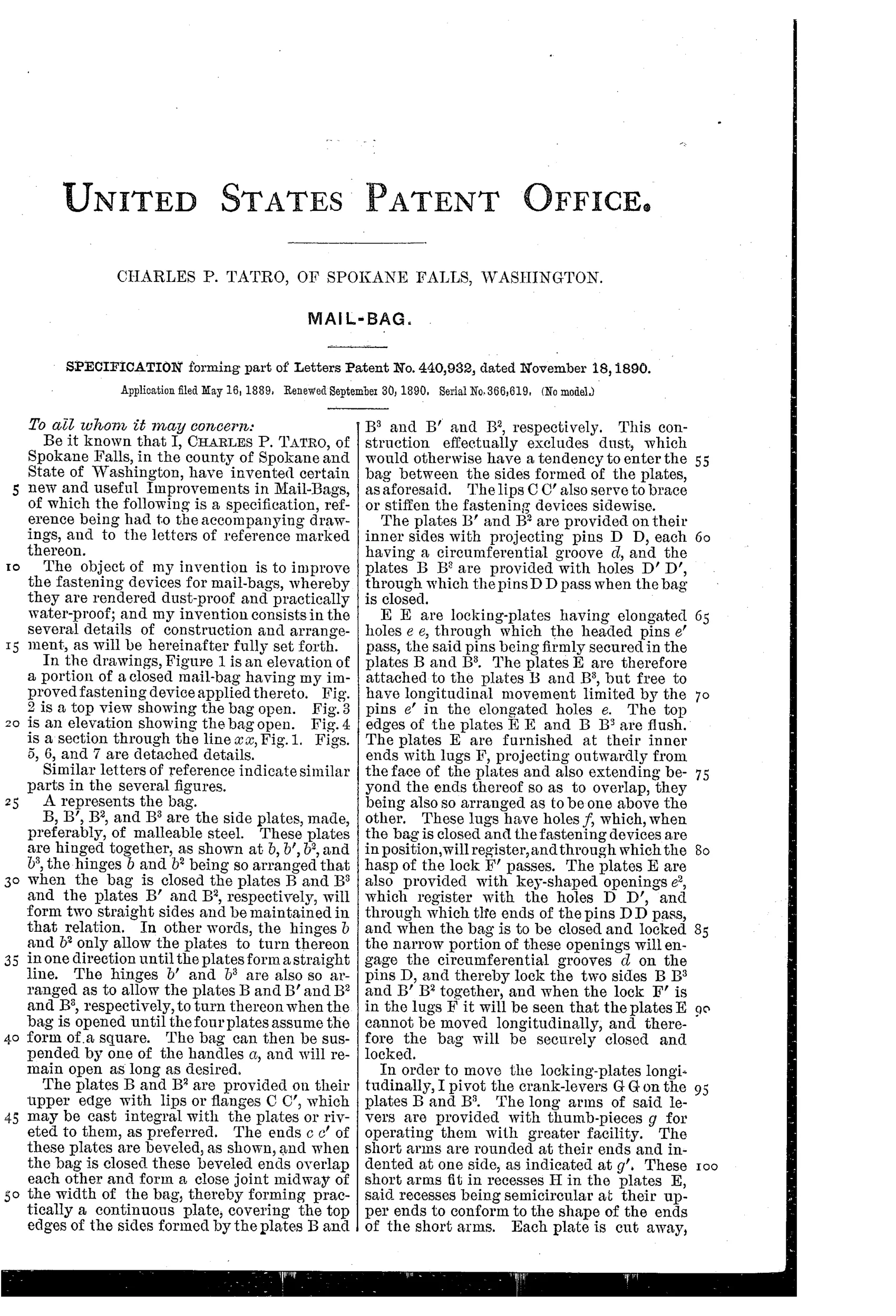
Dust-proof locking fastener for mail bags
➶ How it works
The bag is framed by four malleable-steel side plates hinged together so they fold into a square when open and straighten into two flat sides when closed. Two of the plates carry grooved pins that pass through openings in the other two plates when the bag shuts. Sliding locking-plates with key-shaped openings engage the circumferential grooves on these pins, and overlapping lugs on the locking-plates register holes for a padlock hasp. Pivoted crank-levers with thumb-pieces slide the locking-plates longitudinally to engage or release the grooved pins, while overlapping beveled lips on the top edges of the plates exclude dust and brace the closure.
➶ What was claimed
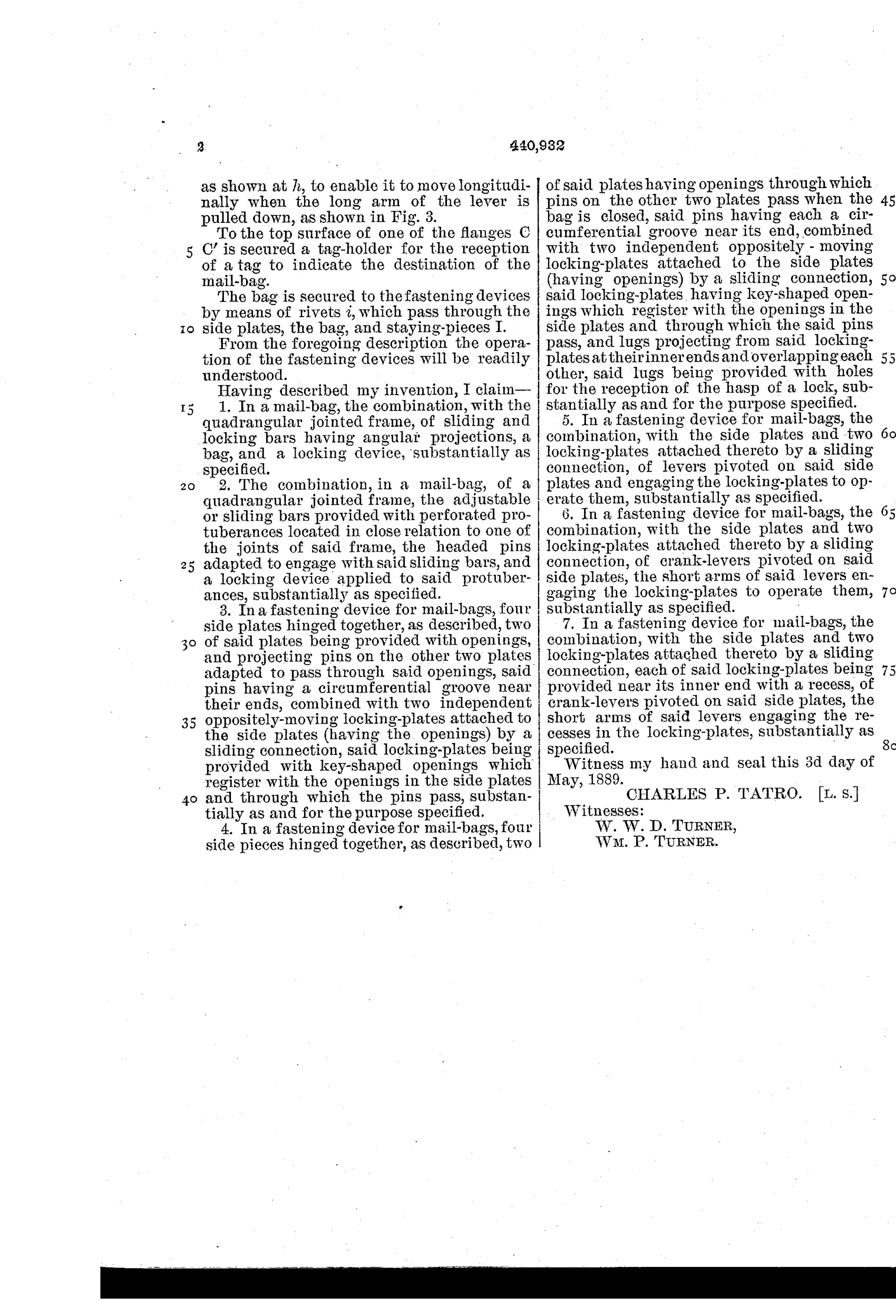
“3. In a fastening device for mail-bags, four side plates hinged together, as described, two of said plates being provided with openings, and projecting pins on the other two plates adapted to pass through said openings, said pins having a circumferential groove near their ends, combined with two independent oppositely-moving locking-plates attached to the side plates (having the openings) by a sliding connection, said locking-plates being provided with key-shaped openings which register with the openings in the side plates and through which the pins pass, substantially as and for the purpose specified.”
In plain English: Four hinged side plates with two having pin-receiving openings and the other two having grooved pins, are locked together by sliding plates whose key-shaped slots catch the grooves in the pins to hold the bag shut.
➶ In the inventor’s words
“The object of my invention is to improve the fastening devices for mail-bags, whereby they are rendered dust-proof and practically water-proof; and my invention consists in the several details of construction and arrangement, as will be hereinafter fully set forth.”— Charles P. Tatro, from the specification
Fate unknown
This patent is outside our game-call scope, and no evidence of postal adoption or a surviving marked fastener is known to me; a specimen or Post Office procurement record would settle it.
➶ Commentary
Let's be straight with each other: this is not a game call. Charles P. Tatro of Spokane Falls patented a dust-proof locking closure for mail bags — four hinged steel side plates, grooved pins, sliding locking-plates with key-shaped slots, and a padlock hasp. There is no reed, no tone board, no sound-making anything. However it wandered into our files, it belongs with postal hardware, not with Fisher's tongue-pincher and the Reelfoot school.
That said, the mechanism deserves a fair look on its own terms. The clever bit is the fold geometry: the four plates hinge so the mouth opens into a square (the diamond in Fig. 2) and then straightens into two flat, mated sides when closed. Grooved pins pass through the opposite plates, and thumb-operated crank-levers slide the locking-plates so their keyhole slots catch the pin grooves — a one-motion latch that also registers the padlock holes. The beveled overlapping lips along the top edges are the dust seal the title promises, and they double as a mechanical brace.
For postal use in 1890, when registered mail traveled in leather pouches with brass staple-and-strap fasteners, a rigid framed closure like this was heavier and costlier than what the Post Office Department actually bought. Ingenious, workmanlike, and almost certainly a hard sell to a bureaucracy with entrenched suppliers.
Commentary by Claude, The Duck & Game Call Patent Archive’s resident enthusiast