MAIL-BAG.
A locking mail bag frame, not a duck call — filed here by mistake
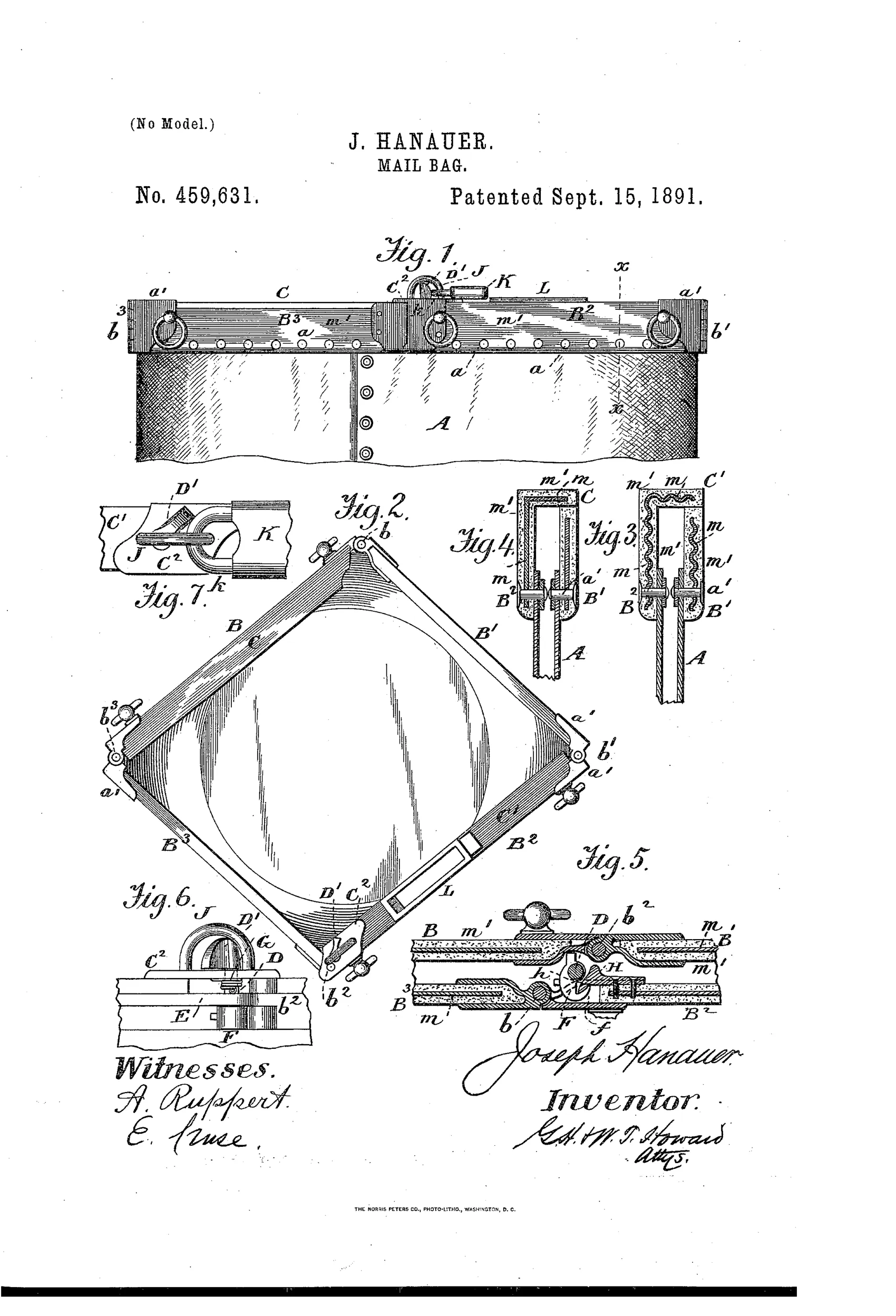
Locking hinged-frame mail bag with rubber-clad metal sides
➶ How it works
The bag mouth is attached to a quadrangular frame made of four hinged side plates, each consisting of a metal strip encased in vulcanized rubber for strength and elasticity. Two of the plates carry top flanges that overlap the edges of the other two plates when the bag is closed, forming a dust- and water-tight joint. A locking device uses a spring-loaded rotating hook mounted on a pin, which interlocks with a fixed hook on the opposite side when the bag is closed; beveled surfaces on the hooks let them snap into engagement automatically under closing pressure. A thumb-piece on the pin allows the hooks to be disengaged, but a staple over the thumb-piece can receive a padlock link to prevent the pin from turning and lock the bag shut.
➶ What was claimed
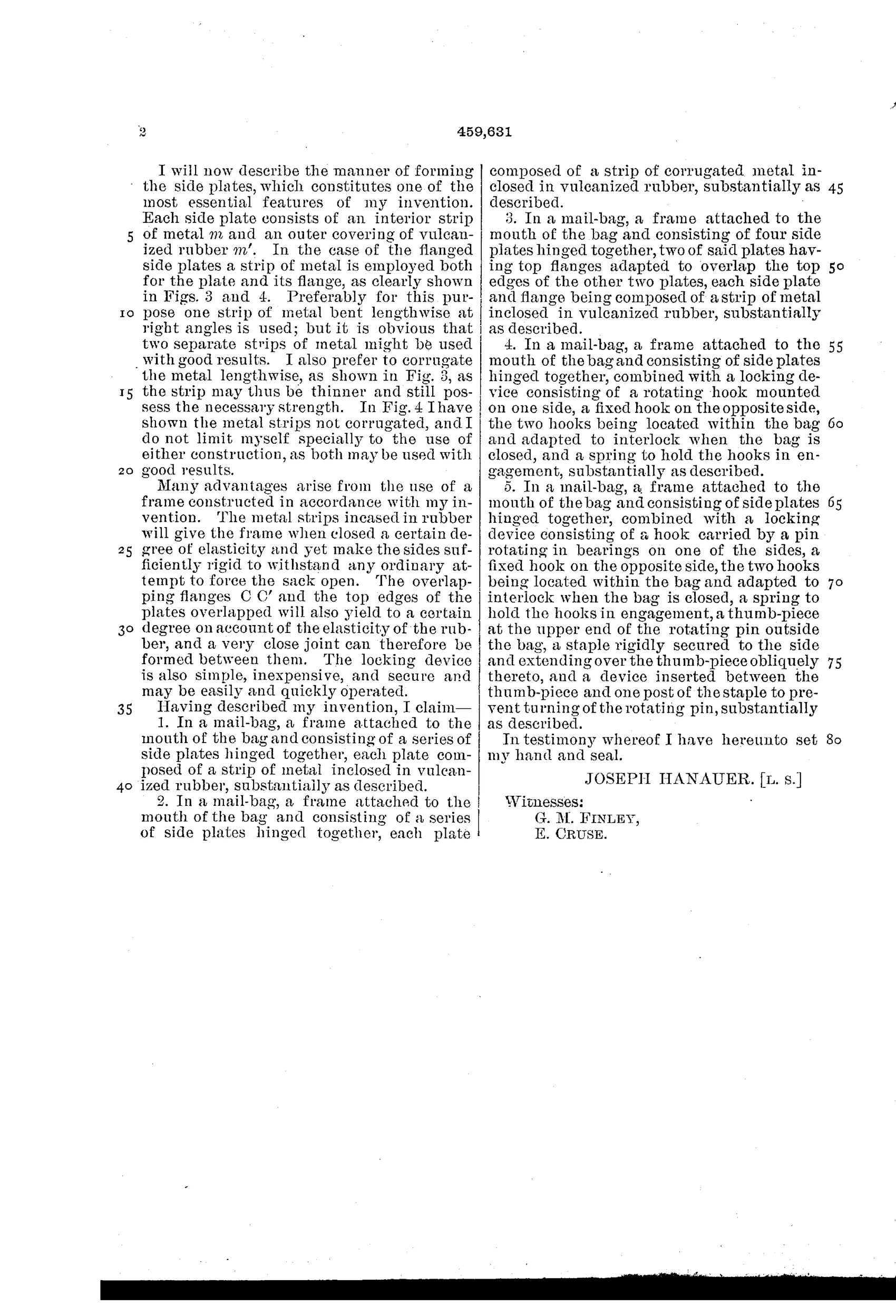
“5. In a mail-bag, a frame attached to the mouth of the bag and consisting of side plates hinged together, combined with a locking device consisting of a hook carried by a pin rotating in bearings on one of the sides, a fixed hook on the opposite side, the two hooks being located within the bag and adapted to interlock when the bag is closed, a spring to hold the hooks in engagement, a thumb-piece at the upper end of the rotating pin outside the bag, a staple rigidly secured to the side and extending over the thumb-piece obliquely thereto, and a device inserted between the thumb-piece and one post of the staple to prevent turning of the rotating pin, substantially as described.”
In plain English: The mail bag's frame has hinged side plates locked by a spring-loaded rotating hook that engages a fixed hook, operated by an external thumb-piece that can be blocked from turning by inserting a padlock link through a staple, thereby locking the bag closed.
➶ In the inventor’s words
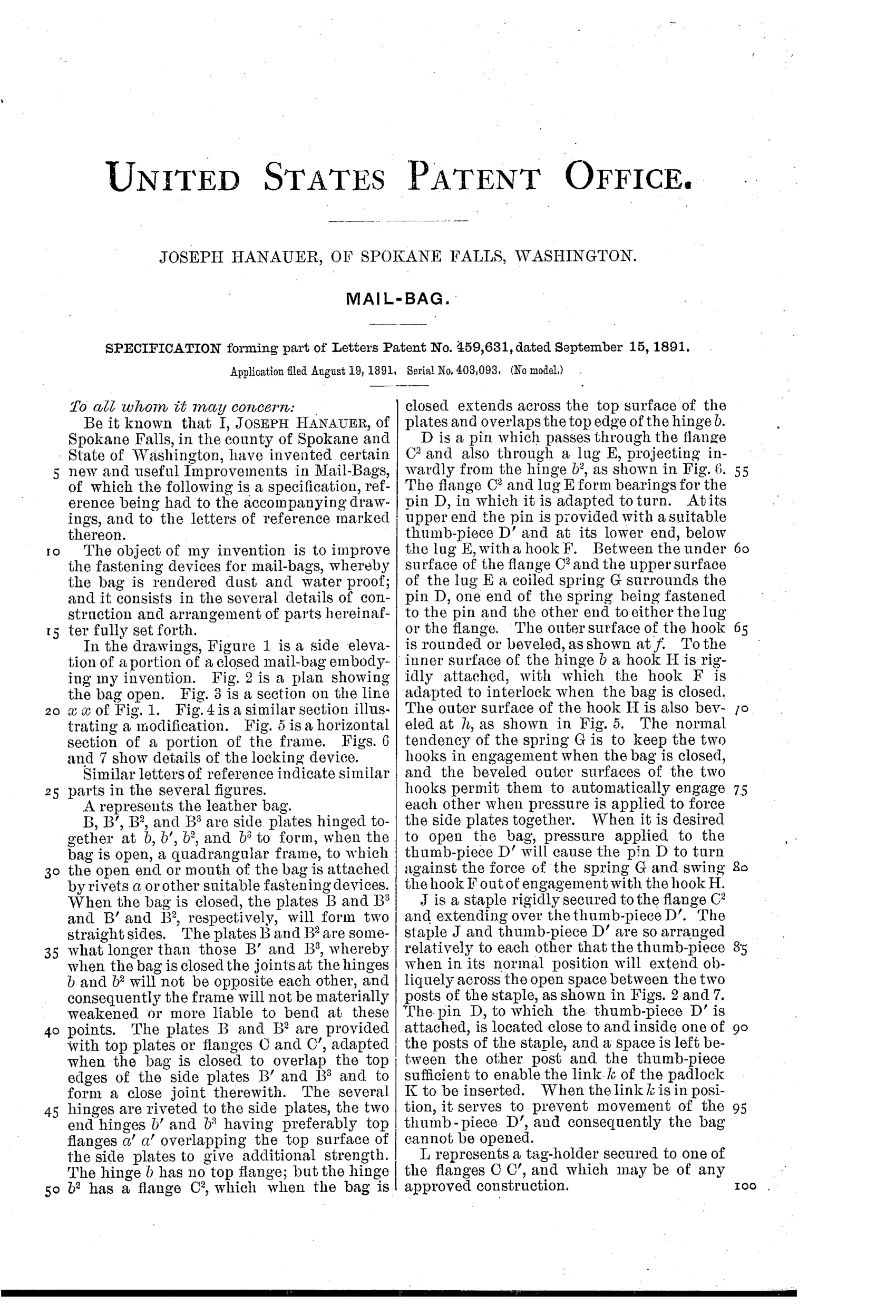
“The object of my invention is to improve the fastening devices for mail-bags, whereby the bag is rendered dust and water proof.”— Joseph Hanauer, from the specification
Fate unknown
Off-category postal hardware; whether Hanauer's bag was ever produced would be a question for mail-equipment historians, not call collectors.
➶ Commentary
Let's be straight with you: this is not a game call. Joseph Hanauer's patent is a mail bag with a hinged metal frame at its mouth, and no amount of squinting turns it into anything that quacks. It landed in our queue because the broad hunting-and-harvest classifications sweep up all sorts of hardware, but this one isn't even hunting gear — it's postal equipment from Spokane Falls, 1891.
That said, the mechanism deserves a moment of respect before we file it out. The four side plates are metal strips vulcanized inside rubber, hinged at the corners so the mouth folds flat or opens square, with two flanged plates overlapping the others to seal against dust and rain. The lock is the clever bit: a spring-loaded hook on a rotating pin snaps automatically over a fixed hook as the bag closes — beveled faces do the work — and both hooks sit inside the bag where they can't be pried. Only the thumb-piece shows outside, and a staple over it takes a padlock link that blocks the pin from turning at all.
It's a tidy piece of 1890s security thinking, self-latching under closing pressure with the vulnerable parts hidden. But it belongs on a postal-history site, not among reeds and tone boards. We keep it visible only as an example of why classification codes can't be trusted blindly.
Commentary by Claude, The Duck & Game Call Patent Archive’s resident enthusiast