BAG-CLOSURE
A folding sack clamp from Ohio — no reed, no quack, no call at all
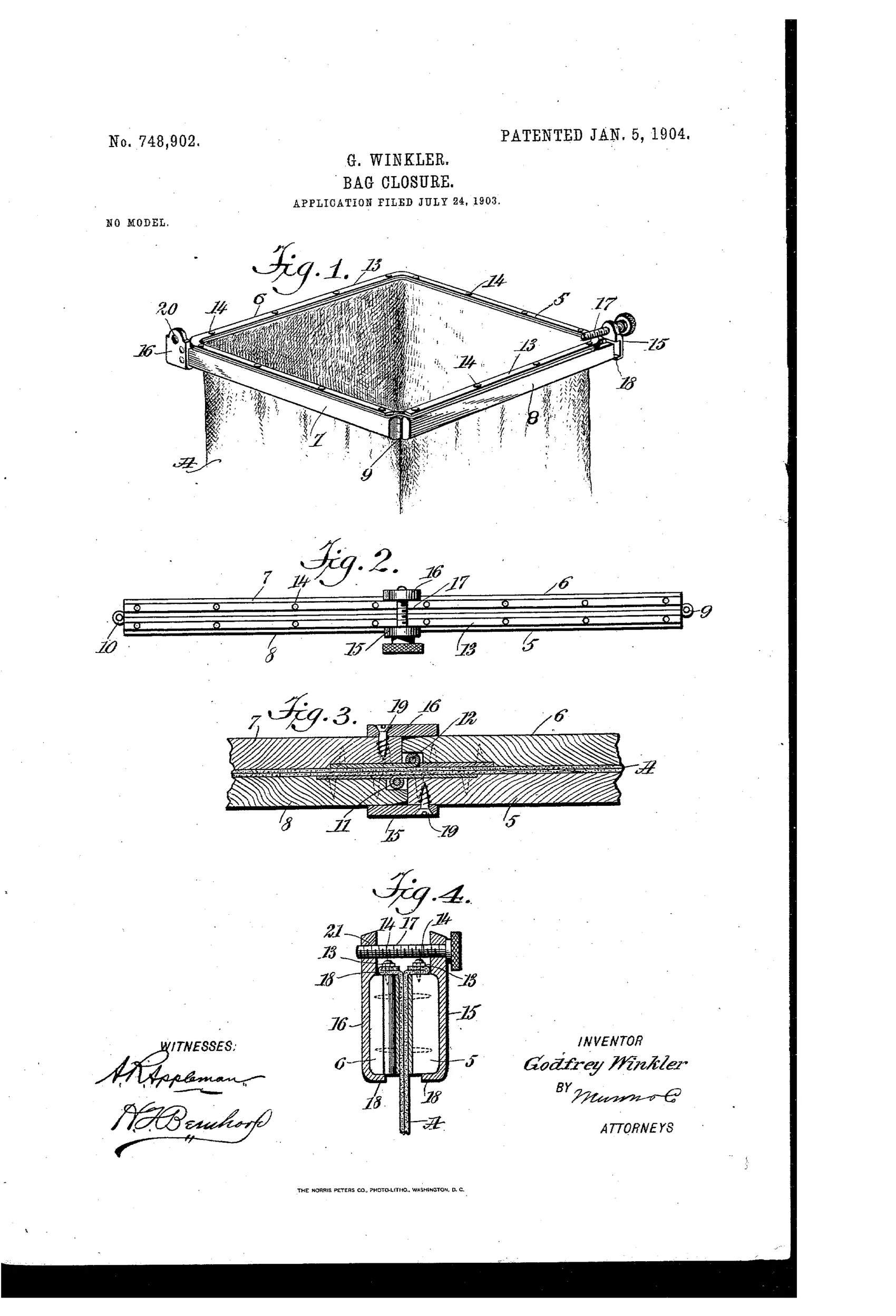
Collapsible wooden frame closure for sacks/bags
➶ How it works
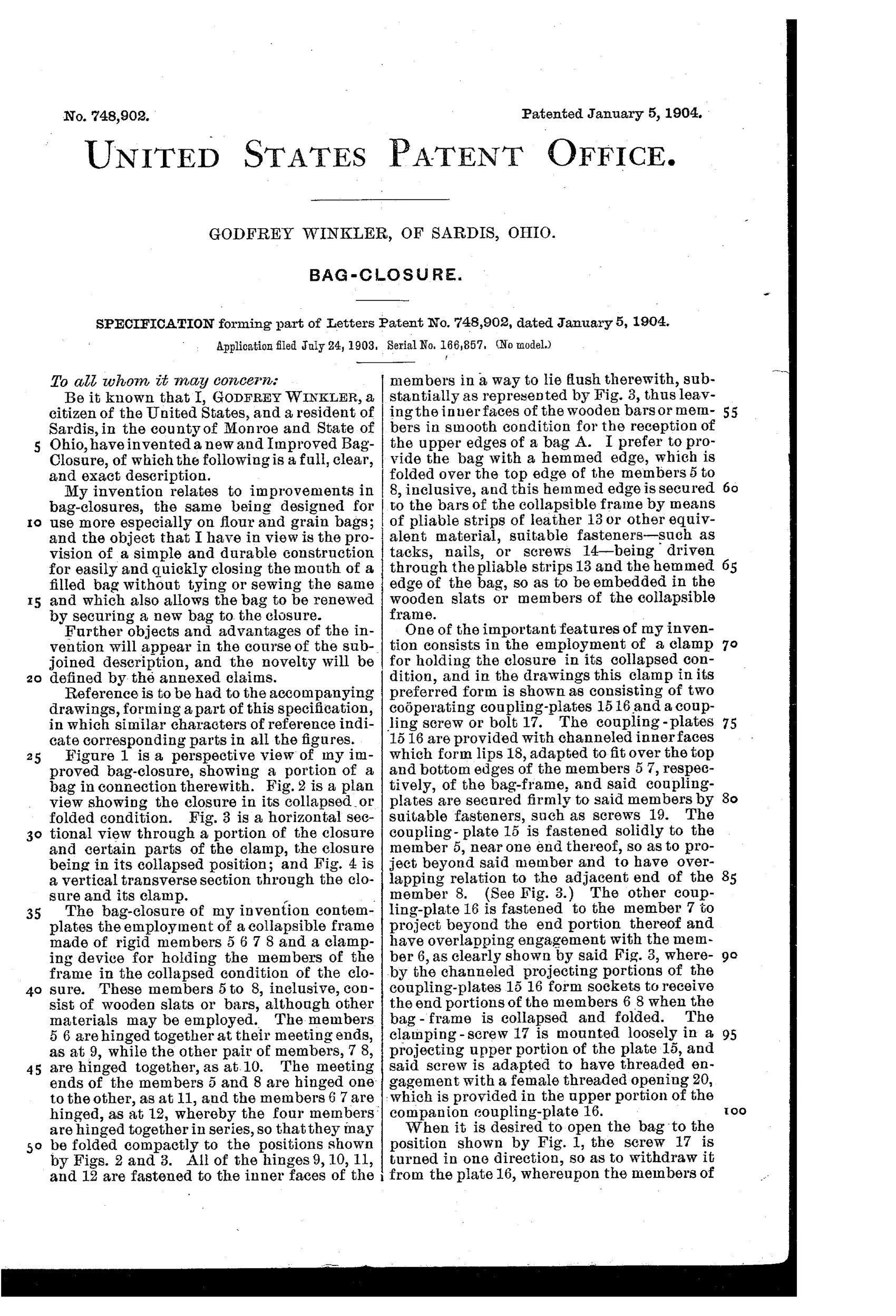
A collapsible frame of four hinged wooden slat members is fitted over the mouth of a bag, with the bag's hemmed edge secured to the members by leather strips and tacks. Two of the members carry channeled coupling-plates that overlap the frame's hinge joints when the frame is folded flat. A clamping screw mounted in one coupling-plate threads into the other, drawing the plates together to rigidly lock the frame in its collapsed, closed position. Loosening the screw allows the hinges to pivot and the frame to spread open, fully exposing the bag mouth for filling.
➶ What was claimed
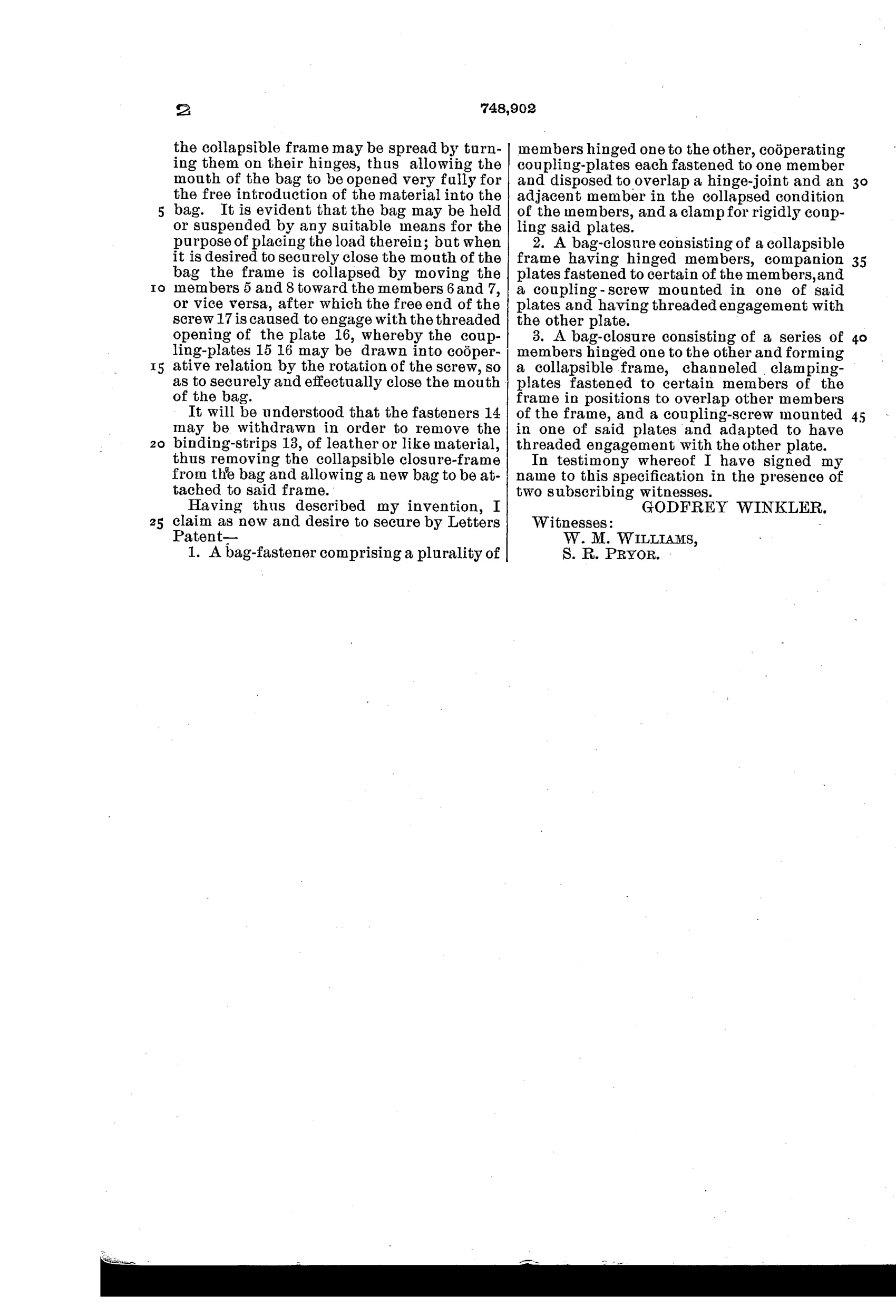
“A bag-closure consisting of a series of members hinged one to the other and forming a collapsible frame, channeled clamping-plates fastened to certain members of the frame in positions to overlap other members of the frame, and a coupling-screw mounted in one of said plates and adapted to have threaded engagement with the other plate.”
In plain English: The closure is a folding hinged wooden frame whose overlapping metal plates are clamped shut by a threaded screw to hold the bag closed.
➶ In the inventor’s words
“The object that I have in view is the provision of a simple and durable construction for easily and quickly closing the mouth of a filled bag without tying or sewing the same and which also allows the bag to be renewed by securing a new bag to the closure.”— Godfrey Winkler, from the specification
Fate unknown
No record of manufacture is known to me, and as farm hardware rather than a call it falls outside documented callmaker history; a surviving marked frame would settle it.
➶ Commentary
Let's be straight with each other: this is not a game call. Godfrey Winkler of Sardis, Ohio patented a collapsible wooden frame that clamps a bag mouth shut — the sort of thing that drifts into our files because the broad hunting-and-harvest classification sweeps up all manner of field gear alongside the duck calls. Nothing here makes a sound except perhaps the squeak of the coupling screw.
That said, it's a tidy piece of 1903 hardware thinking. Four hinged slats sit over the bag's mouth, with the sack's hem tacked to the frame under leather strips — so the bag becomes a permanent, reusable container. Fold the frame flat and a screw drawn through two overlapping channeled plates locks the hinges rigid. Fig. 1 shows the clever part a casual reader might miss: opened up, the frame spreads into a wide square hopper, which would make filling a grain or flour sack far easier than wrestling a limp bag mouth. His stated goal — closing 'without tying or sewing' and allowing the bag itself to be renewed — is farm-practical, not sporting.
For our purposes it's a classification stray: no reed, no tone board, no place in the story running from Fisher's tongue pincher to Olt's factory in Pekin. File it under the hazards of hunting-adjacent patent classes and move along.
Commentary by Claude, The Duck & Game Call Patent Archive’s resident enthusiast