DECOY-DUCK.
A decoy, not a call — but the hinged metal head earns a look
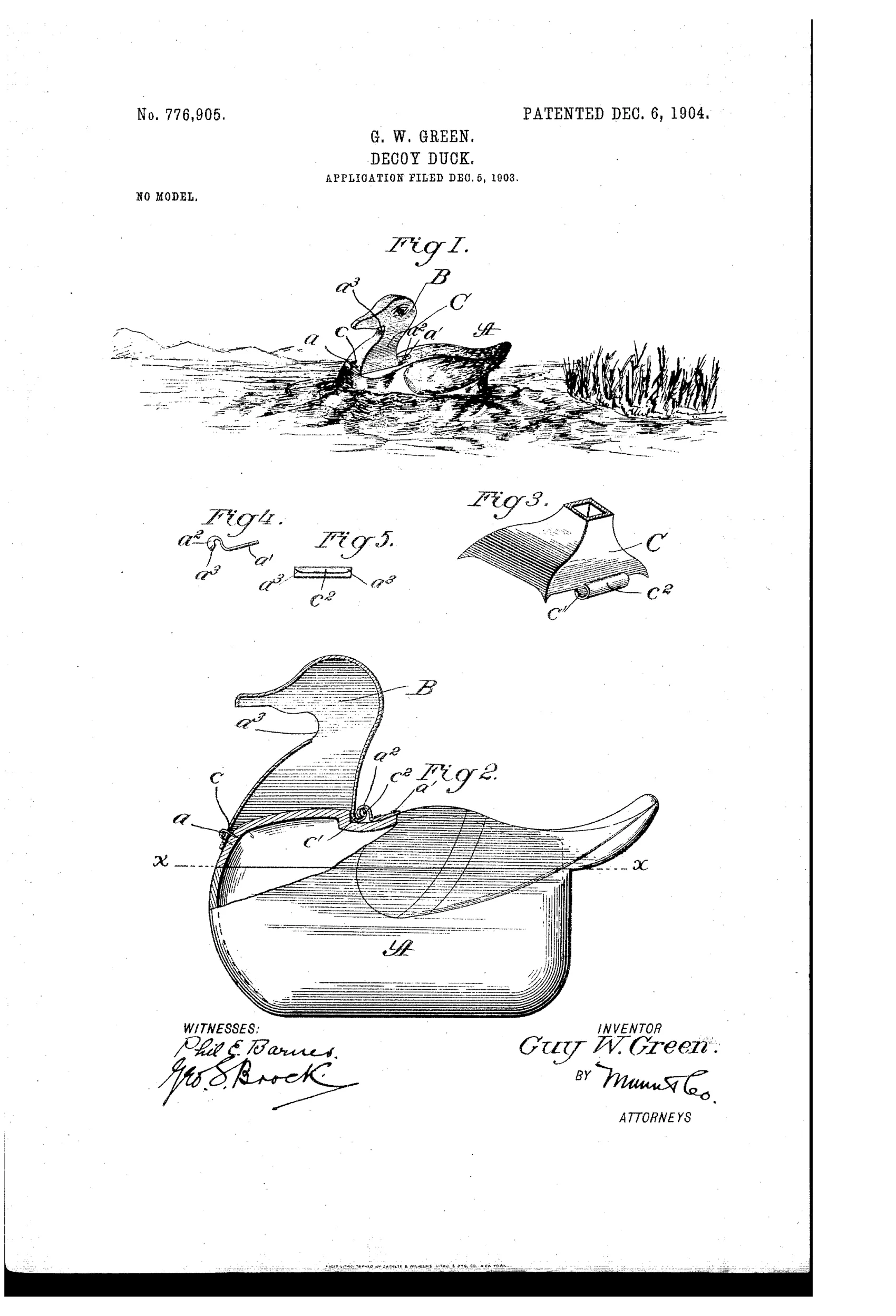
A detachable-head decoy duck
➶ How it works
The body is a hollow, buoyant block of wood or fiber, split along a horizontal line and hollowed out, then glued back together. A hollow sheet-metal head and neck fits over the front of the body, secured by a pintleless hinge formed from a hooked plate and a hooked tongue that snap together. A staple or eye on the body passes through a slot in the neck and is locked in place with a removable cotter-pin, allowing the head to swing back and forth or be fully detached for shipping. The open underside of the bill catches air currents to make the decoy swing naturally on the water.
➶ What was claimed
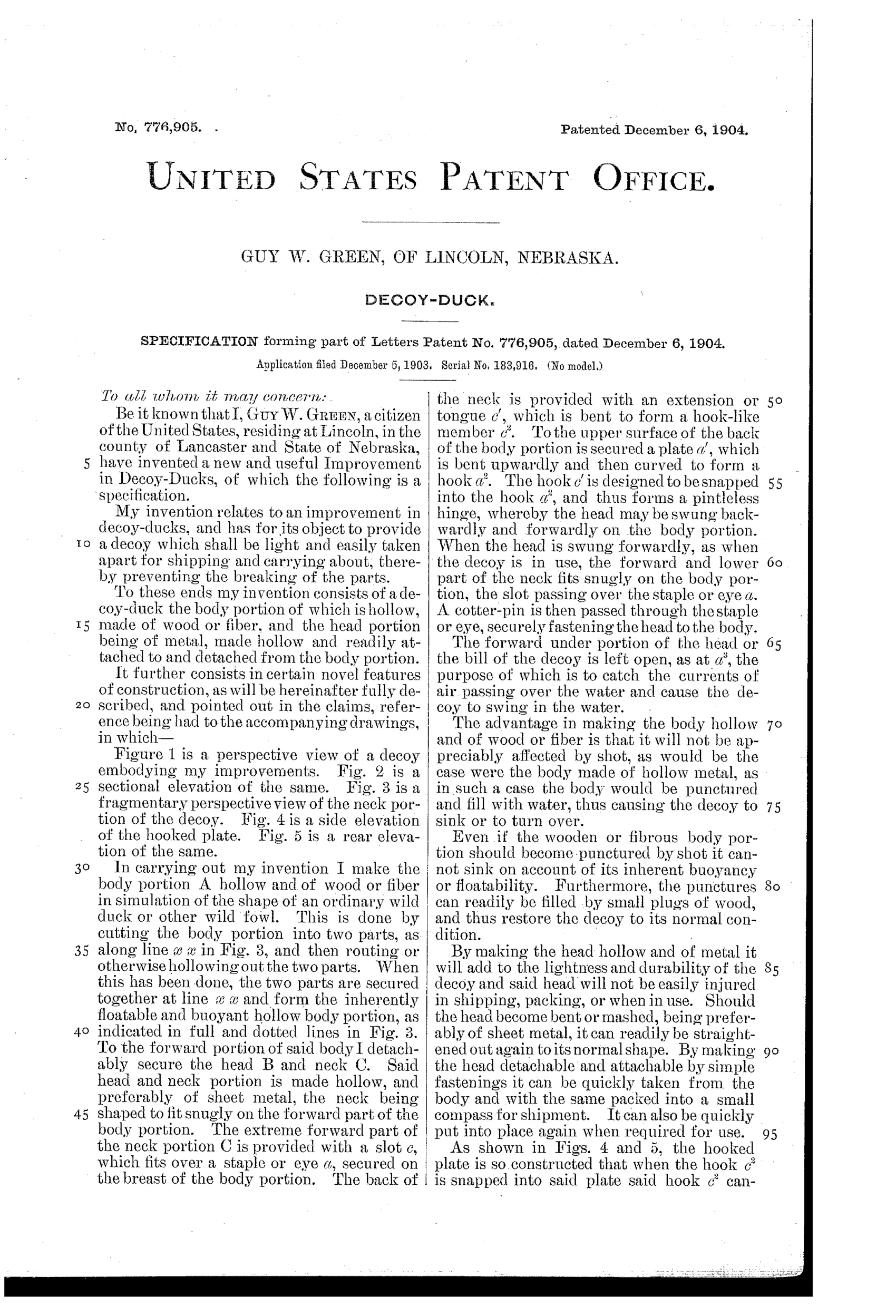
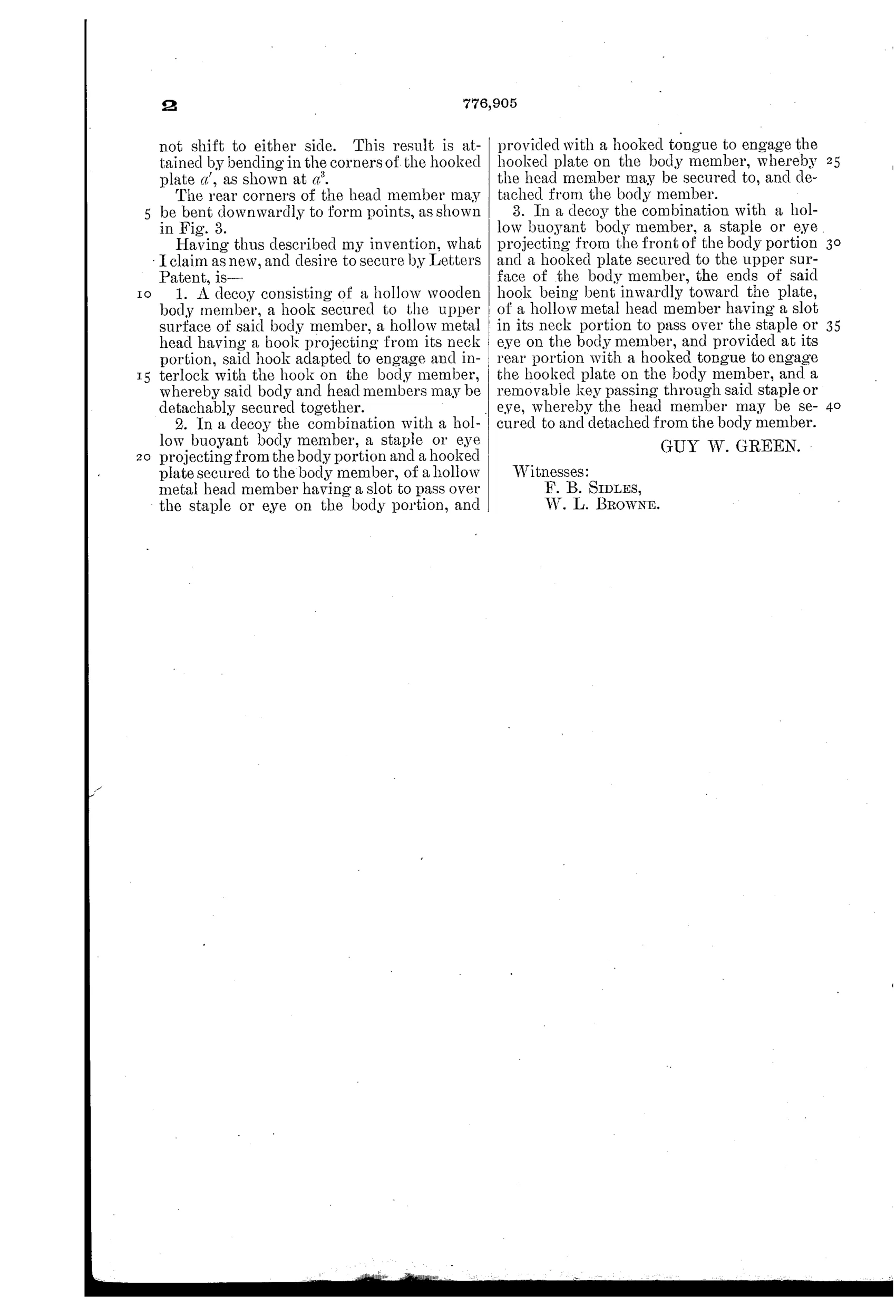
“1. A decoy consisting of a hollow wooden body member, a hook secured to the upper surface of said body member, a hollow metal head having a hook projecting from its neck portion, said hook adapted to engage and interlock with the hook on the body member, whereby said body and head members may be detachably secured together.”
In plain English: The decoy has a hollow wooden body with a hook on top and a hollow metal head with a matching hook on its neck, so the two interlocking hooks let the head be attached to and removed from the body.
➶ In the inventor’s words
“Even if the wooden or fibrous body portion should become punctured by shot it cannot sink on account of its inherent buoyancy or floatability.”— Guy W. Green, from the specification
Fate unknown
No documented example of this metal-headed, detachable design is known to me; a surviving marked decoy or a period catalog listing would settle it.
➶ Commentary
Let's be upfront: this is a decoy, not a call, so it sits at the edge of our beat. The harvest-gear classification sweeps up all kinds of hunting equipment, and Guy Green's decoy duck is here as a neighbor rather than a resident. Still, it's worth two minutes, because the mechanics are genuinely thoughtful.
The body is a hollowed wooden block, split horizontally, gutted, and glued back — standard practice among good decoy makers for lightness. What's unusual is the head: hollow sheet metal, joined to the body by a pintleless hinge made of two interlocking hooks and locked with a cotter-pin through a staple. Pull the pin and the head comes off entirely for shipping — a real virtue when a rig might be two or three dozen birds hauled by rail. Leave it loose and the head swings, and here's the detail a casual reader will miss: Fig. 2 shows the underside of the bill left open, deliberately, so wind catches it and rocks the decoy on the water. Motion was the eternal decoy problem, and Green solves it passively, with no strings or clockwork.
His best line — that a shot-punctured body 'cannot sink on account of its inherent buoyancy' — is honest salesmanship. Whether hunters wanted a metal-headed duck glinting at first light is another question; painted wood held the market for a reason.
Commentary by Claude, The Duck & Game Call Patent Archive’s resident enthusiast