DECOY-DUCK.
A duck you sew together: molded-paper decoy stitched at the seam, 1905.
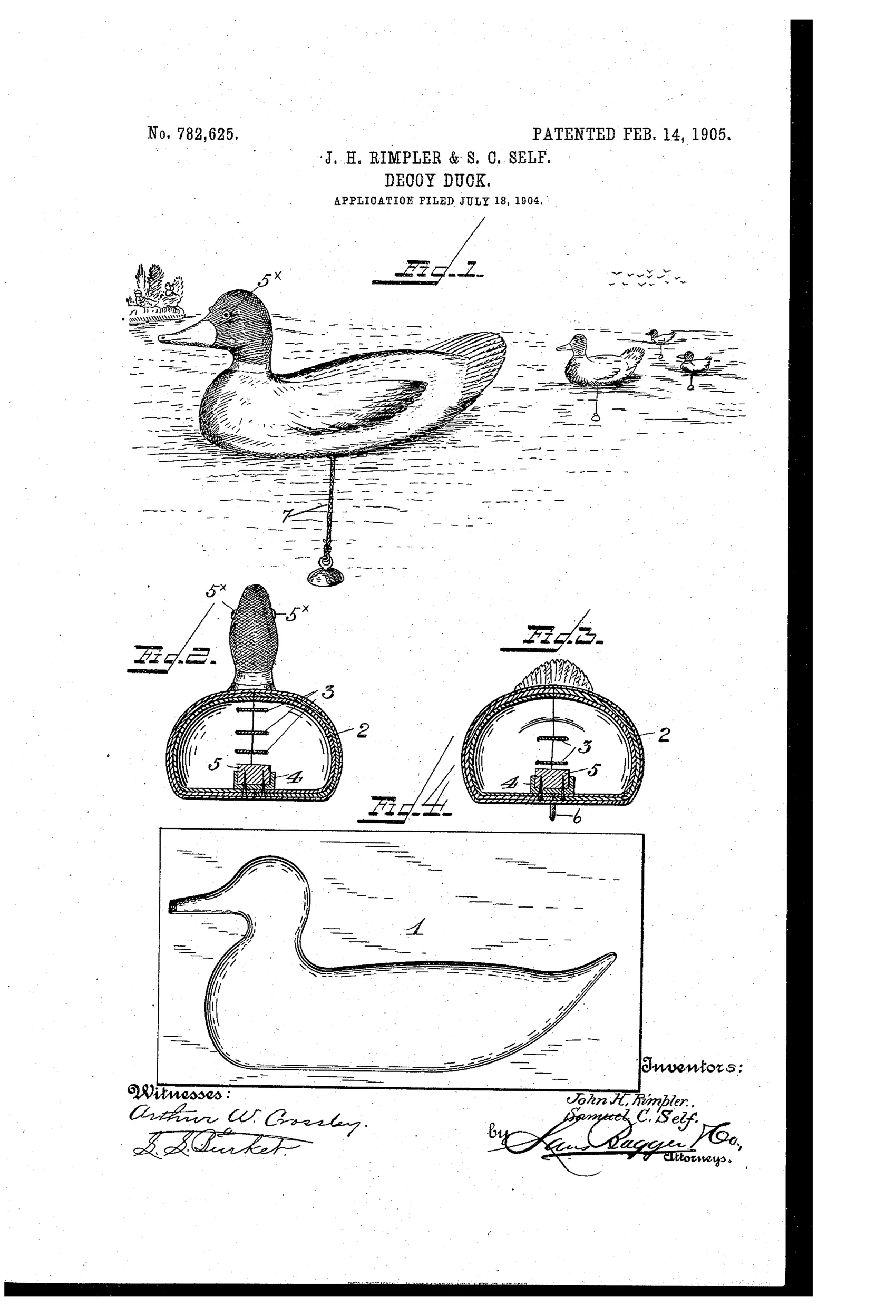
Hollow molded-paper waterfowl decoy
➶ How it works
Two halves of thick pasted paper sheets are molded, oven-dried, and paraffin-treated for hardness and water resistance. A trough-shaped lead weight with an embedded wooden strip is placed inside before the halves are sewn together with strong cord along the seam. Molded paper covers the seam line, and the whole decoy is coated with waterproof varnish such as spar-varnish and paraffin. A screw-eye may be turned into the bottom strip of wood to attach a cord or weighted cord for anchoring the decoy upright in water.
➶ What was claimed
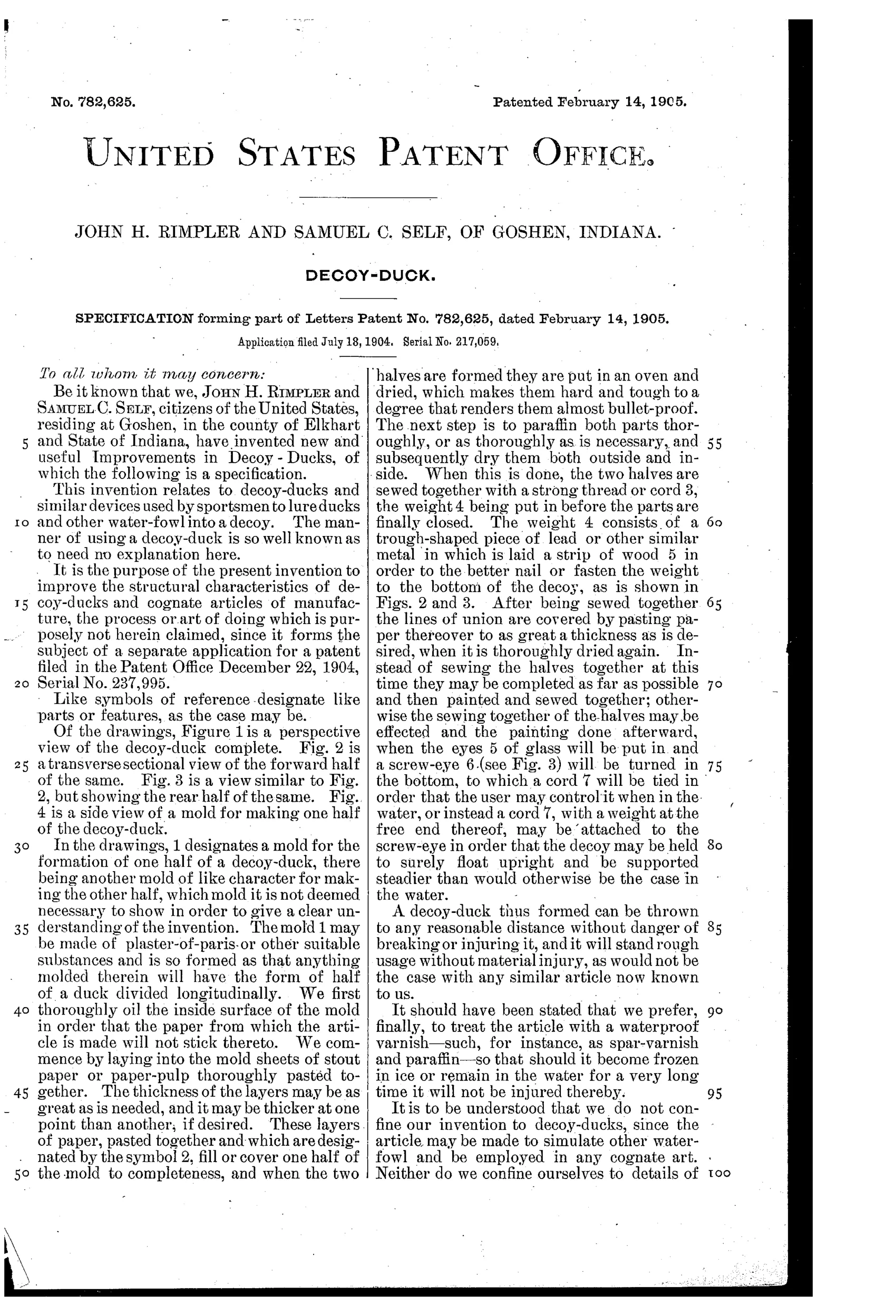
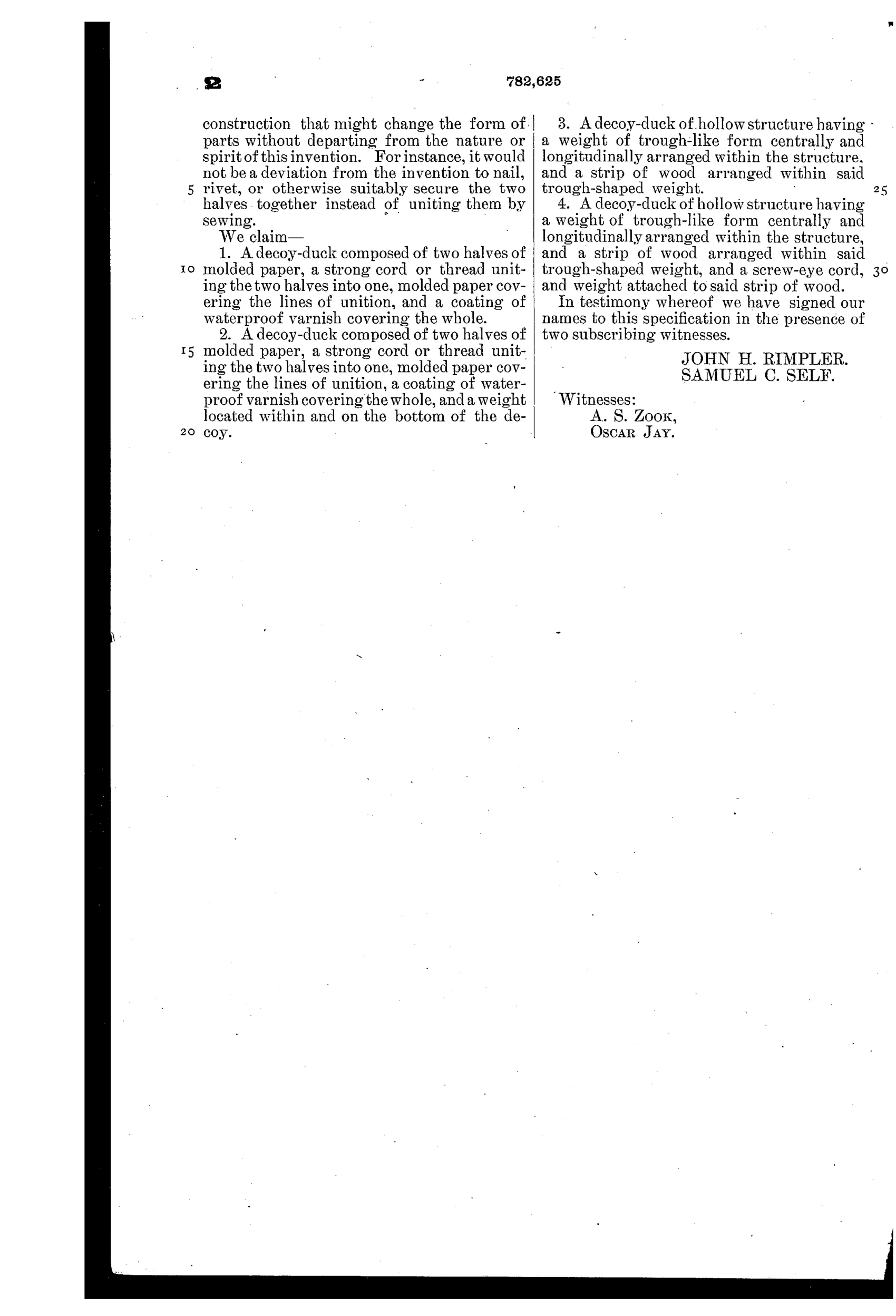
“1. A decoy-duck composed of two halves of molded paper, a strong cord or thread uniting the two halves into one, molded paper covering the lines of unition, and a coating of waterproof varnish covering the whole.”
In plain English: The decoy is made of two molded-paper halves sewn together with cord, with the seam covered in paper and the whole thing coated in waterproof varnish.
➶ In the inventor’s words
“A decoy-duck thus formed can be thrown to any reasonable distance without danger of breaking or injuring it, and it will stand rough usage without material injury, as would not be the case with any similar article now known to us.”— John H. Rimpler and Samuel C. Self, from the specification
Fate unknown
Molded-paper decoys were later made commercially, but no Rimpler & Self example is documented; a marked or attributable specimen would settle it.
➶ Commentary
First, a housekeeping note: this is a decoy, not a call. It makes no sound at all — it sits in the broad hunting-gear class alongside our calls, and it's worth a look precisely because it shows the other half of the duck hunter's kit being industrialized in the same years Olt was starting to turn out calls in Pekin.
The mechanical idea is honest and cheap. Wooden decoys of the era were carved, heavy, and expensive by the dozen; Rimpler and Self propose pressing two halves of pasted paper in a form (Fig. 4 shows the mold), oven-drying them, dropping in a trough of lead with a wooden strip embedded for the screw-eye, then literally sewing the halves together with cord and papering over the seam. The paraffin-and-spar-varnish finish does the waterproofing. The sectional views in Figs. 2 and 3 are the interesting part: the lead ballast sits low in the hollow shell, doing the self-righting work a carved keel does on a wooden bird.
Were they onto something? Absolutely — papier-mâché decoys became a real industry a generation later. Whether stitched seams could survive a season of freezing water and rough handling is the doubtful bit; the patent's own boast about throwing it 'to any reasonable distance' suggests they knew durability was the question buyers would ask. A plausible idea from Goshen, ahead of the materials that would make it stick.
Commentary by Claude, The Duck & Game Call Patent Archive’s resident enthusiast