MACHINE FOR CLIMBING POLES.
A pole-climbing rig, not a call — filed here by classification accident
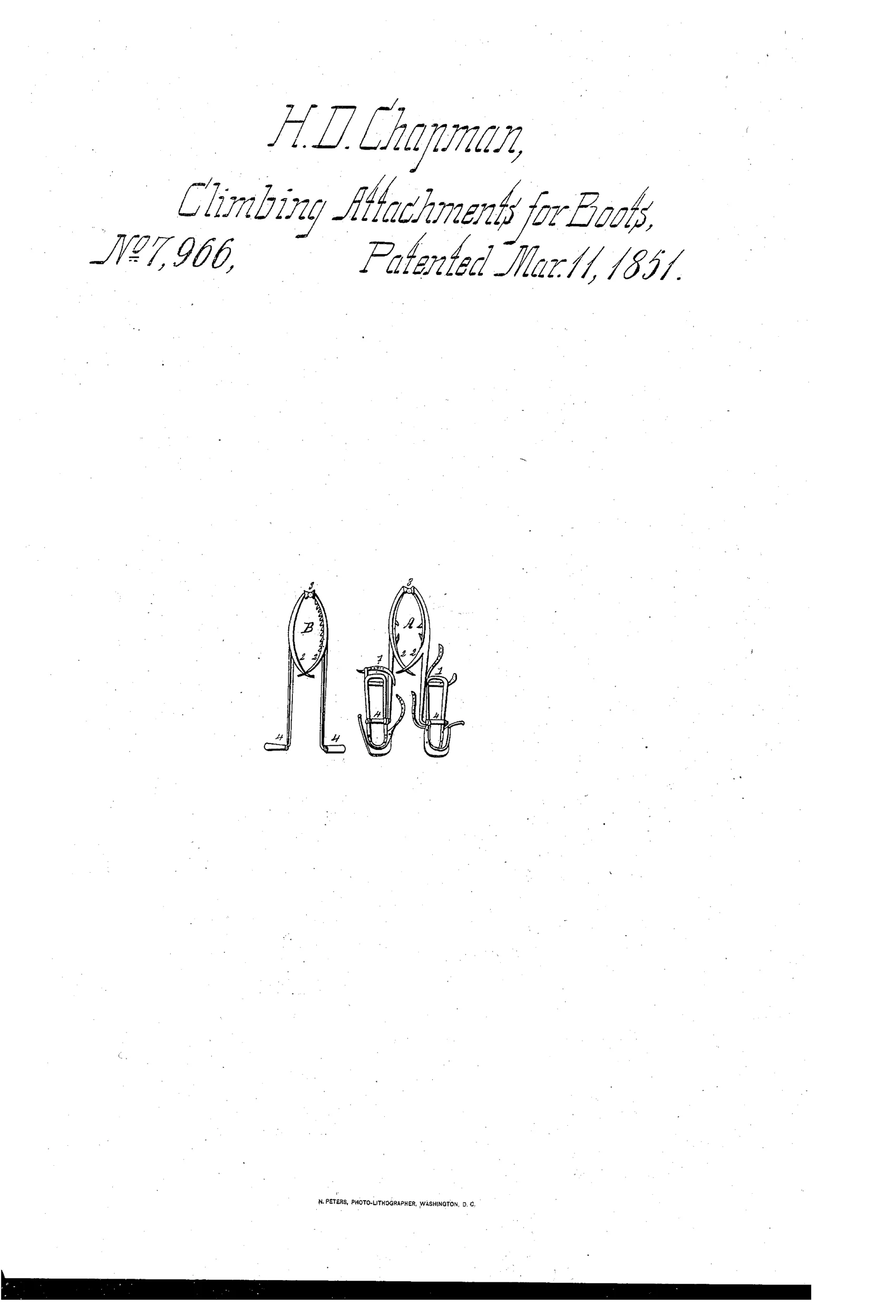
Hand and foot climbing device for poles and masts
➶ How it works
An iron grappling lever (A) fitted with sandals is placed around the base of a pole and secured to the climber's feet with straps and buckles. A second similar grappling (B), fitted with wooden hand grips instead of sandals, is held by the hands. The climber alternately closes the hand grappling to support his weight, draws his feet upward with the foot grappling, and repeats this motion to ascend, with a hinge point (Fig. 3) allowing each grappling to expand or contract around the pole.
➶ What was claimed
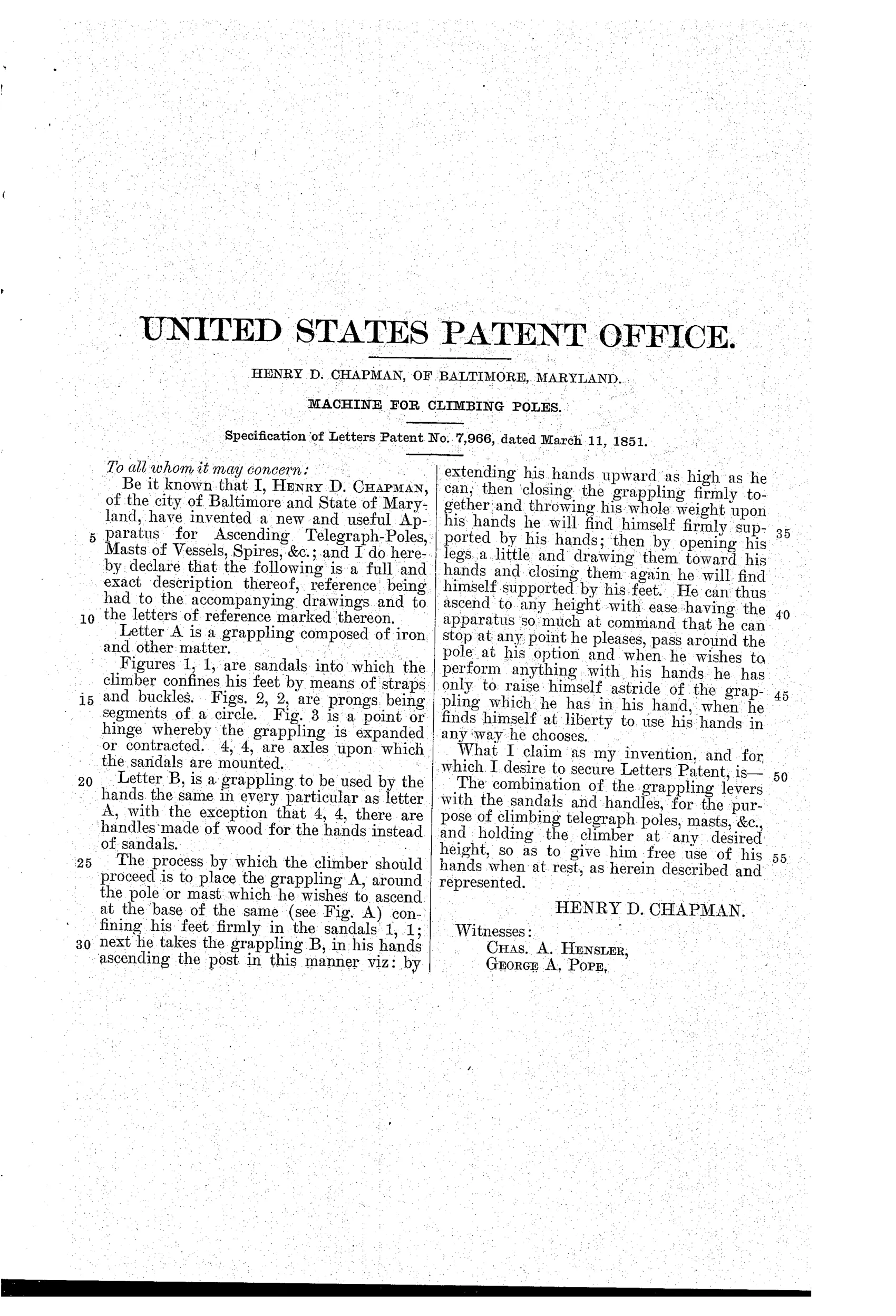
“The combination of the grappling levers with the sandals and handles, for the purpose of climbing telegraph poles, masts, &c., and holding the climber at any desired height, so as to give him free use of his hands when at rest, as herein described and represented.”
In plain English: The invention claims combining pivoting grappling levers with foot sandals and hand grips so a person can climb a pole and pause at any height with both hands free.
➶ In the inventor’s words
“He can thus ascend to any height with ease having the apparatus so much at command that he can stop at any point he pleases, pass around the pole at his option and when he wishes to perform anything with his hands he has only to raise himself astride of the grappling which he has in his hand, when he finds himself at liberty to use his hands in any way he chooses.”— Henry D. Chapman, from the specification
Fate unknown
No surviving example or maker record of this specific grappling design is documented; a marked specimen or period trade listing would settle it.
➶ Commentary
Let's be honest up front: this is not a game call. Chapman's 1851 patent is a pair of hinged iron grapplings — one strapped to the feet with sandals, one gripped in the hands — for inchworming up telegraph poles and ship masts. It lands on this site only because the broad hunting-and-harvest classification sweeps in all sorts of outdoor gear; there is no reed, no tone board, and nothing here will fool a mallard.
That said, the mechanism deserves a fair reading. Each grappling is an oval lever hinged at the top (Fig. 3) so the curved prongs can open around the pole and bite when weighted. The climber alternates: sit on the hand grappling, draw the feet up, stand on the foot grappling, slide the hand unit higher. The clever detail is in the claim — the device holds the climber at any height with both hands free, which in 1851, with telegraph lines spreading fast and linemen improvising, was the real problem to solve. History went the other way: strap-on gaff spurs and body belts won, being lighter and faster, and hinged pole-hugging frames became a recurring also-ran in climbing patents for the next century.
For duck-call readers, treat this as a reminder of how young the whole outdoor-patent world was — Fisher's first duck-call patent was still nineteen years off when Chapman was buckling sandals to iron loops.
Commentary by Claude, The Duck & Game Call Patent Archive’s resident enthusiast