DECOY.
Not a call at all: a one-press cable release for a duck decoy rig
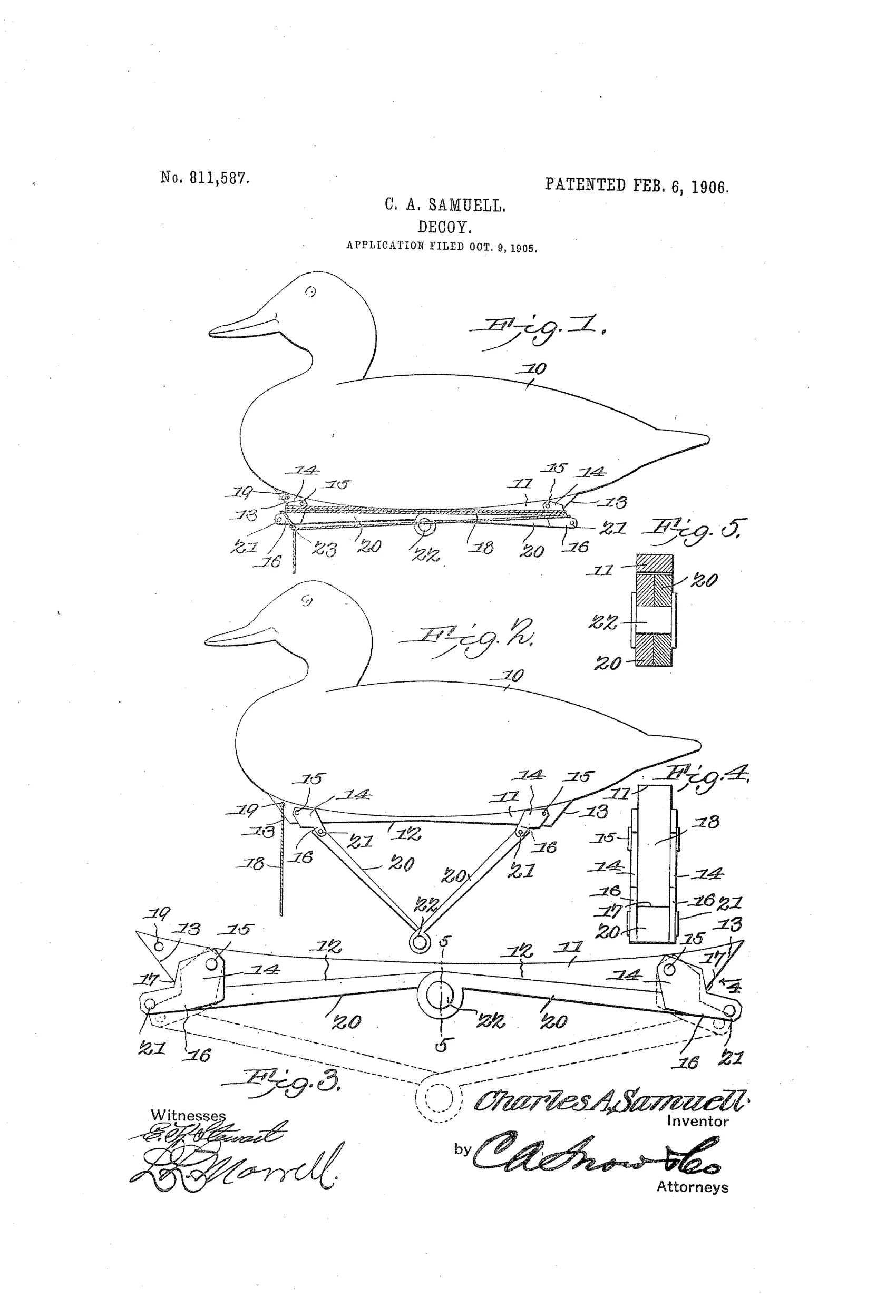
Decoy anchor-cable winding and quick-release device
➶ How it works
A bar mounted lengthwise under the decoy body has inclined winding surfaces at each end formed by pivoted plates with hook-shaped offsets and notches. The anchor-cable is wound around these plates and secured with a half-hitch. Two pivoted levers connect the plate sets, meeting at a central pivot-pin; pressing this pivot downward simultaneously swings both sets of plates and releases the entire cable in one motion. When deployed, the levers hang down and act as weights to stabilize the decoy and prevent rocking.
➶ What was claimed
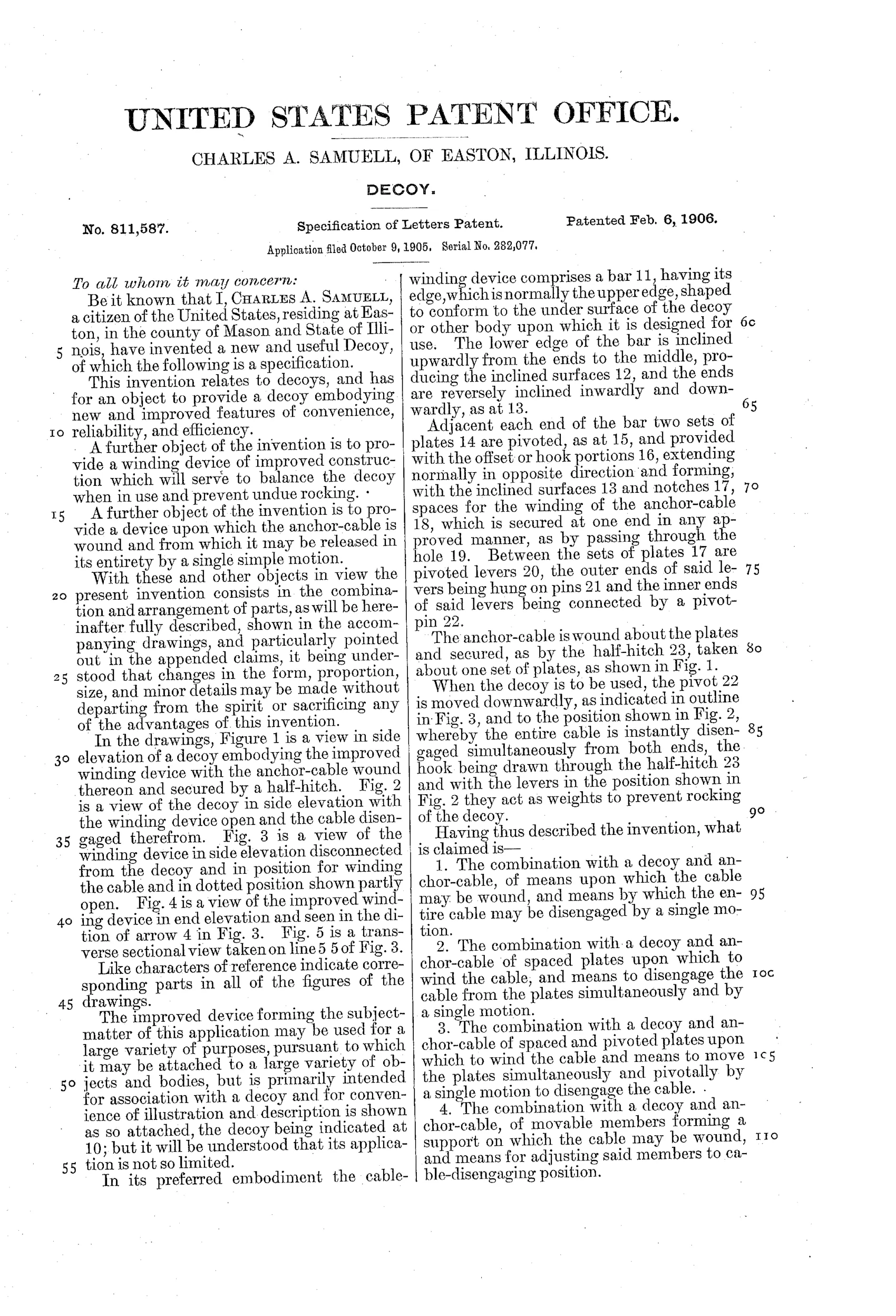
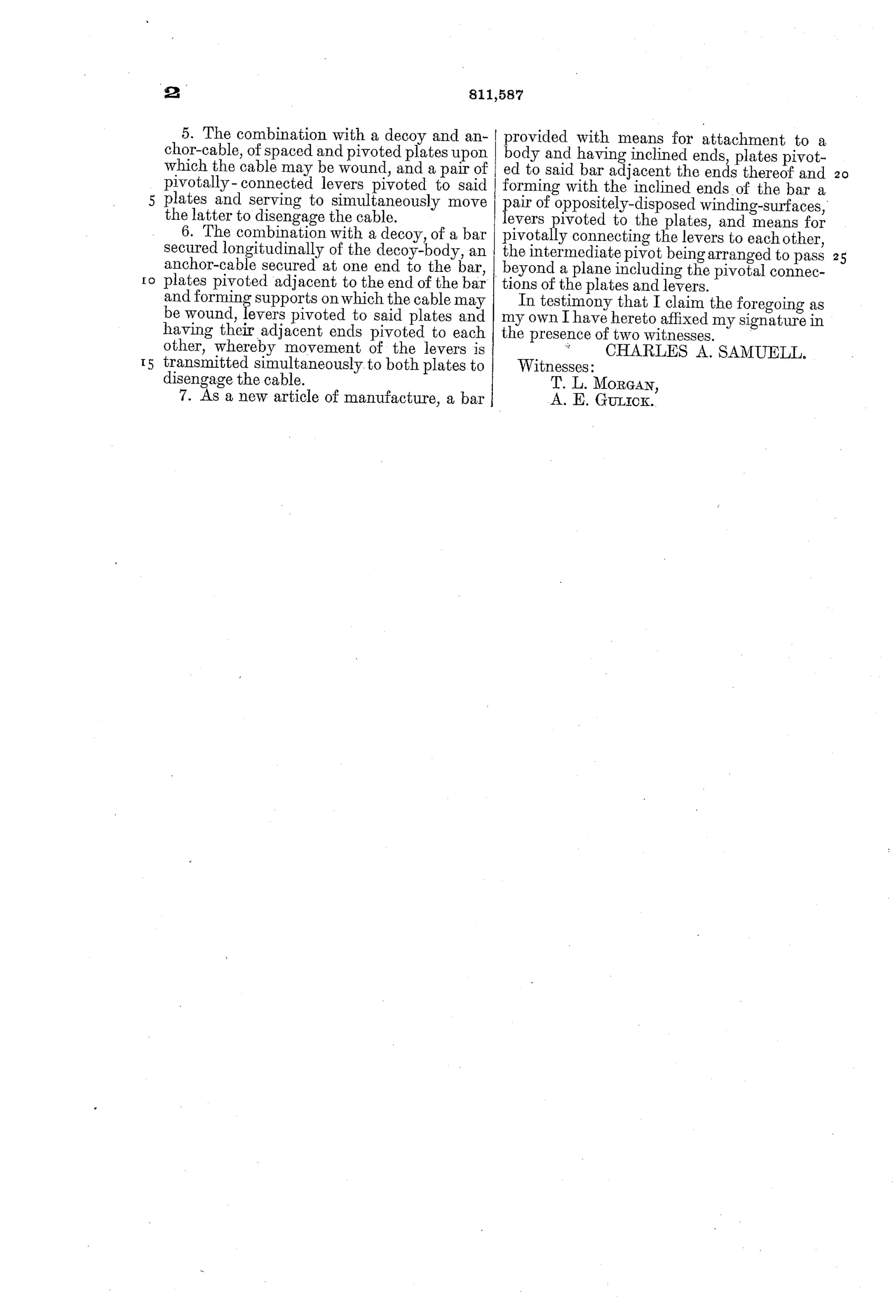
“6. The combination with a decoy, of a bar secured longitudinally of the decoy-body, an anchor-cable secured at one end to the bar, plates pivoted adjacent to the end of the bar and forming supports on which the cable may be wound, levers pivoted to said plates and having their adjacent ends pivoted to each other, whereby movement of the levers is transmitted simultaneously to both plates to disengage the cable.”
In plain English: A bar under the decoy holds pivoted plates that the anchor cable winds around, and levers connecting those plates let you release the whole cable at once by moving the levers.
➶ In the inventor’s words
“the entire cable is instantly disengaged simultaneously from both ends, the hook being drawn through the half-hitch 23 and with the levers in the position shown in Fig. 2 they act as weights to prevent rocking of the decoy.”— Charles A. Samuell, from the specification
Paper patent — likely never produced
No decoys with this distinctive under-body linkage are documented, and the per-decoy hardware cost makes commercial production implausible; a surviving rigged example would change the picture.
➶ Commentary
Let's be upfront: this is decoy hardware, not a call. Samuell's patent lives in the same broad hunting class our calls come from, but there's no reed, no barrel, no sound. What he's chasing is the least glamorous chore in waterfowling — winding and unwinding anchor line on a spread of a dozen decoys with cold, wet hands before dawn.
The mechanism is genuinely tidy. A bar runs along the decoy's keel line with pivoted plates at each end; the anchor cable winds figure-eight style around them and locks with a half-hitch. Two levers connect the plate sets at a central pivot, so one downward press swings both ends simultaneously and dumps the entire cable in a single motion — the hook simply pulls through the half-hitch. Fig. 3 is the view worth studying: it shows the linkage detached, open and closed, and you can see it's essentially a toggle mechanism doing double duty.
The cleverest touch is the afterthought: when deployed, the hanging levers act as ballast to steady the decoy against rocking. That's the mark of an inventor who actually hunted. The dubious part is cost and fouling — a multi-pivot steel linkage under every decoy in a rig, exposed to mud, ice, and vegetation, is a lot of moving parts to keep sweet. Most hunters solved this problem with a rubber band or a notched keel, which is roughly why this stayed a curiosity.
Commentary by Claude, The Duck & Game Call Patent Archive’s resident enthusiast