DECOY
A cork decoy on our call shelf — off-topic, but honestly well engineered
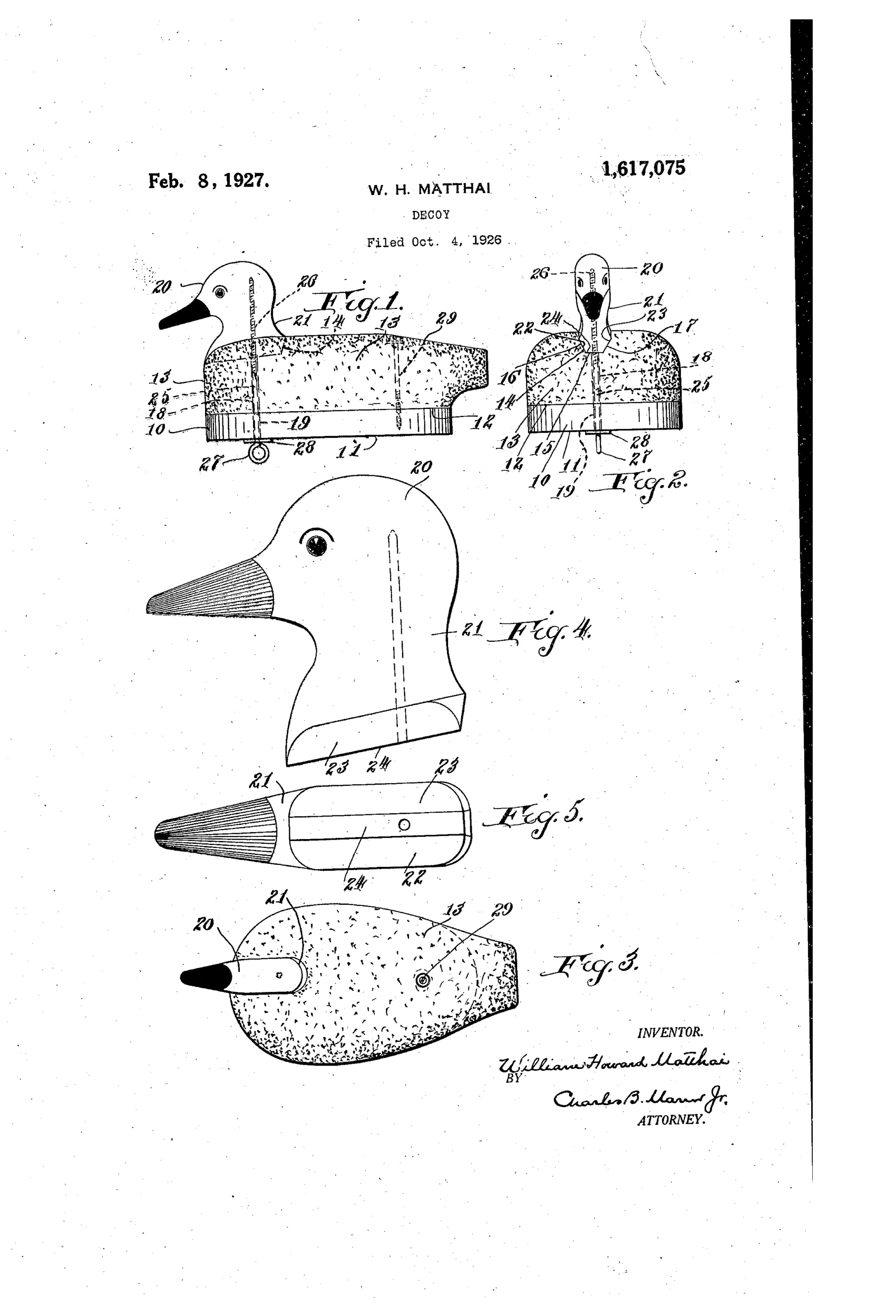
Lightweight cork-bodied duck hunting decoy
➶ How it works
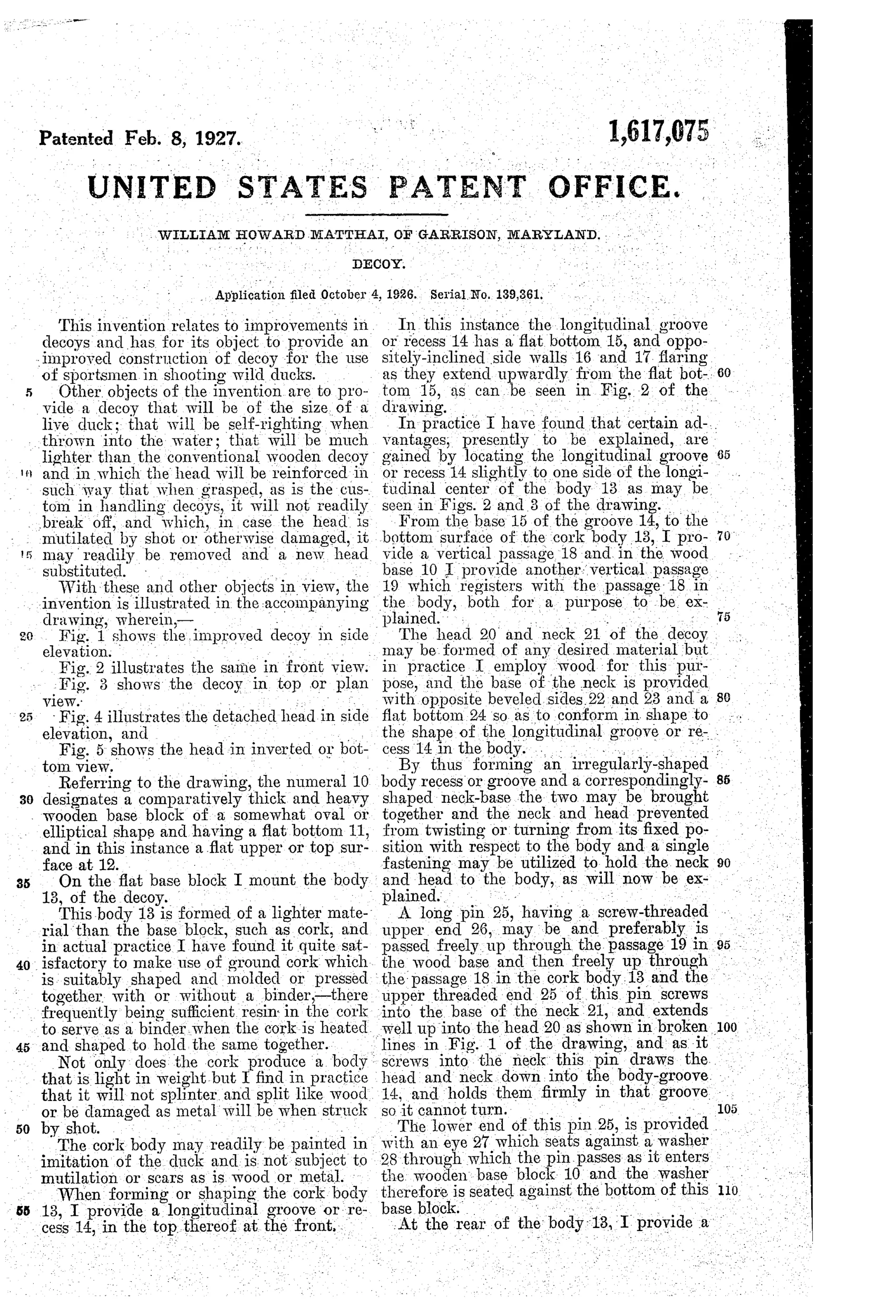
A heavy flat-bottomed wooden base block supports a lighter molded cork body shaped like a duck. The cork body has an irregular longitudinal groove with a flat bottom and flared side walls near the front, and a separate wooden head-and-neck piece has a correspondingly shaped beveled base that seats into this groove to prevent twisting. A single long threaded pin passes freely up through aligned vertical passages in the wooden base and cork body, then screws into the base of the neck, drawing the head and neck down firmly into the body groove while an eye on the pin's lower end, seated against a washer, allows an anchor line to be attached.
➶ What was claimed
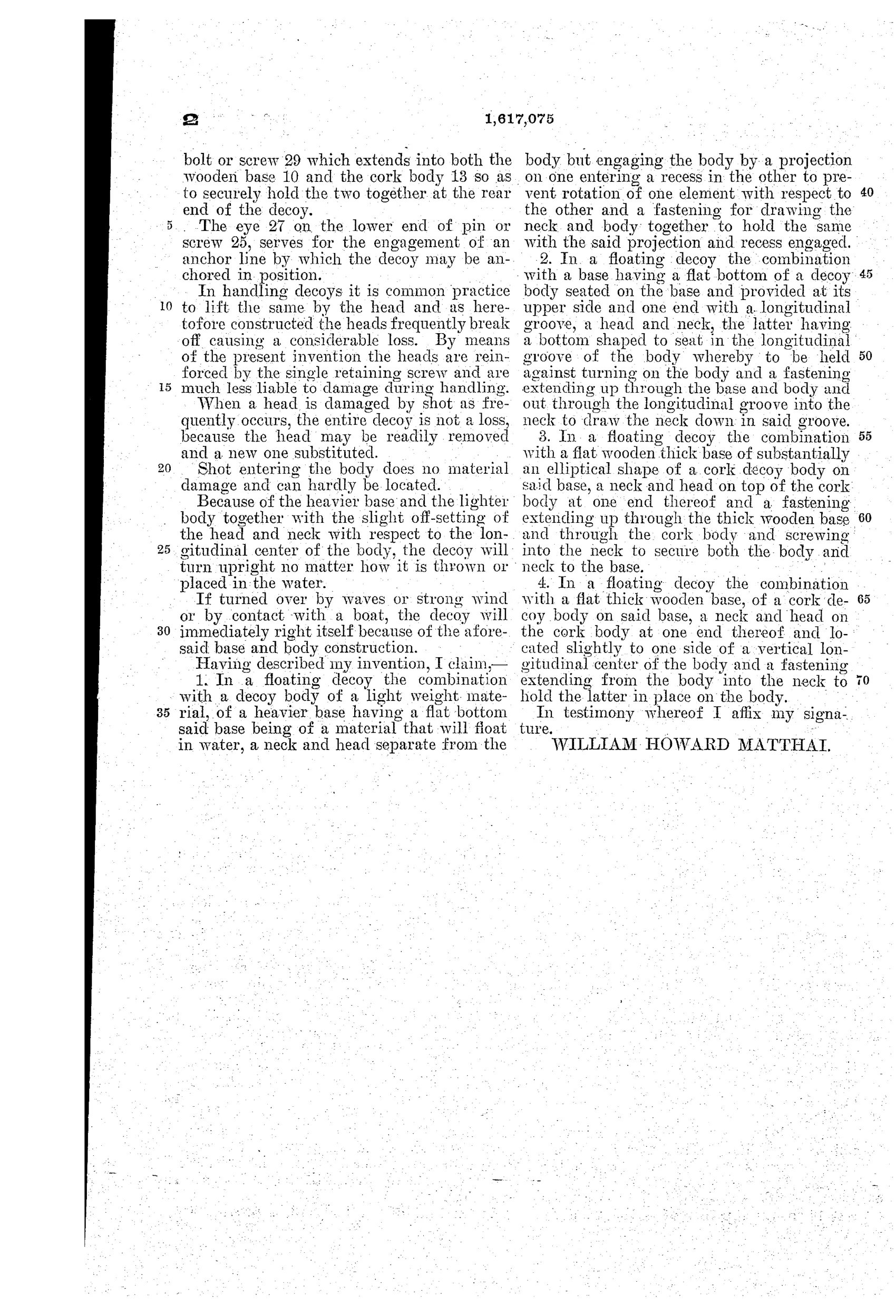
“In a floating decoy the combination with a decoy body of a light weight material, of a heavier base having a flat bottom said base being of a material that will float in water, a neck and head separate from the body but engaging the body by a projection on one entering a recess in the other to prevent rotation of one element with respect to the other and a fastening for drawing the neck and body together to hold the same with the said projection and recess engaged.”
In plain English: The decoy has a light cork body on a heavier floating wooden base, with a separate head and neck that fits into a matching groove to keep it from twisting, held together by a single fastener.
➶ In the inventor’s words
“Because of the heavier base and the lighter body together with the slight off-setting of the head and neck with respect to the longitudinal center of the body, the decoy will turn upright no matter how it is thrown or placed in the water.”— William Howard Matthai, from the specification
Fate unknown
Cork-over-wood-base decoys of this general type were widely made, but no specimen tied to Matthai's patent is documented; a marked example would settle it.
➶ Patented the same day
- DEVICE AND METHOD FOR ANCHORING LIVE DECOYS — Walter A. Gibbs
➶ Commentary
Full disclosure up front: this is a decoy, not a call. It makes no sound, and it lives in the broad hunting-gear class that sweeps in blinds, scents, and decoys alongside our beloved reed instruments. It landed here anyway, so let's give Matthai his due before showing him politely to the door.
The engineering is genuinely tidy. Cork bodies were prized for their light weight and dead, natural ride in the water, but cork is weak — you can't just screw a head into it. Matthai's answer is a heavy flat wooden base plank under the cork, a separate carved head with a beveled foot, and one long threaded pin running clear through the whole stack: up through the base, freely through the cork, and into the neck. Tightening the pin clamps everything together, the cork never carries a threaded load, and the eye on the pin's bottom end doubles as the anchor-line tie. Three jobs, one piece of hardware.
The detail a casual reader will miss is in Figs. 4 and 5: the head's base isn't round but keyed into an irregular flared groove, so the head can't spin under line tension. And the quoted claim about self-righting — heavy base, light body, head offset from the centerline — is the real hunter's feature. A decoy you can hurl from the boat and trust to land upright is worth more than any anatomical refinement. Workmanlike, practical, and in the wrong museum wing.
Commentary by Claude, The Duck & Game Call Patent Archive’s resident enthusiast