DEVICE AND METHOD FOR ANCHORING LIVE DECOYS
Not a call at all: a swivel tether for a living, swimming duck decoy
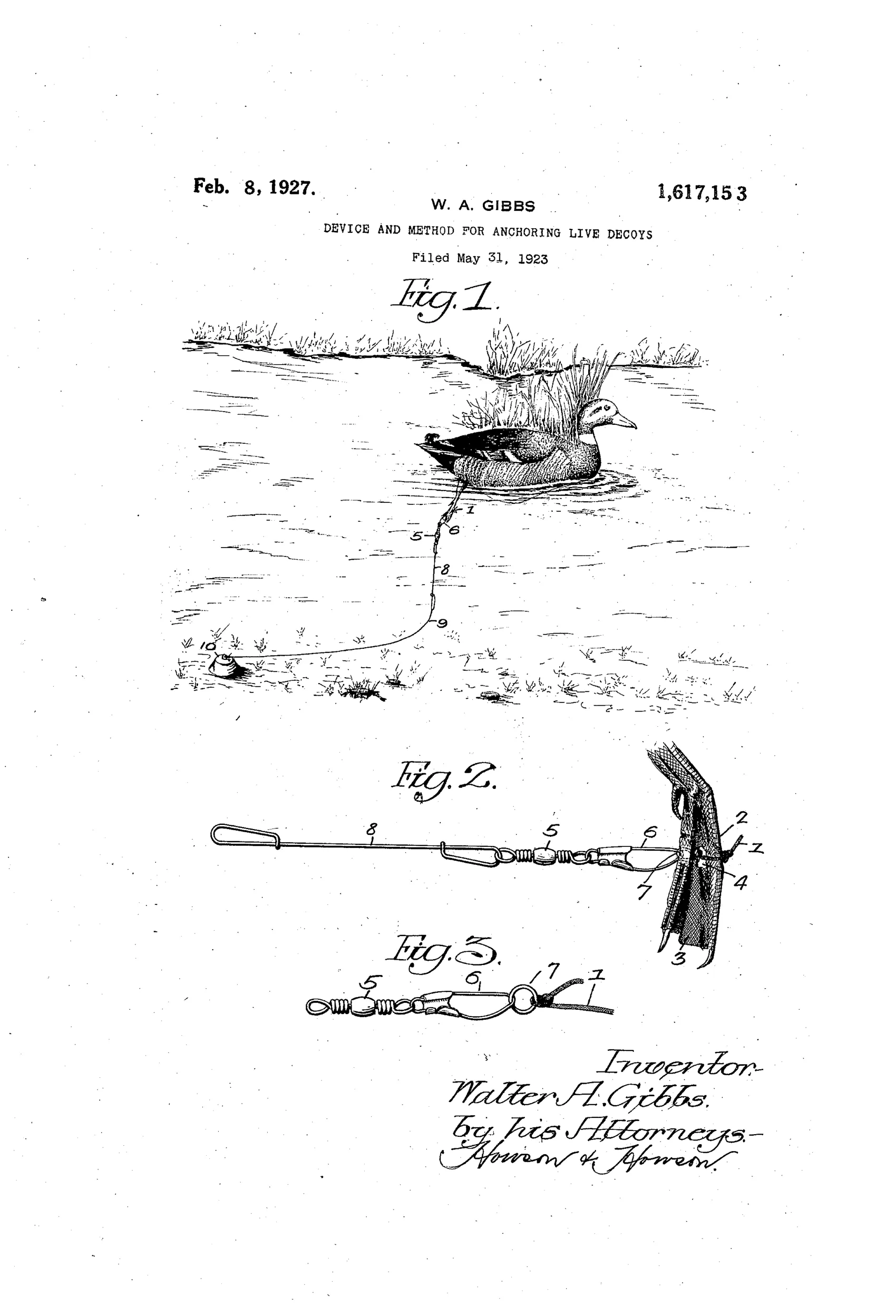
Anchor device for tethering live duck decoys
➶ How it works
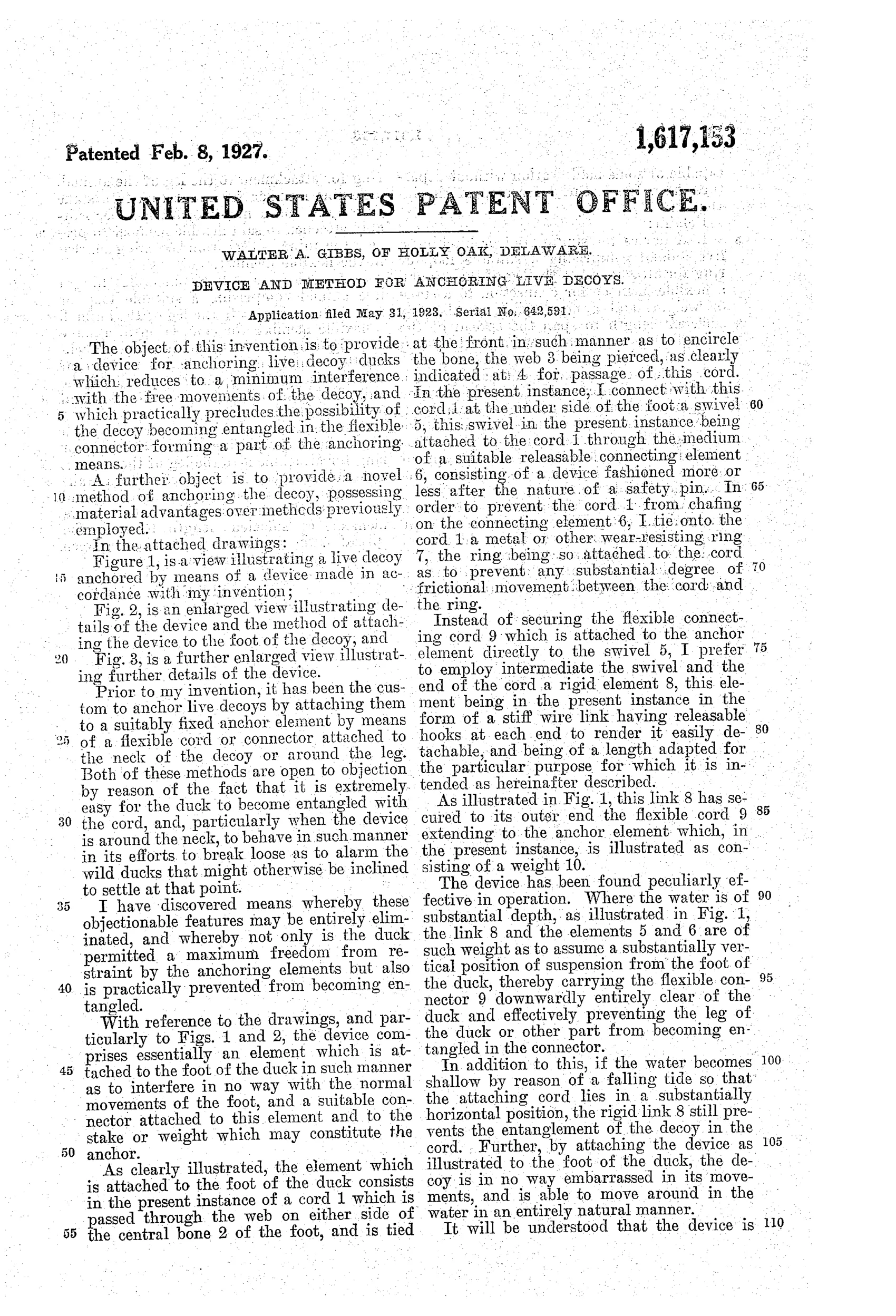
A cord is passed through the web of the decoy's foot on either side of the central bone and tied at the front to encircle the bone, preventing chafing via a wear-resisting metal ring. This cord attaches via a releasable safety-pin-like connector to a swivel, which in turn connects through a rigid wire link (with releasable hooks at each end) to a flexible cord leading to a weight or anchor. The rigid link keeps the flexible connector held away from the duck's leg, preventing entanglement whether the water is deep (link hangs vertically) or shallow (link stays rigid horizontally). The swivel allows the duck to move and turn without twisting or fouling the tether.
➶ What was claimed
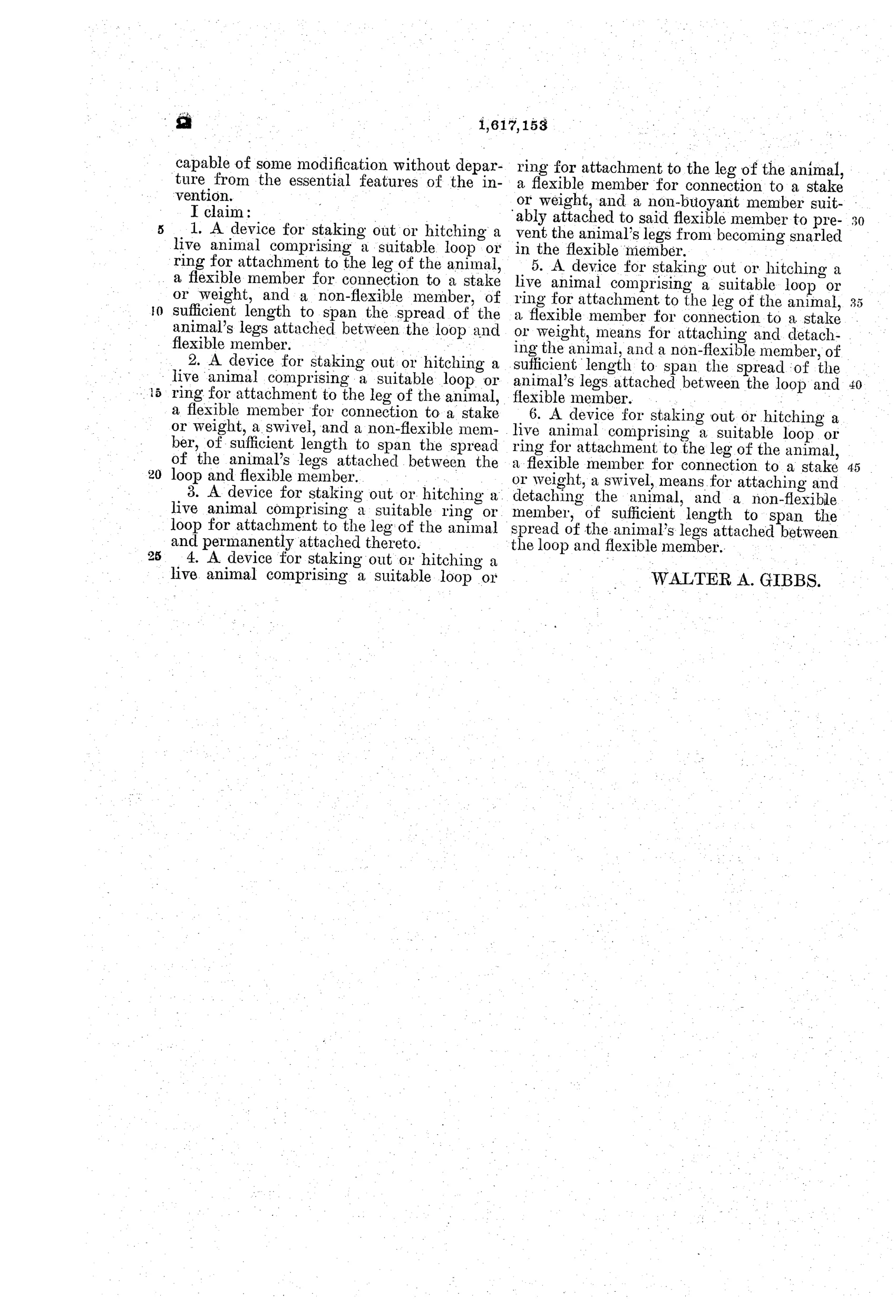
“1. A device for staking out or hitching a live animal comprising a suitable loop or ring for attachment to the leg of the animal, a flexible member for connection to a stake or weight, and a non-flexible member, of sufficient length to span the spread of the animal's legs attached between the loop and flexible member.”
In plain English: The device has a loop that attaches to the animal's leg, a flexible line to an anchor, and a rigid rod between them long enough to keep the animal's legs from getting tangled.
➶ In the inventor’s words
“I have discovered means whereby these objectionable features may be entirely eliminated, and whereby not only is the duck permitted a maximum freedom from restraint by the anchoring elements but also is practically prevented from becoming entangled.”— Walter A. Gibbs, from the specification
Fate unknown
The parts are trivially manufacturable and live-decoy rigs were common before 1935, but no marked commercial version of Gibbs's specific tether is documented; a labeled example or catalog listing would settle it.
➶ Patented the same day
- DECOY — William Howard Matthai
➶ Commentary
Full disclosure: this one is a neighbor, not a resident. Gibbs patented no sound-maker here — this is hardware for staking out a live duck, the practice that made mechanical decoys and calls comparatively optional for the hunters who could afford a flock. Before the federal ban on live decoys in 1935, a well-trained calling hen was the deadliest tool on the marsh, and the mundane problem Gibbs attacks is real: a tethered duck paddles in circles, winds the line around its own legs, chafes its foot raw, and either drowns or stops behaving like a contented wild bird.
The mechanical answer is tidy. The cord passes through the web of the foot and around the central bone with a metal wear ring so the attachment doesn't saw through flesh. Then comes the clever bit, visible in Fig. 2: a rigid wire link, deliberately longer than the spread of the duck's legs, sits between the leg loop and the flexible anchor line. The flexible cord physically cannot reach the legs to wrap them. A swivel upstream lets the bird pivot all day without twisting anything. In shallow water the stiff link lies horizontal; in deep water it hangs; either way the tangle zone is bridged.
It's fishing-tackle thinking — snap, swivel, leader — applied to livestock. Sensible, cheap to make, and rendered obsolete by law eight years after issue.
Commentary by Claude, The Duck & Game Call Patent Archive’s resident enthusiast