Toy Handkerchief.
A reed in a handkerchief pocket, built to fake a nose-blow — not a duck call
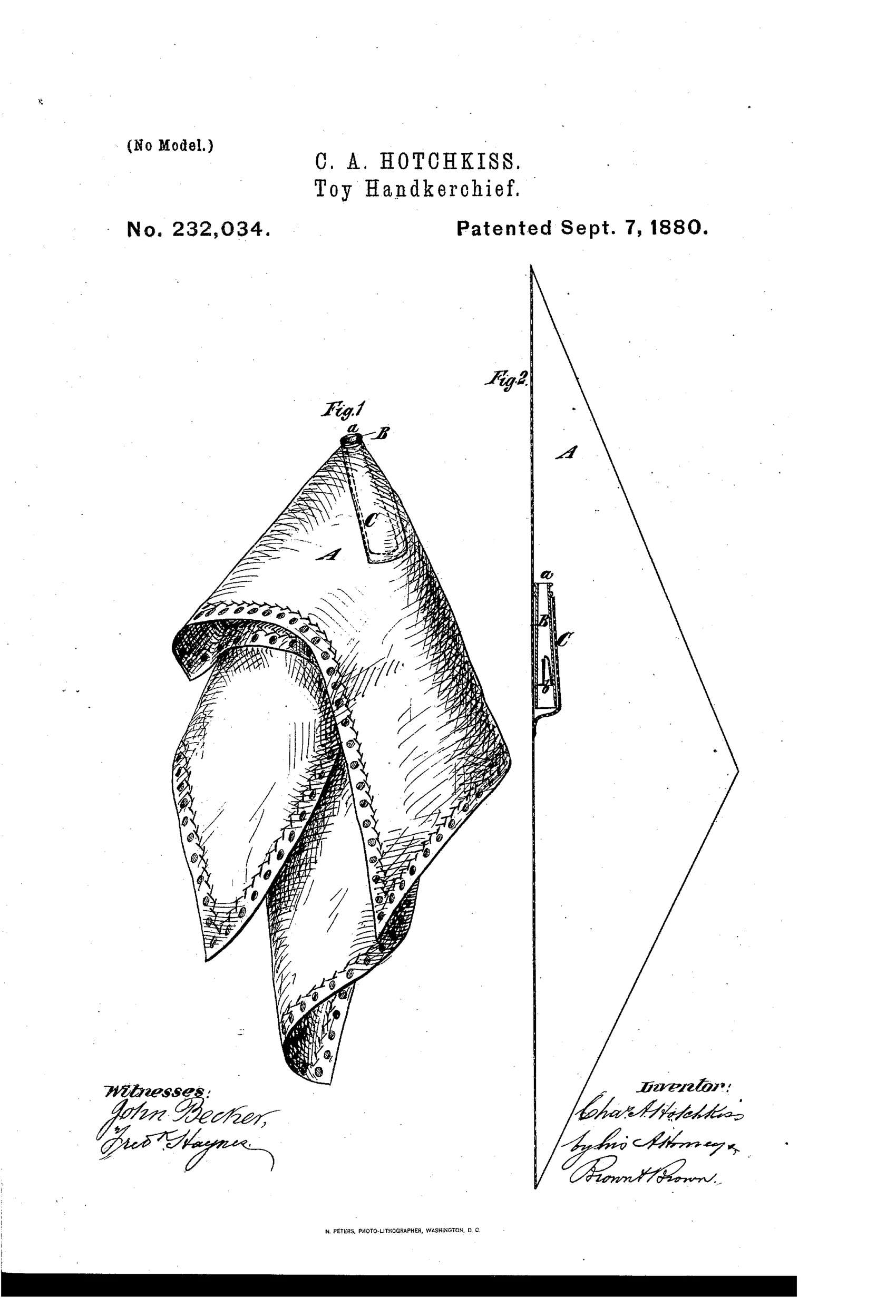
A toy handkerchief with attached noisemaker
➶ How it works
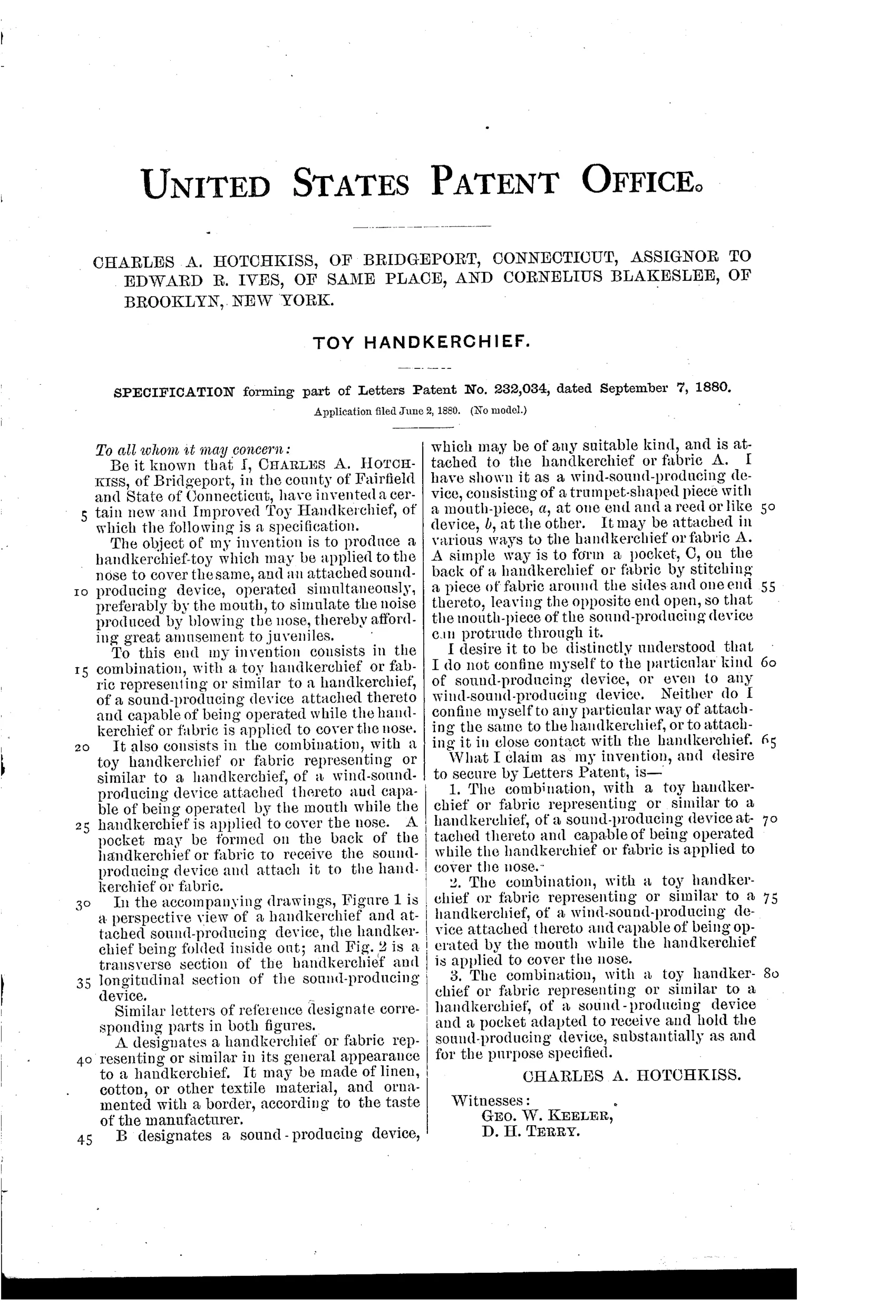
A fabric handkerchief has a pocket stitched to its back that holds a small trumpet-shaped sound-producing device. The device has a mouth-piece at one end and a reed or similar device at the other, with the mouth-piece protruding through the open end of the pocket. When the handkerchief is applied to the nose, the wearer blows into the mouth-piece to produce a sound simulating nose-blowing. The device may be attached in various ways and is not limited to any particular sound-producing mechanism.
➶ What was claimed
“The combination, with a toy handkerchief or fabric representing or similar to a handkerchief, of a sound-producing device and a pocket adapted to receive and hold the sound-producing device, substantially as and for the purpose specified.”
In plain English: A toy handkerchief combined with a pocket that holds a sound-making device.
➶ In the inventor’s words
“an attached sound-producing device, operated simultaneously, preferably by the mouth, to simulate the noise produced by blowing the nose, thereby affording great amusement to juveniles.”— Charles A. Hotchkiss, from the specification
Fate unknown
The assignment to toy maker Edward R. Ives strongly suggests production was intended, but no documented surviving example of this specific handkerchief is known to me; a marked specimen or Ives catalog listing would settle it.
➶ Patented the same day
- Decoy-Bird. — Frederick H. Gladwish
➶ Commentary
Let me be straight with the reader: this one wandered into our files on a technicality. It is a reed-operated sound device, yes, but the quarry here is not mallards — it is siblings and parlor guests. Charles Hotchkiss stitched a pocket to the back of a toy handkerchief, slid in a small trumpet-shaped reed with a mouthpiece poking out the open end, and instructed the user to blow into it while pretending to blow the nose. The specification promises this affords 'great amusement to juveniles,' which is patent-lawyer language for a whoopee-cushion ancestor.
Mechanically it is honest and simple. Fig. 2 shows the reed unit in section — mouthpiece at one end, reed at the other — and Hotchkiss deliberately claims the combination broadly, refusing to be pinned to any one sound mechanism. That is smart drafting: the invention is the pocket-plus-noisemaker pairing, not the reed itself, which was commonplace in call and squeaker work by 1880.
What gives this scrap of prank hardware real interest is the assignment: Edward R. Ives of Bridgeport, one of the great American toy manufacturers of the era. An assignment to a working toy house at filing suggests genuine commercial intent, not a dreamer's flyer. But for our purposes it sits firmly outside the game-call story — no tone board, no tuning, no bird to fool, only an uncle.
Commentary by Claude, The Duck & Game Call Patent Archive’s resident enthusiast