FOLDING DECOY.
A pop-up fabric duck: crank the bail, and the body inflates into shape
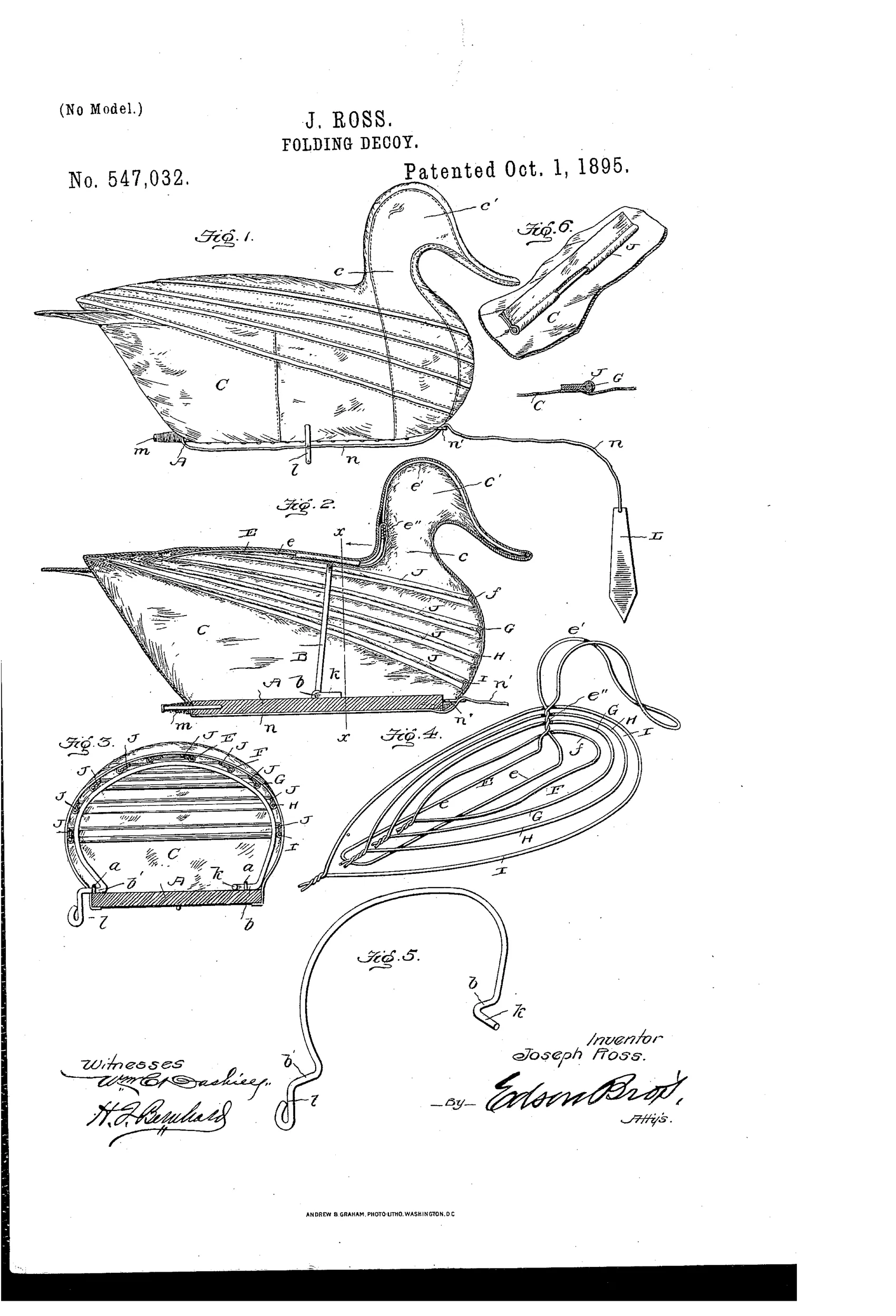
Collapsible fabric decoy duck with wire braces
➶ How it works
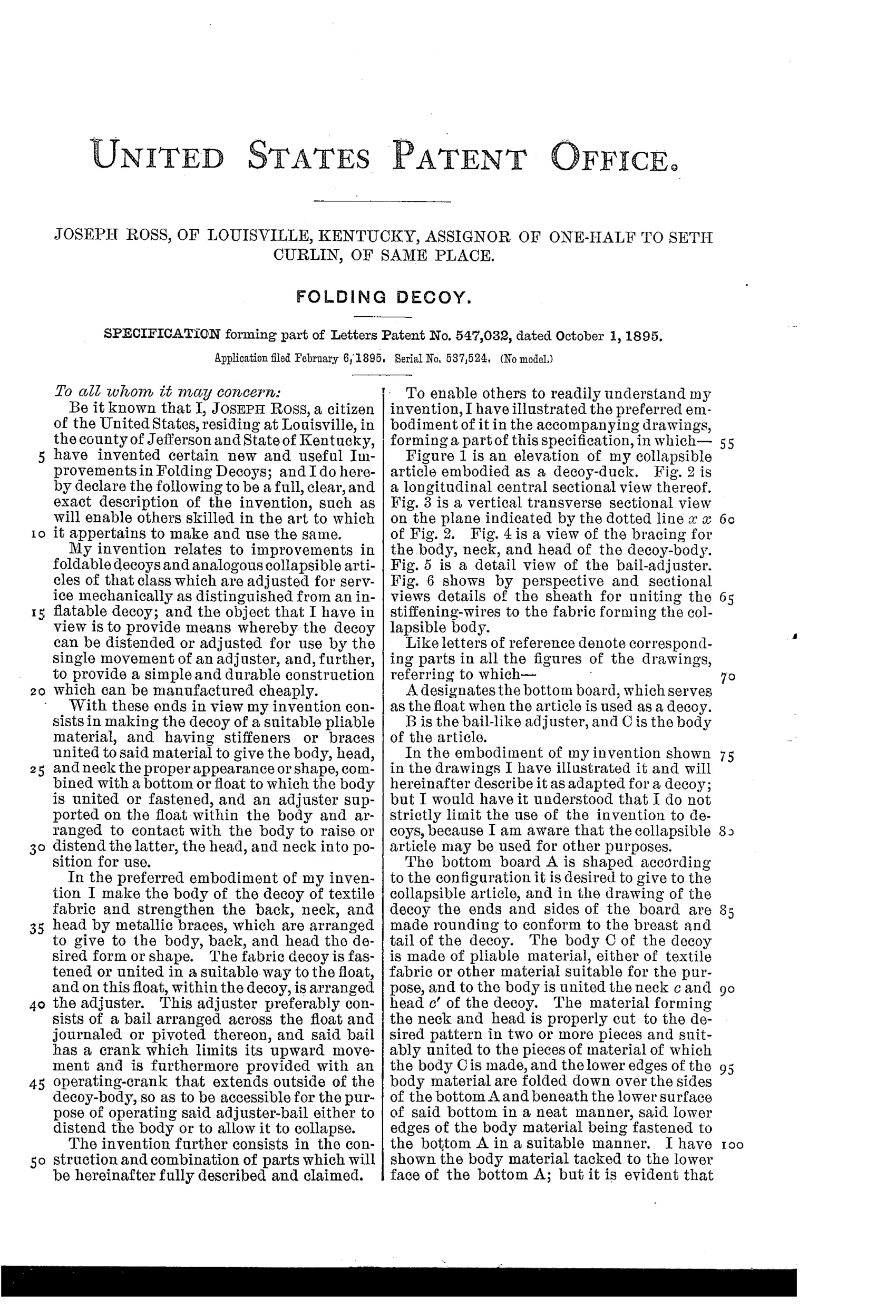
The decoy's body, neck, and head are made of pliable fabric strengthened by wire braces sheathed in fabric strips to prevent chafing. A bail-like adjuster is pivoted transversely on the bottom float board and, when its external crank-handle is turned upward, presses against the braced back of the body to lift and distend the body, head, and neck into shape. A crank-stop bears against the bottom board to limit the bail's upward travel and lock it in the distended position. When the bail is turned back down flat, the body collapses onto the float for compact storage or transport.
➶ What was claimed
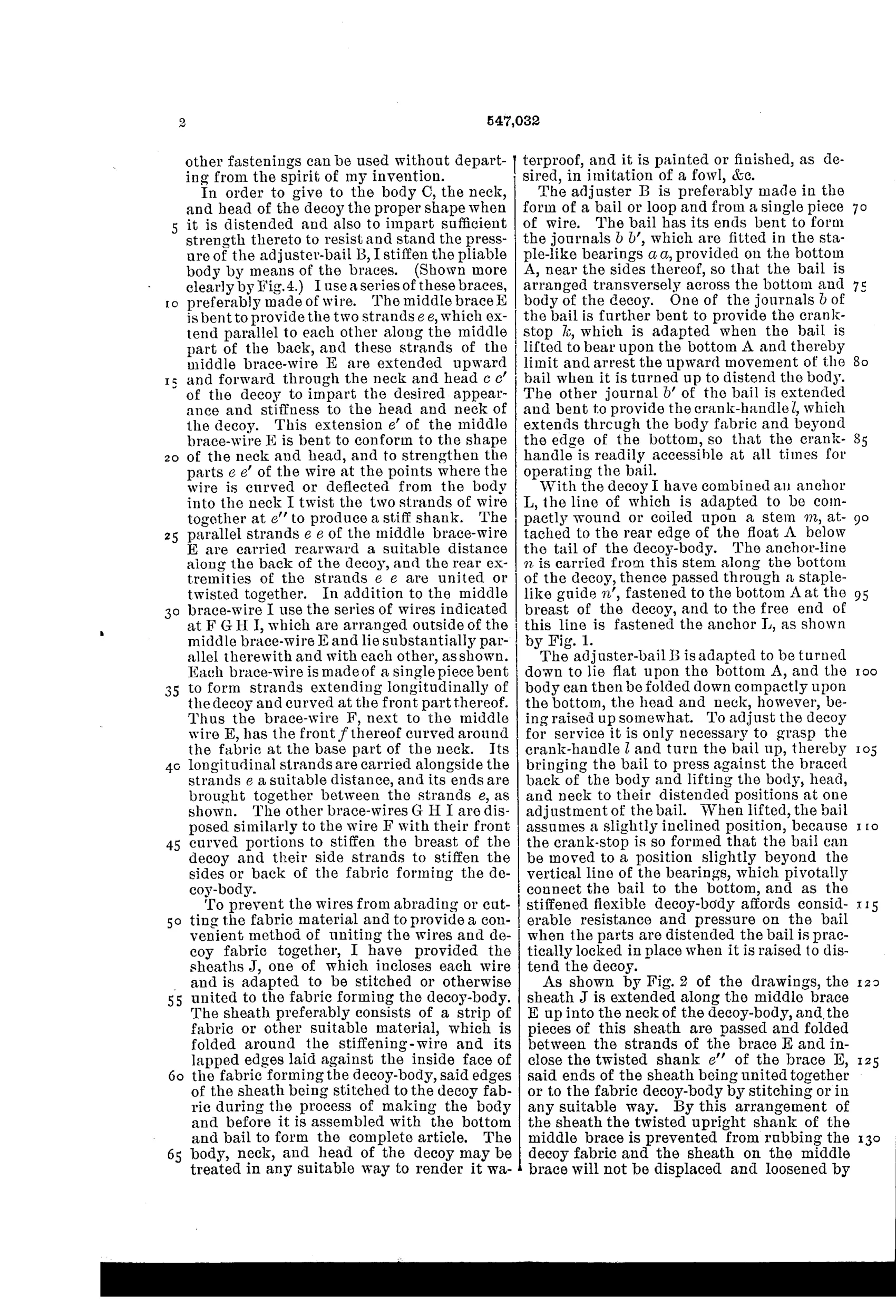
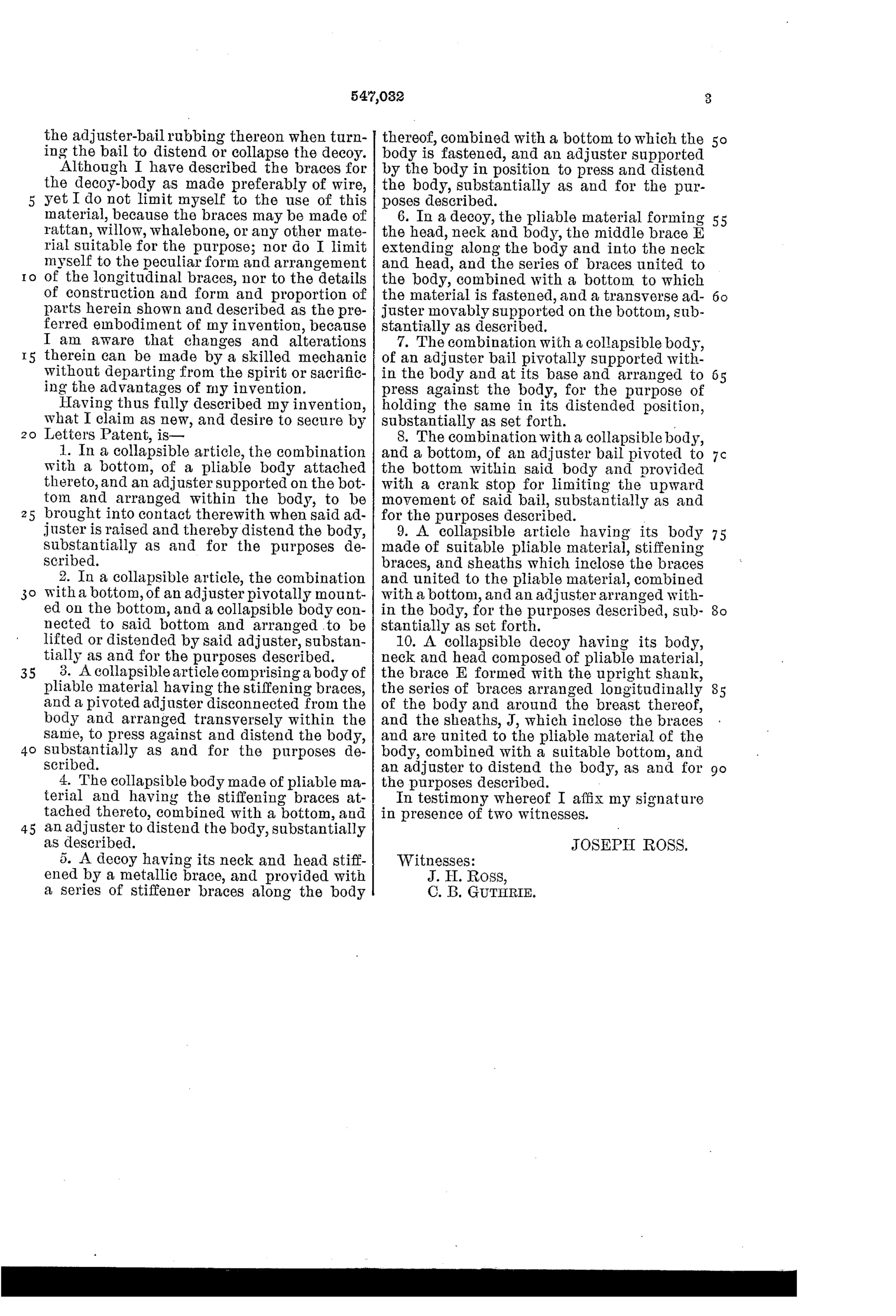
“1. In a collapsible article, the combination with a bottom, of a pliable body attached thereto, and an adjuster supported on the bottom and arranged within the body, to be brought into contact therewith when said adjuster is raised and thereby distend the body, substantially as and for the purposes described.”
In plain English: A folding decoy has a flexible body fixed to a bottom board, with an internal adjuster that, when raised, presses against the body to pop it into shape.
➶ In the inventor’s words
“To adjust the decoy for service it is only necessary to grasp the crank-handle l and turn the bail up, thereby bringing the bail to press against the braced back of the body and lifting the body, head, and neck to their distended positions at one adjustment of the bail.”— Joseph Ross, from the specification
Fate unknown
No commercially marked example of this specific bail-adjusted fabric decoy is documented; a surviving specimen or trade advertisement would settle it.
➶ Patented the same day
- DECOY. — Joseph Ross
➶ More by Joseph Ross
- DECOY. (1895)
➶ Commentary
Full disclosure up front: this is a decoy, not a call — it makes no sound at all, and strictly speaking it sits in the broader hunting-gear class rather than our reed-and-barrel territory. But it lands on the page because it solves a problem every duck hunter of 1895 knew intimately: a rig of solid wooden blocks is heavy, bulky, and miserable to haul into a marsh. Ross's answer is a fabric skin over sprung wire ribs, mounted on a flat float board, that packs flat and erects itself with one motion.
The mechanism is the good part. A bail — essentially a wide wire crank pivoted across the float board, shown alone in Fig. 5 — swings up inside the body and presses against the wire-braced back, lifting body, neck, and head into shape in a single throw. A crank-stop against the bottom board locks it distended. Fig. 4 shows the whole skeleton of nested bracing wires, and Fig. 6 the small but telling detail: each wire runs in a fabric sheath so it can't chafe through the skin. That's a man who has thought about the third season, not just the first.
The weak point is obvious too: fabric soaks, sags, and loses its duck-like sheen in the rain, which is why later folding decoys went to rubber and then inflatable canvas. Ross was chasing the right problem a material generation too early.
Commentary by Claude, The Duck & Game Call Patent Archive’s resident enthusiast