DECOY-DUCK
An inflatable cloth decoy that dips its bill — and isn't a call at all
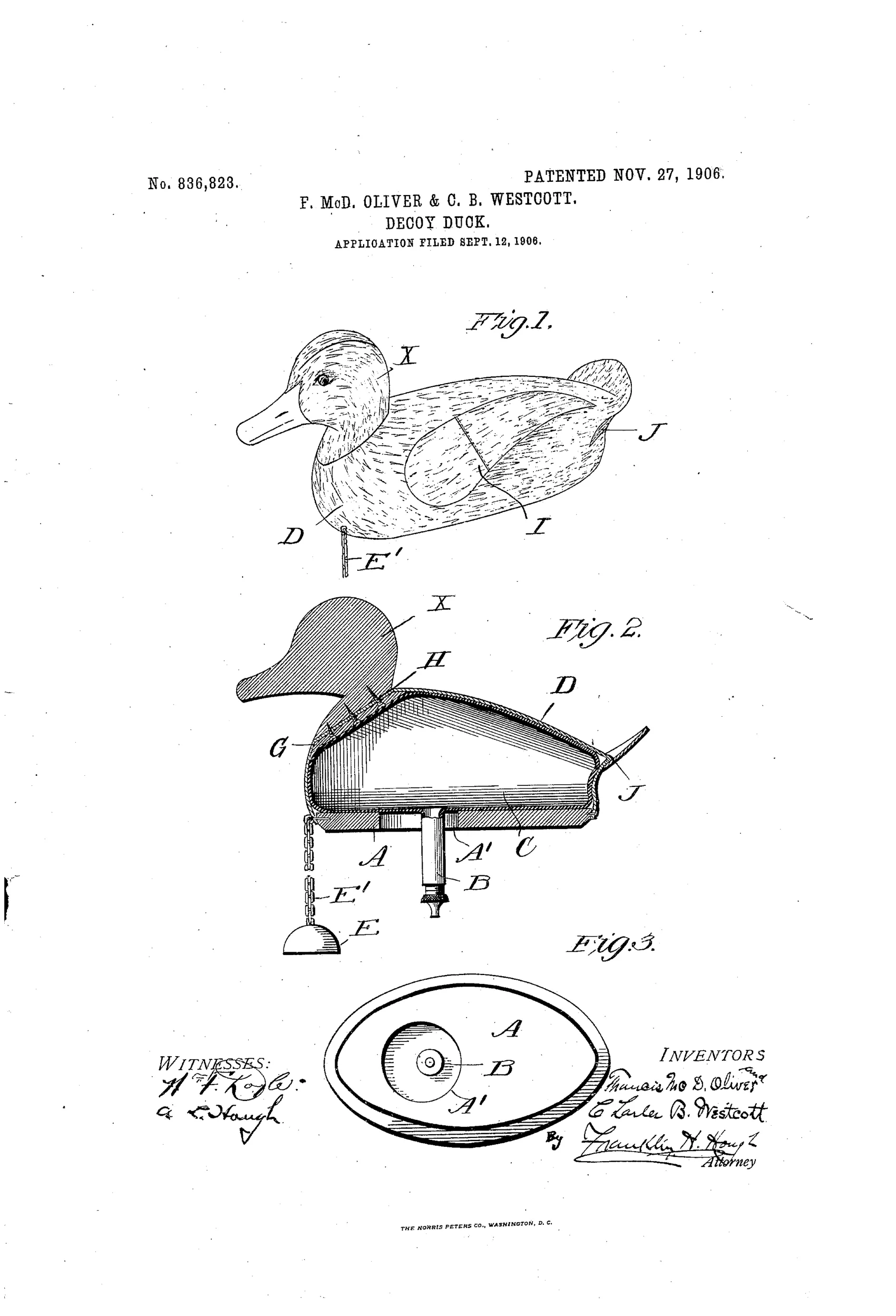
Inflatable collapsible decoy duck
➶ How it works
The decoy has a flat wooden bottom that ballasts it and rides the water surface. An inflating bag inside the fabric body is filled through a valved tube accessible from beneath, causing the cloth cover to distend into a lifelike duck shape. A wooden head and neck are clamped to the body via a screw-fastened clamping plate that can be angled to mimic a turning head. A weighted sinker on a chain attached to the bow causes the decoy to dip and bob in current, while loosely fastened wingtips and tail flutter in the breeze.
➶ What was claimed
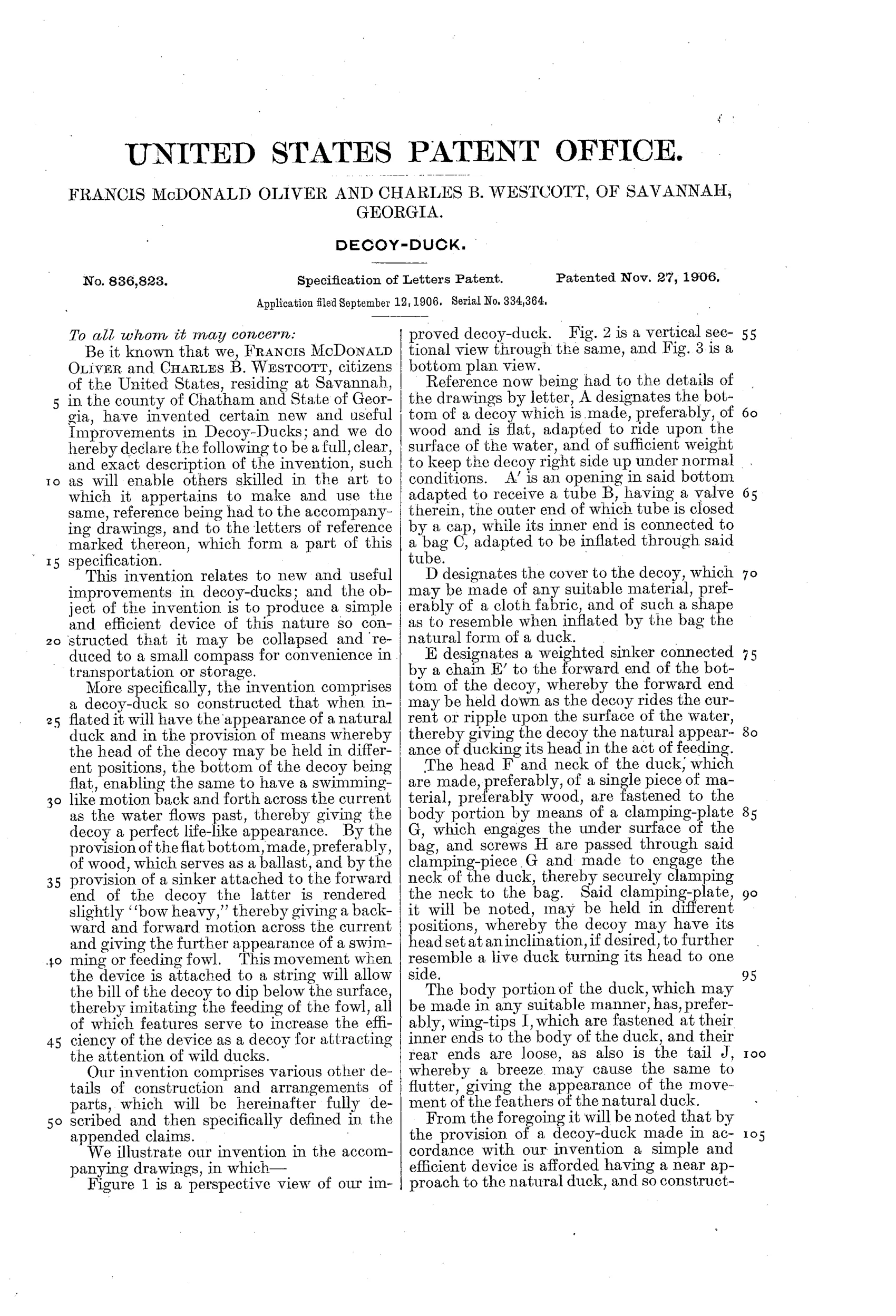
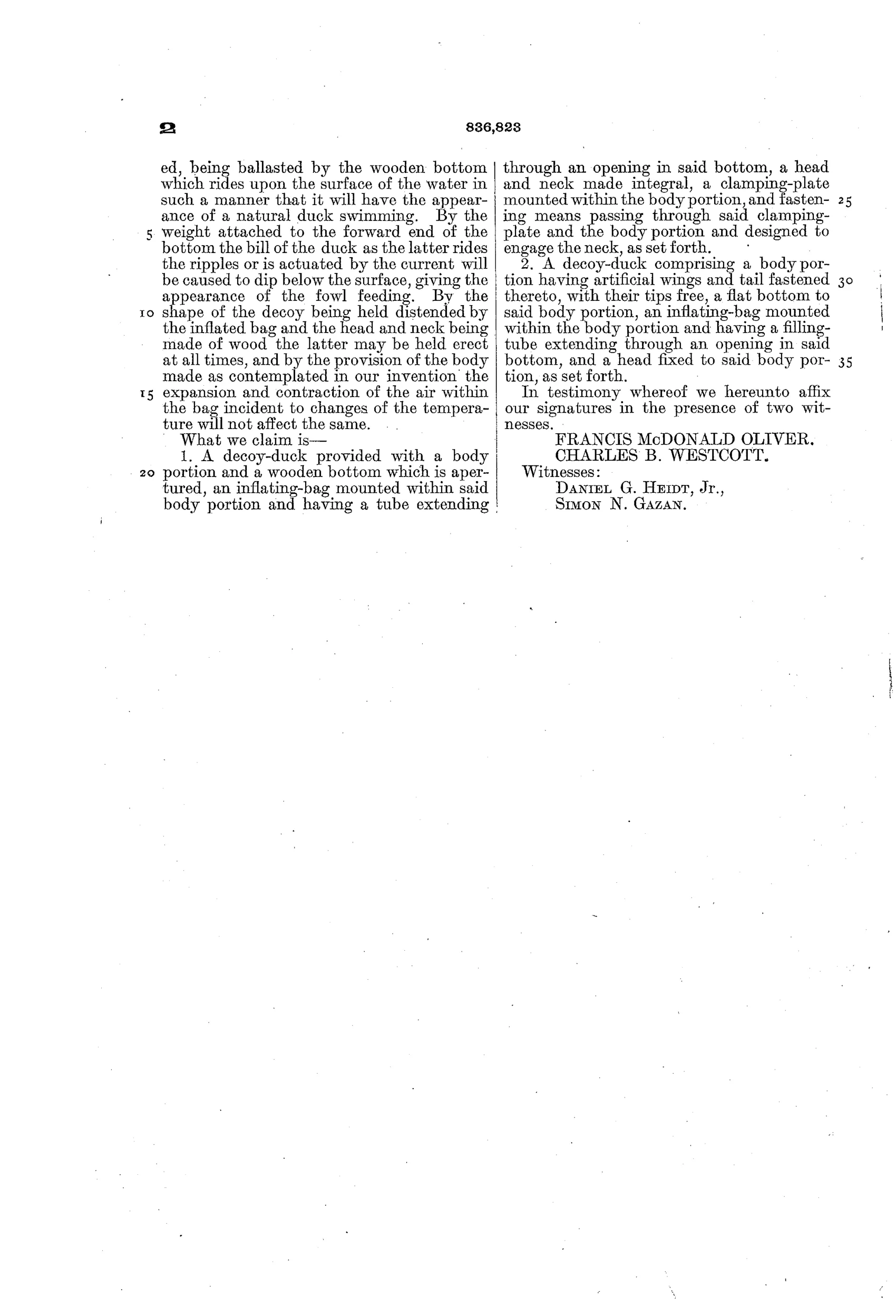
“1. A decoy-duck provided with a body portion and a wooden bottom which is apertured, an inflating-bag mounted within said body portion and having a tube extending through an opening in said bottom, a head and neck made integral, a clamping-plate mounted within the body portion, and fastening means passing through said clamping-plate and the body portion and designed to engage the neck, as set forth.”
In plain English: An inflatable decoy duck with a flat wooden bottom, an internal air bag with a filling tube, and a wooden head/neck clamped to the body by a plate and screws.
➶ In the inventor’s words
“This movement when the device is attached to a string will allow the bill of the decoy to dip below the surface, thereby imitating the feeding of the fowl, all of which features serve to increase the efficiency of the device as a decoy for attracting the attention of wild ducks.”— Francis McDonald Oliver and Charles B. Westcott, from the specification
Fate unknown
No marked example or trade record of this specific design is documented; a surviving specimen or period advertisement would settle it.
➶ More by Francis McDonald Oliver and Charles B. Westcott
- DECOY. (1909)
➶ Commentary
Full disclosure: this one wandered into our category by classification accident. It's a decoy, not a call — it makes no sound whatsoever. Patent class A01M31 sweeps up all manner of hunting gear, and Oliver and Westcott's inflatable duck got caught in the net. But since it's here, it deserves a fair look.
The core idea is packability. A rig of wooden decoys is heavy and bulky; a hunter poling into a Georgia marsh would feel every pound. These two Savannah inventors propose a cloth skin over an internal air bag, filled through a valved tube in a flat wooden bottom — deflate the flock and it stuffs into a sack. The wooden head clamps on with a screw plate that can be angled, so a spread of identical decoys can show different head positions, a detail real duck hunters care about because a raft of ducks all staring the same direction looks wrong from the air.
The cleverest touch is the weighted chain at the bow (E and E' in Fig. 2): current tugs the sinker, the bow dips, and the bill breaks the water like a feeding bird. That's motion for free, decades before motorized spinners. The weak point is obvious too — a cloth-and-bladder decoy in briars, ice, and stray shot pellets has a short life. Collapsible decoys did eventually succeed commercially, in canvas and later rubber, but this particular clamp-headed version reads like an early, fragile step on that road.
Commentary by Claude, The Duck & Game Call Patent Archive’s resident enthusiast