INFLATABLE DECOY.
An 1894 inflatable fabric duck — a decoy, not a call, but a clever one
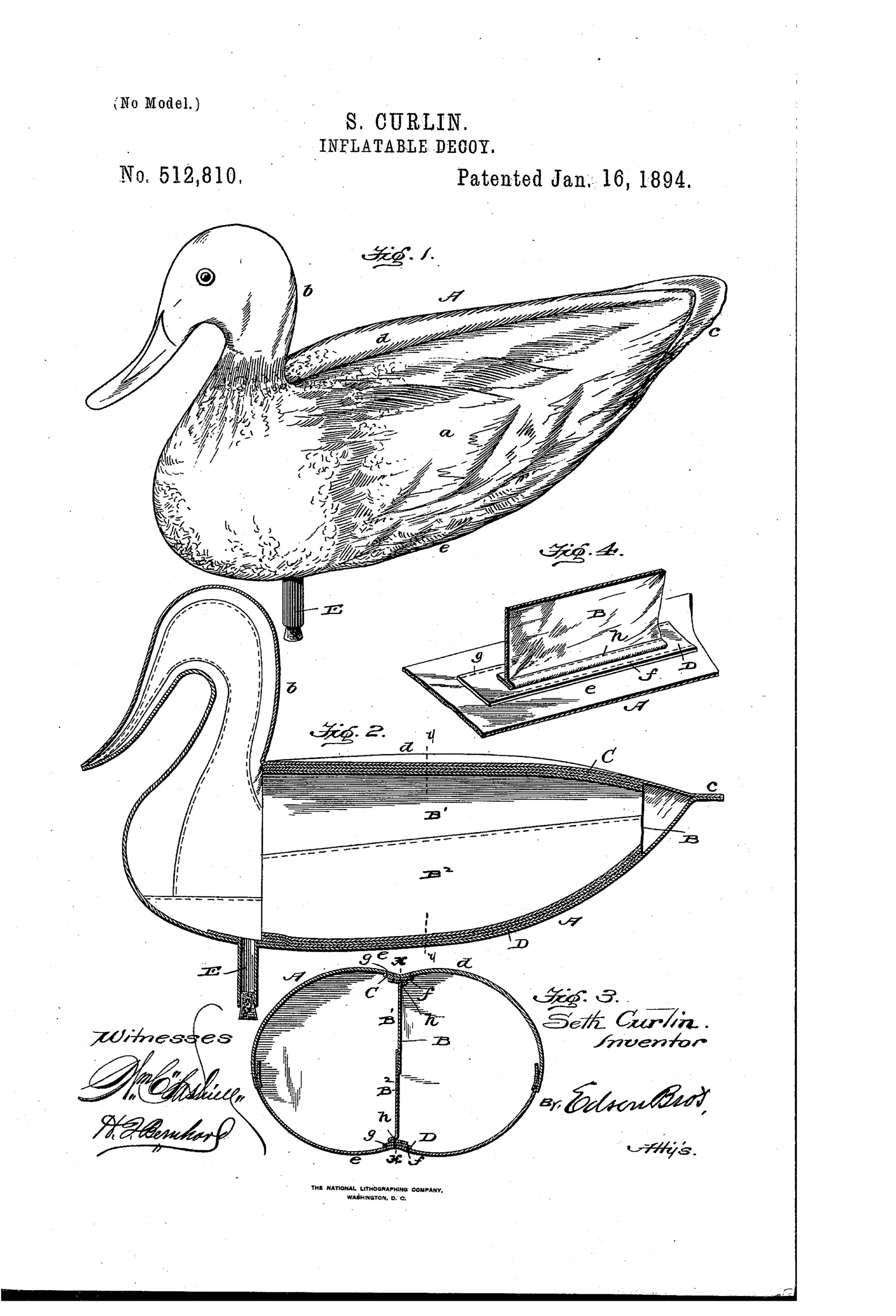
Fabric inflatable duck hunting decoy
➶ How it works
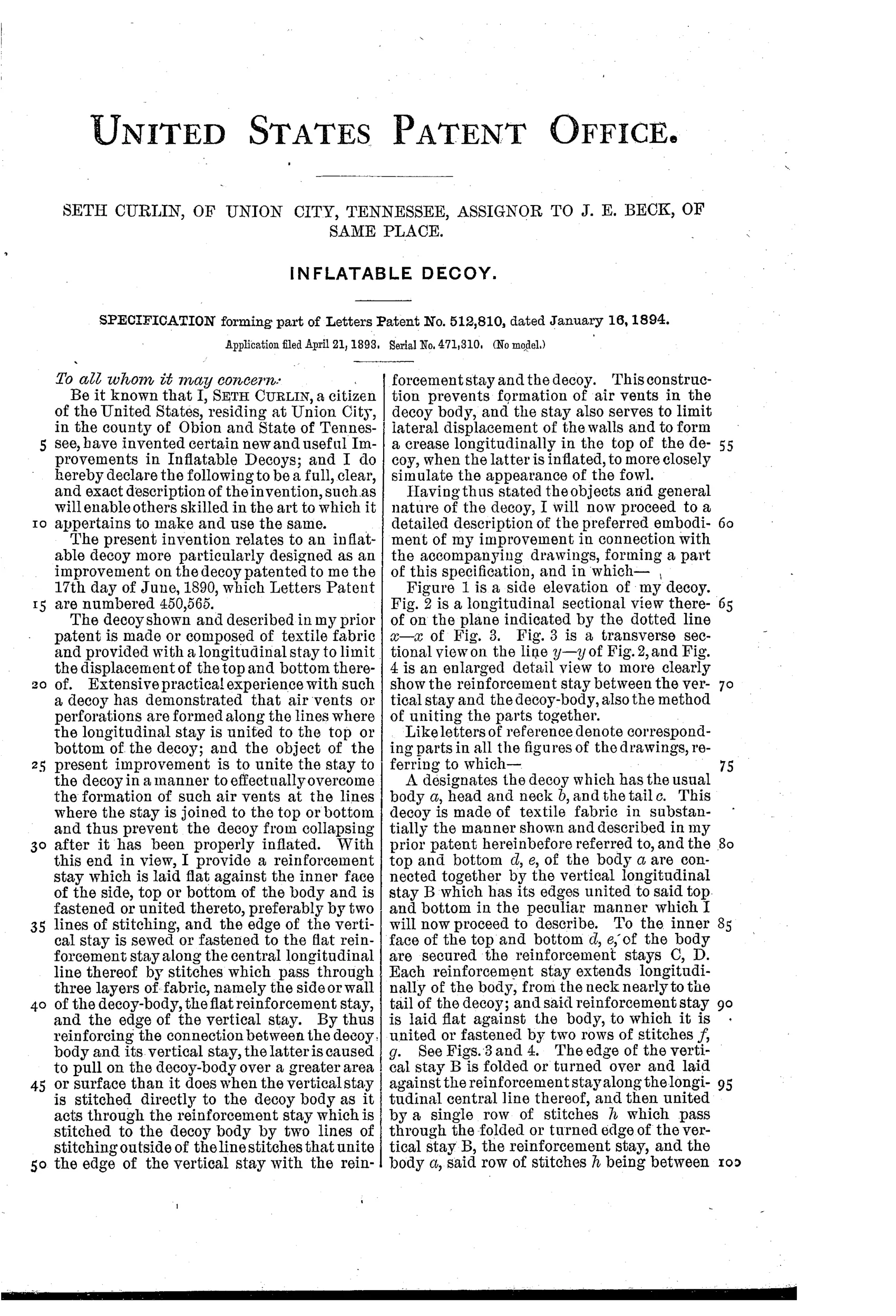
The decoy body is made of textile fabric with top and bottom panels connected by a vertical longitudinal displacement stay B. Flat reinforcement stays C and D are stitched to the inside of the top and bottom, and the edges of the vertical stay are sewn to these reinforcement stays through three layers of fabric to prevent air vents from forming at the seams. When inflated through an inflating tube E fitted with a stopper, the stay pulls on a larger area of fabric and forms a longitudinal crease along the top to better simulate the fowl's shape. Free oil or liquid composition can be introduced through the tube and worked into the seams to seal any remaining crevices.
➶ What was claimed
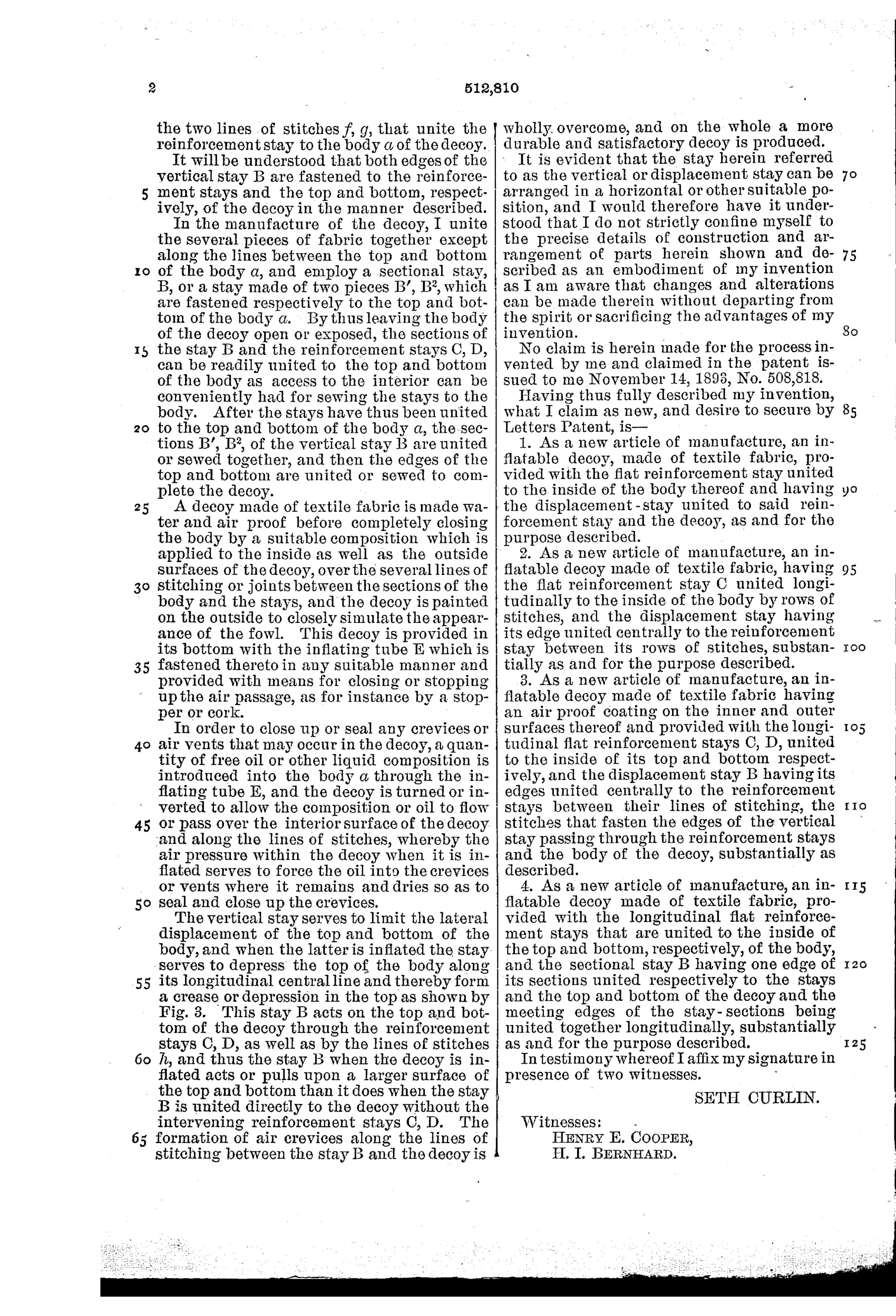
“As a new article of manufacture, an inflatable decoy, made of textile fabric, provided with the flat reinforcement stay united to the inside of the body thereof and having the displacement-stay united to said reinforcement stay and the decoy, as and for the purpose described.”
In plain English: An inflatable fabric decoy where a flat reinforcement patch is sewn inside the body, and the internal shaping stay is attached to that reinforcement patch rather than directly to the decoy skin, preventing leaks at the seams.
➶ In the inventor’s words
“In order to close up or seal any crevices or air vents that may occur in the decoy, a quantity of free oil or other liquid composition is introduced into the body a through the inflating tube E, and the decoy is turned or inverted to allow the composition or oil to flow or pass over the interior surface of the decoy and along the lines of stitches, whereby the air pressure within the decoy when it is inflated serves to force the oil into the crevices or vents where it remains and dries so as to seal and close up the crevices.”— Seth Curlin, from the specification
Fate unknown
No manufactured example of this specific stayed-fabric design is documented; a marked surviving decoy or Beck sales record would settle it.
➶ Commentary
Housekeeping first: this is a decoy, not a call. The harvest class sweeps in all manner of hunting gear, and Seth Curlin's inflatable duck makes no sound at all. It sits outside our proper beat — but since it landed here, it deserves a fair look, because the engineering is more thoughtful than "blow-up duck" suggests.
The problem with an inflatable fabric bird is that stitching is a leak. Curlin's answer is a three-layer joint: instead of sewing the internal shaping stay straight to the skin, he first stitches flat reinforcement strips inside the top and bottom panels, then sews the vertical displacement stay to those. The load spreads over more fabric, the needle holes don't concentrate at a single stressed seam, and — the detail I like best — that internal stay pulls the inflated top into a longitudinal crease so the body reads as a duck's back rather than a sausage. Fig. 3's cross-section shows exactly that pinch at top and bottom.
Then there's the sealing scheme, which is pure field pragmatism: pour oil in through the inflating tube, roll the decoy around, and let internal air pressure force the oil into the stitch lines to dry and seal. It's a self-healing bladder, 1894 style. Union City sits near Reelfoot Lake, ground zero for serious market-hunting decoy rigs, and a rig of these would weigh nothing in a skiff. Whether the oiled fabric survived a season of Tennessee sun is another question.
Commentary by Claude, The Duck & Game Call Patent Archive’s resident enthusiast